

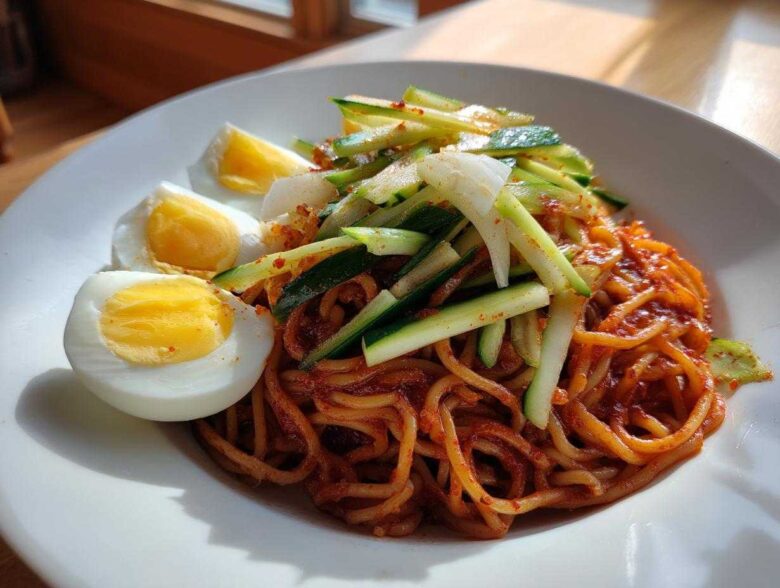
When the summer heat hits and you just can’t face the stove, you need something instantly refreshing, right? That’s when I turn to my favorite Korean dish that literally tastes like a blast of cool air: Bibim Guksu Spicy Cold Noodles! I remember the first time I made this; I was convinced it would turn out too complicated with all those Korean ingredients, but honestly, it surprised me. If you’ve ever wanted the authentic flavor—that perfect balance of spicy, sweet, and tangy—without spending hours in the kitchen, this is the one. I promise this simple recipe delivers the ultimate chewy noodles coated in the best dressing. I’ve refined this process over the years, and trust me, you’ll want to bookmark this recipe for every hot day. For more essential cooking tips, check out my main blog page!
Why You Will Love This Bibim Guksu Spicy Cold Noodles Recipe
Seriously, you need this recipe in your life when the temperature starts creeping up. It’s fast, it’s zesty, and it hits all the right flavor notes. Forget complicated steps; this is pure summer happiness in a bowl!
- Unbelievably Quick: We’re talking under 15 minutes total time! This is the perfect emergency Quick Korean Meal Prep solution when you’re starving.
- That Perfect Texture: The secret cold-rinsing technique makes the noodles incredibly chewy, which is non-negotiable for great Bibim Guksu Spicy Cold Noodles.
- Flavor Magic: The sauce is the absolute star. It’s spicy from the chili paste, but perfectly balanced with sweetness and a sharp, addictive tanginess.
- Minimal Cooking Required: Most of the time is spent on assembly, not standing over a hot stove. Hello, Easy Cold Noodle Recipe!
- Highly Customizable Toppings: You can throw on whatever fresh veggies you have, making it a great way to use up produce sitting in the fridge.
- Authentic Taste Made Simple: You get that genuine Korean restaurant flavor—the one that reminds you of big summer gatherings—without needing a million obscure ingredients.
Essential Ingredients for Authentic Bibim Guksu Spicy Cold Noodles Sauce
Okay, let’s talk about the heart of this dish: the sauce! If you get the sauce right, you’ve nailed the Bibim Guksu Spicy Cold Noodles. It’s all about balance here. You need that deep, savory heat from the two chili components, balanced by bright acidity and sweetness. Don’t try to substitute all of these things; they work together like a perfect little team.
The star, of course, is gochujang—that thick Korean chili paste. It brings the deep color and fermented flavor. Then we add gochugaru, the flakes, which gives it that upfront punch of clean heat. Seriously, don’t skip those flakes if you want that authentic kick!
The Noodle Base and Fresh Toppings
For the noodles themselves, I always use dried somen. They are super thin and cook in practically no time. The trick is making sure you handle them right after cooking so they stay delightfully springy when cold. Think of them as the perfect canvas for all that gorgeous sauce!
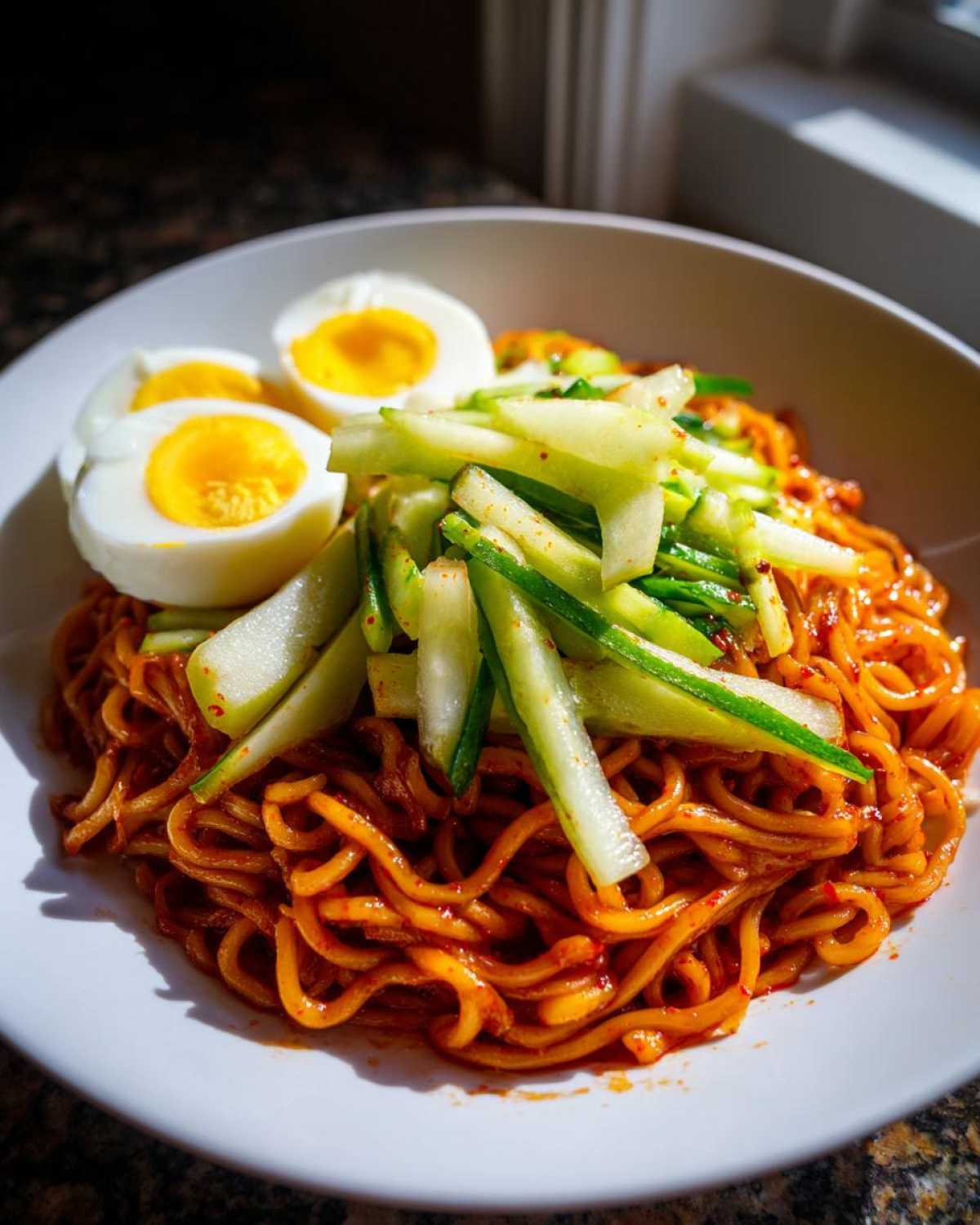
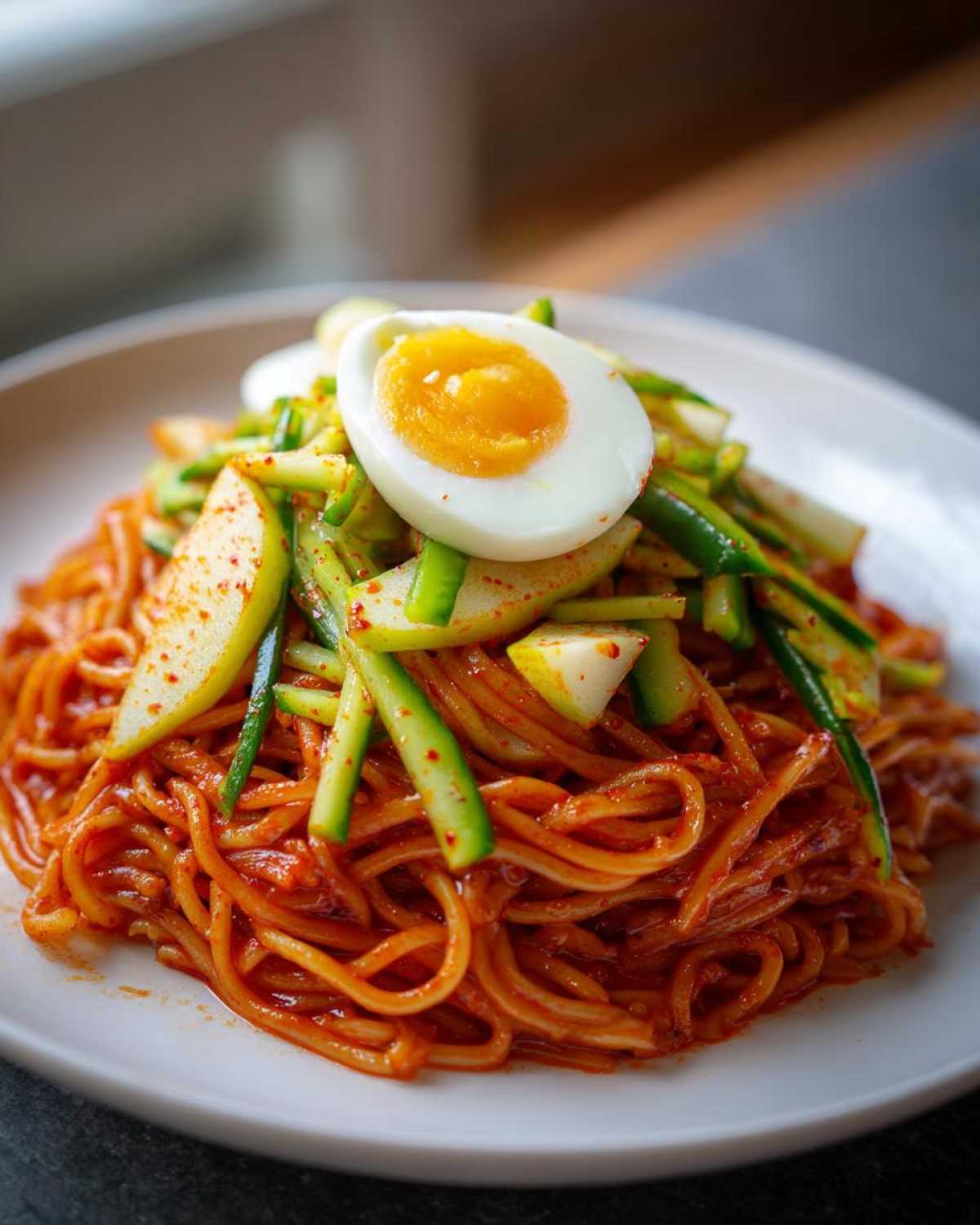
When it comes to toppings, think fresh crunch! You need cucumber, sliced super thin—you want long, delicate matchsticks, which we call julienne—to pile high on top. I love adding a bit of crunchy Asian pear or a crisp apple if I have one; it’s slightly sweet and offsets the spice beautifully. And naturally, you need that perfectly cooked, halved hard-boiled egg leaning against the mound of noodles. It catches all the extra sauce, and it’s wonderful!
Achieving Chewy Cold Noodles Technique for Perfect Bibim Guksu
If you just boil the noodles, drain them, and dump the sauce on, you’re missing the single most important step for incredible Bibim Guksu Spicy Cold Noodles. I’m talking about the rinsing process. This is where the magic happens to get that satisfying, springy, chewy texture that makes Korean cold noodles famous. Please do not skip it!
First, you have to cook them perfectly. Since somen noodles are so thin, they cook in like three minutes. Watch them like a hawk! The moment they are done, you drain them immediately. Don’t let them sit in the colander even for a second after draining the hot water.
Now, the main event: the wash. Run those hot noodles under seriously cold running water. Keep them moving and rub them gently, almost massaging them with your fingertips. You are trying to scrub off all that starchy residue that makes noodles slimy and heavy. It needs to feel almost squeaky clean when you’re done. This scrubbing action is key to the whole Chewy Cold Noodles Technique.
Listen, if you really, really want to go next-level chef mode—and I frequently do when I’m feeling extra—here is my expert tip. After the cold water rinse, give the noodles a quick, hard toss in a bowl of actual ice water for about 30 seconds. That temperature shock locks in the chewiness beautifully. Then, you must drain them so well! I press them down against the colander to get every last drop of water out before tossing them with that amazing sauce. Wet noodles make a weak, soupy dressing, and we are making vibrant Bibim Guksu, not noodle soup!
If you want some other amazing, quick sauce ideas—though none are as good as this one, obviously—you have to check out my thoughts on creamy peanut sauce. It’s a totally different vibe, but just as fast!
How to Make Bibim Guksu Spicy Cold Noodles: Step-by-Step Instructions
Alright, the noodles are cold, clean, and ready to go. Now we assemble our masterpiece! This is where the flavor really explodes. Making the sauce for your Bibim Guksu Spicy Cold Noodles is honestly faster than boiling the water in the first place. I usually do this while the noodles are chilling down post-rinse, just to save time.
Mixing the Bibim Guksu Authentic Sauce
Grab a small bowl—don’t waste a big one here! We want everything to mesh perfectly. Scoop in your gochujang and gochugaru. Then, add the balancing ingredients: the rice vinegar for that beautiful tang, the sugar or syrup for sweetness, a splash of soy sauce for depth, and just a teaspoon of aromatic sesame oil. Don’t forget that tiny bit of minced garlic—it wakes everything up! Whisk it all together until it’s a smooth, deep red paste. It should look glossy and inviting. If you want more tips on perfect mixing techniques, look at how I bring together my apple cobbler batter—it’s about smooth incorporation!
Assembly and Final Presentation of Spicy Banquet Noodles
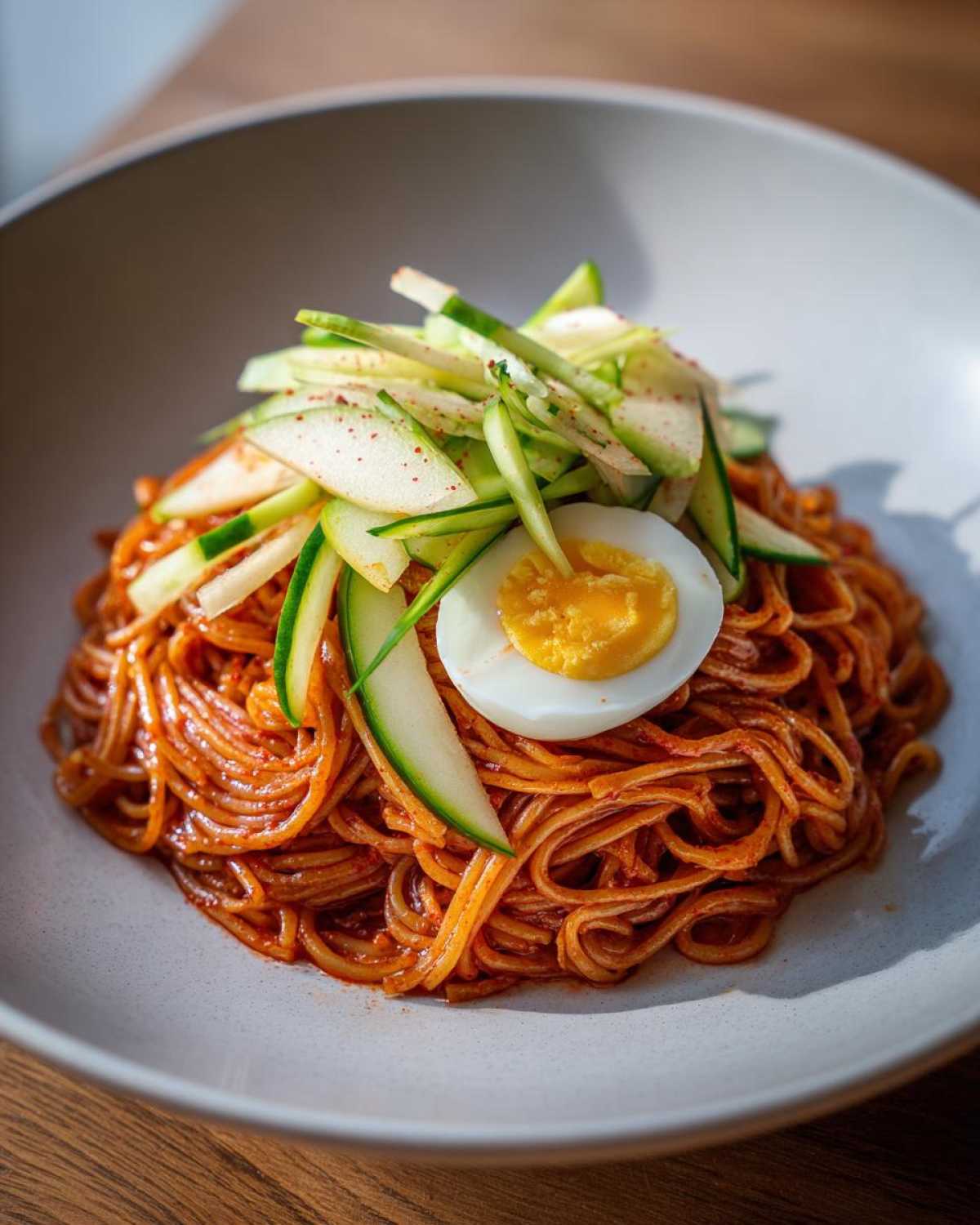
Once your noodles are seriously well-drained—we don’t want water diluting our sauce—plop them right into the serving bowl. Pour that beautiful, rich sauce right over the top of the cold noodles. Now, this is important: you need to toss it well. Use tongs or chopsticks and work it through until every single strand of noodle has been kissed by the sauce. This final toss ensures every bite delivers maximum flavor, living up to the name of Spicy Banquet Noodles.
Finally, pile on your pretties! Arrange those thin slices of cucumber and sweet pear right on top—don’t toss them in yet, you want that fresh crunch contrasting the chewy noodles. Place your egg half proudly in the center, and finish with a final light sprinkle of sesame seeds for visual appeal. Serve instantly and enjoy the cool, spicy rush!
Bibim Guksu Toppings Ideas and Variations
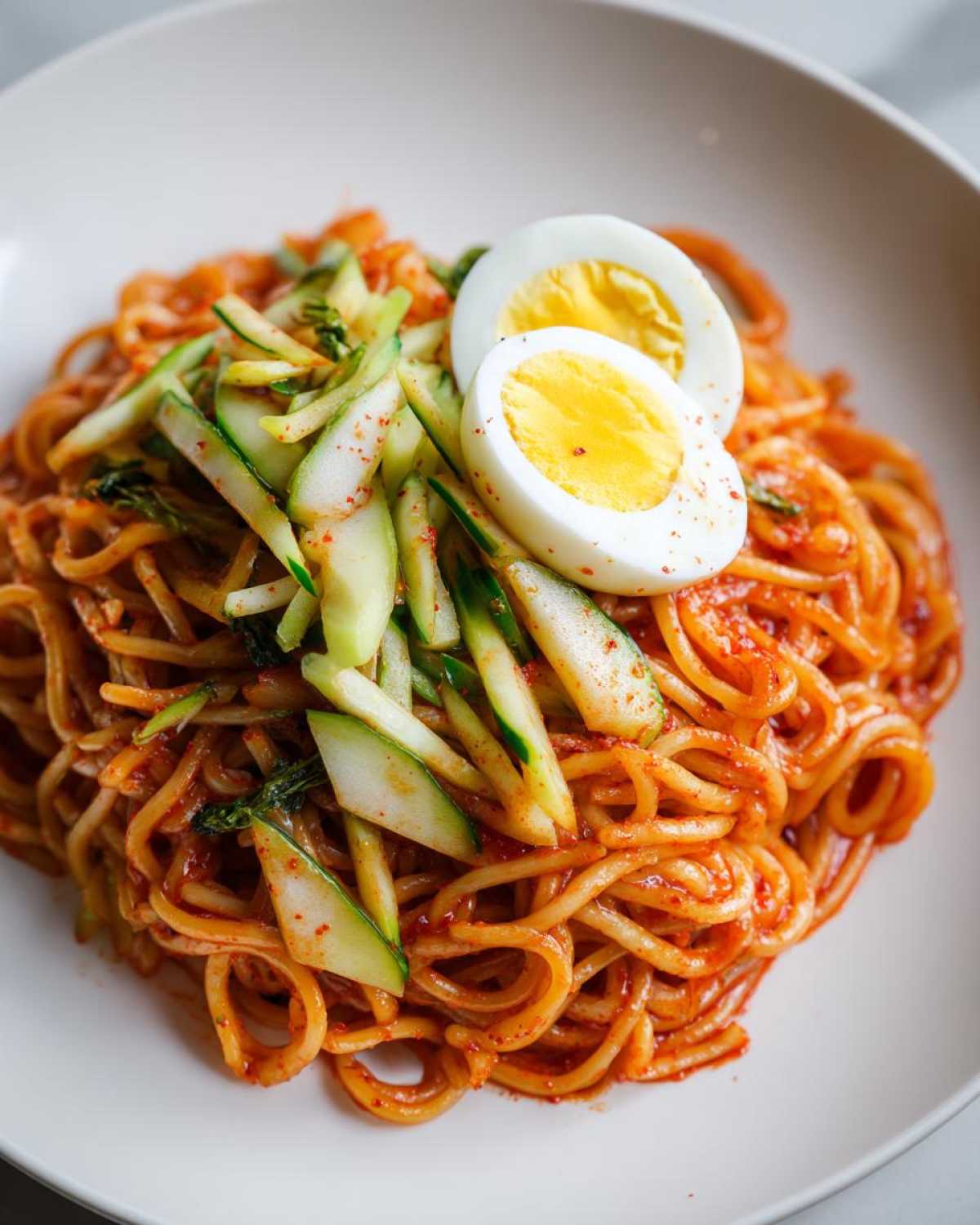
So, you’ve mastered the sauce and the noodle technique for the best Bibim Guksu Spicy Cold Noodles. Fantastic! Now, let’s talk about taking it from great to absolutely legendary with toppings. The base ingredients—cucumber, maybe some pear—give you that essential freshness, but you can absolutely customize this!
If you want to lean into more traditional Korean flavors, you have to try adding pickled radishes. They give you this amazing sweet-and-sour pop that cuts through the chili heat perfectly. Also, don’t be shy with some shredded perilla leaves if you can find them; they have this unique, bright herbal flavor that just sings with sesame oil.
Another really popular addition is a thin sheet of seasoned dried seaweed, or gim, crumbled right over the top. It adds a salty, savory depth that I just can’t get enough of. And if you have some leftover shredded chicken breast or even some thinly sliced bulgogi, that makes this a hearty meal that’s perfect for lunch the next day!
I know a lot of folks look for ways to keep their favorite dishes plant-based, so here’s something important for everyone: For a Vegan Bibim Guksu Option, simply skip the hard-boiled egg, obviously, and make sure the gochujang you are using doesn’t have any hidden fish products in it—most standard ones these days are fine, but it’s always good to check the label, right? You can substitute the egg richness with baked or air-fried tofu crumbles if you want that extra protein oomph. You can check out my foolproof recipes for vegan baking if you want to explore more plant-forward cooking, like this creamy pumpkin pie!
Storage and Keeping Your Korean Spicy Cold Noodles Fresh
Now, I know what you’re thinking: can I make a big batch of these phenomenal Bibim Guksu Spicy Cold Noodles for meal prep? The answer is yes and no! Like most cold noodle dishes, they really shine when eaten the second they are made, but leftovers are absolutely doable if you follow my simple rule.
The absolute killer mistake is mixing the sauce and the noodles completely and then putting them both in the fridge. When you do that, the noodles absorb ALL the sauce and turn into this stiff, flavor-clumped block by morning. No thank you!
If you have leftovers, you must store the components separately. Keep the perfectly rinsed and drained cold noodles in one airtight container. Mix up the sauce separately—it keeps beautifully at room temperature or in the fridge for about a week. When you’re ready to eat, take out a portion of noodles, put them in a bowl, and then—here’s the trick—add just a tablespoon or two of cold water or a splash of ice water before you add the sauce.
Why the water? Because the noodles will have dried out a little bit in the fridge. That tiny bit of added liquid helps loosen them back up and allows them to accept the sauce again without becoming mushy. Only then do you dress them with your reserved sauce. Toss well and enjoy your second helping of spicy goodness—it’s almost as good as the first batch!
Quick Korean Meal Prep and Time Breakdown
I really want you to see just how little time it takes to get this amazing Bibim Guksu Spicy Cold Noodles on the table. When you look at the breakdown, it’s practically instant gratification! This is designed to be a lightning-fast meal, which is why it’s my go-to after a crazy day. We’re clocking in at only 5 minutes of actual cooking time, and the prep is just 10 minutes. Total time? Maybe 15 minutes if you rush!
That speed boost comes from planning just a couple of things ahead when you have a spare moment. For example, if you know you’ll want this for lunch tomorrow, boil two eggs tonight and keep them in the fridge. That way, tomorrow morning, all you have to do is crank up the stove for 3 minutes to cook the noodles!
The sauce components are all pantry staples that can be mixed in under two minutes flat using a small bowl. No fancy equipment needed, just a whisk and about 60 seconds of stirring to get that perfect consistency. It’s the definition of a Quick Korean Meal Prep item.
You can also julienne your cucumber and even slice your Asian pear ahead of time and store them in separate containers in the fridge. Keep them dry, though! When you’re ready to serve, all you are doing is boiling the somen, rinsing it icy cold, and then stirring. It really doesn’t get faster or more delicious than this right here. If you love finding super speedy recipes that don’t skimp on flavor, you should definitely peek at my thoughts on this creamy feta and olive dip—it’s another one that flies out of my kitchen when I need something fast!
Frequently Asked Questions About Bibim Guksu
I know sometimes recipes leave you with lingering questions, especially when you’re trying a dish for the first time, like this awesome Bibim Guksu Spicy Cold Noodles. I’ve pulled together the most common things folks ask me when they are getting ready to make their own batch!
Can I use ramen noodles instead of somen for this Easy Cold Noodle Recipe?
You absolutely *can*, but you’re going to notice a big difference in texture! Somen noodles are traditionally used because they are thinner wheat noodles that absorb the sauce beautifully and get that perfect, delicate chew when rinsed properly. Standard instant ramen noodles are usually thicker and often contain oil, which can make them feel heavier after rinsing in cold water. If ramen is all you have, go for it—it will still be delicious, truly—but accept that it won’t have that signature light, bouncy texture you get from somen. It’ll lean more towards a hearty Korean Noodle Salad with Vegetables vibe!
What if I don’t have gochugaru for the Gochujang Cold Noodle Dish?
Oh, that’s tricky! Gochugaru (the Korean chili flakes) is what gives the dressing that vibrant red color and the clean, slightly smoky heat without adding too much paste thickness. If you don’t have it for your Gochujang Cold Noodle Dish, you have two slightly less ideal options. Your first choice is to just use more gochujang, but be careful—too much paste can make the sauce overly salty and thick. Your second option, if you are desperate for heat, is a tiny pinch of cayenne pepper, but please use caution! Cayenne lacks the fruity complexity of gochugaru, so the flavor won’t be 100% authentic, but it will still be spicy!
If you have questions about anything else, like how to order ingredients online or maybe even where I shop for my kitchen gear, feel free to reach out anytime; you can always drop me a line on my contact page!
Serving Suggestions for Your Refreshing Asian Noodle Salad
Since this Refreshing Asian Noodle Salad is wonderfully spicy and served cold, you want sides that complement that heat without competing with it or making you sweat even more! Think cool, crunchy, and mildly savory. It’s a balancing act, my friend.
The absolute best pairing in my book is a small bowl of quick-pickled radish. You know, the bright pink cubes you sometimes get at Korean BBQ spots? They are tangy, slightly sweet, and that burst of vinegar is the perfect palate cleanser between bites of spicy noodle. It’s a must-have for me whenever I make Bibim Guksu Spicy Cold Noodles.
If you don’t want to pickle anything, even some simple, crisp sliced cucumbers sprinkled lightly with salt and sesame oil work wonders. Or, if you used the optional Asian pear in the noodles, you can skip the side veggie entirely and just lean into the texture you already have!
On the drink front, you need something cool and hydrating. Skip anything too heavy or creamy. I love a simple, slightly sweetened barley tea served ice-cold—it’s traditional and incredibly refreshing. But if you’re feeling festive and want something with a little more zing to go alongside your spicy chilled noodles, you absolutely have to try my recipe for a Watermelon Mint Mojito. It’s fruity, bright, and cuts right through the richness of the sesame oil in the dressing. It’s the perfect cool-down companion for dinner!
PrintBibim Guksu Spicy Cold Noodles
Make authentic Korean Spicy Cold Noodles (Bibim Guksu) with this simple recipe. This dish features chewy noodles tossed in a balanced, spicy, sweet, and tangy sauce, perfect for a quick summer meal.
- Prep Time: 10 min
- Cook Time: 5 min
- Total Time: 15 min
- Yield: 1 serving
- Category: Main Course
- Method: Boiling and Mixing
- Cuisine: Korean
- Diet: Vegetarian
Ingredients
- 1 serving dried somen or thin wheat noodles
- 1/2 cup cold water (for rinsing)
- 1 tablespoon gochujang (Korean chili paste)
- 1 teaspoon gochugaru (Korean chili flakes)
- 1 tablespoon rice vinegar
- 1 tablespoon sugar or corn syrup
- 1 teaspoon soy sauce
- 1 teaspoon sesame oil
- 1/2 teaspoon minced garlic
- 1/4 teaspoon toasted sesame seeds
- 1/4 cucumber, julienned
- 1/4 Asian pear or small apple, julienned (optional)
- 1 hard-boiled egg, halved (optional)
Instructions
- Cook the noodles according to package directions, usually 3 to 4 minutes for somen. Do not overcook.
- Immediately drain the hot noodles and rinse them thoroughly under cold running water. Rub the noodles gently with your hands while rinsing to remove excess starch. This step makes the noodles chewy.
- Drain the rinsed noodles very well, squeezing out any excess water. Place the cold, drained noodles in a serving bowl.
- In a separate small bowl, combine the gochujang, gochugaru, rice vinegar, sugar, soy sauce, sesame oil, minced garlic, and sesame seeds to make the sauce. Mix until smooth.
- Pour the sauce over the cold noodles. Use tongs or chopsticks to mix the noodles and sauce together until every strand is coated evenly.
- Top the noodles with the julienned cucumber, pear or apple, and the halved hard-boiled egg, if using.
- Serve immediately while cold.
Notes
- For a vegan option, omit the hard-boiled egg and ensure your gochujang does not contain fish sauce.
- If you prefer a tangier sauce, increase the rice vinegar by 1/2 teaspoon.
- Rinsing the noodles in ice water after the cold water rinse will make them even chewier.
Nutrition
- Serving Size: 1 bowl
- Calories: 350
- Sugar: 12
- Sodium: 650
- Fat: 8
- Saturated Fat: 1
- Unsaturated Fat: 7
- Trans Fat: 0
- Carbohydrates: 58
- Fiber: 4
- Protein: 10
- Cholesterol: 185