

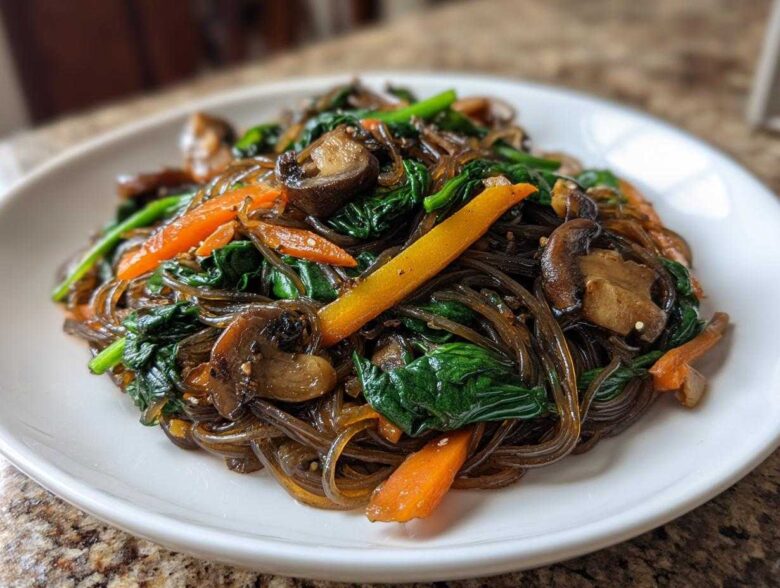
Oh, if you haven’t tasted true Japchae, you are missing out on the most fantastically satisfying chewiness you can imagine! I’m talking about those slippery, slightly bouncy sweet potato starch noodles that make this Korean dish so addictive. For years, my versions were just… fine. But once I cracked the code on the right texture, everything changed. Trust me, this authentic recipe for Japchae Sweet Potato Noodles is the only one you’ll ever need—it’s all about balancing that savory sauce against the beautiful texture of the dangmyeon.
Why This Japchae Sweet Potato Noodles Recipe Works (E-E-A-T)
So, what makes this recipe stand head and shoulders above the rest? I’ve tested tons of methods, and it truly comes down to two things that you absolutely cannot skip if you want that restaurant-quality magic in your home kitchen. It’s not just throwing things in a wok; it’s about precision with the noodles and respect for the sauce layering. Learning these steps made all the difference when making my Japchae Sweet Potato Noodles! Check out my tip on marinating meat if you opt for beef.
- The careful prepping of every component individually. We aren’t just throwing raw veggies in late; we’re seasoning them slightly before they even hit the final toss.
- The crucial rinsing technique for those noodles—that’s the secret weapon!
Achieving the Perfect Chewy Glass Noodles Cooking Texture
You see, sweet potato starch noodles, or dangmyeon, are naturally starchier than mung bean noodles. That means they have this incredible ability to stay delightfully bouncy, even after they’ve cooled down or been reheated. The key to chewy glass noodles cooking perfection is this: boil them until just tender, then you absolutely must shock them under cold running water. This stops that cooking process instantly and removes excess starch so they don’t become a clumped-up mess later.
Balancing the Sweet and Savory Japchae Flavor Profile
This is where my expertise comes in! The sauce needs to be strong because those thick noodles soak up all that flavor. We use a robust ratio of soy sauce to brown sugar (more sugar than you might think!) and finish it all with a healthy hit of nutty sesame oil right at the end. This combination hits that perfect sweet, salty, and umami spot that makes everyone ask, “What’s in this?” You’ll notice that the sauce ingredients are whisked separately—don’t just drizzle them in!
Essential Japchae Ingredients Explained
Okay, let’s talk about what you need to make this happen. Unlike some other noodle dishes that use standard wheat or rice noodles, Japchae relies on something truly special. Don’t panic if you haven’t seen these before; I’ve got the breakdown right here. Getting the right ingredients makes explaining the steps later so much easier, especially when we discuss flavor balance. If you want to skip the beef and use tofu, I talk more about that genius swap in a later section, but for now, let’s focus on the star: the noodles! Knowing the right ingredients is key to mastering the Japchae Sweet Potato Noodles.
Sourcing and Preparing Your Japchae Sweet Potato Noodles (Dangmyeon)
The absolute non-negotiable item here is the 8 ounces of Japchae Sweet Potato Noodles, which you’ll see labeled as dangmyeon. Seriously, don’t substitute these with glass noodles meant for soups or pho; they behave totally differently when stir-fried! These noodles are made from sweet potato starch, which is why they get that signature, satisfying chewiness we are aiming for! You can usually find a bag of them in the international aisle of a large grocery store or definitely at any Asian market. Understanding the right Japchae ingredients explained truly sets you up for success.
Vegetable Prep and Protein Choices for Your Korean Glass Noodle Stir Fry Recipe
For the veggies, presentation matters a lot, so think thin! The carrots must be finely julienned—that’s thin matchsticks—and sliced onions, mushrooms, and peppers should match that thinness so they cook evenly and incorporate nicely into the final mix. If you are adding the optional beef, make sure it’s sliced paper-thin against the grain. If beef isn’t your thing, which I totally get, know that you can easily turn this into an amazing Korean glass noodle stir fry recipe by swapping steak for pressed, cubed tofu that browns beautifully in the pan. If you want to see how I handle other savory components, check out my recipe for easy ground beef chili!
How to Make Japchae: Step-by-Step Dangmyeon Stir Fry Instructions
Alright, time to get cooking! This is where all that prep work pays off, and honestly, it moves much faster than you think once you get into the rhythm. Remember, the key to this whole operation is working in stages so nothing gets soggy or mushy. We are building layers of flavor and texture into our amazing Japchae Sweet Potato Noodles. Make sure your workstation is ready because we are moving fast once the wok hits the heat. If you need a simple way to manage your timing, my general advice on one-pot cooking might help you keep track of all your components!
Prepping Components: Marinating and Blanching
We start small. If you’re using beef, get that sliced meat tossed right away with just a splash of soy sauce, sugar, and pepper—let it relax for ten minutes while you handle the greens. Next up is the spinach, which needs a super quick dip in boiling water. Thirty seconds is all it takes! Drain it right away, squeeze out every drop of excess water you can, and then toss it lightly with a tiny bit of soy sauce, sesame oil, and sugar. This prevents it from watering down the whole dish later.
The Critical Step: Chewy Glass Noodles Cooking Technique
This is the step that separates the good Japchae from the legendary dish, so pay attention! Take your 8 ounces of dangmyeon and drop them into vigorously boiling water. You’re usually looking at 6 to 8 minutes; you want them tender, but they MUST retain a slight resistance when you bite them—that’s the hallmark of chewy glass noodles cooking done right. Drain them fast, immediately rinse them under cold water until they feel cool to the touch, and then use kitchen shears to snip them into manageable 6-inch pieces. Don’t forget to toss them with a tablespoon of sesame oil right away so they don’t fuse into one giant noodle ball!
Stir-Frying Vegetables and Combining for the Best Japchae Flavor
Heat up that wok with a tablespoon of oil. Cook the beef first until it’s done, then scoop it out. The trick now is to cook the veggies—carrots, onions, mushrooms, peppers—in batches instead of dumping everything in at once. This ensures every vegetable gets seared slightly and stays crisp-tender, not steamed! Season each batch lightly, maybe with a small drizzle of the leftover seasonings from the vegetable steps. While those cook, quickly whisk together your main sauce: the soy sauce, brown sugar, sesame oil, garlic, and pepper. When everything is cooked (beef back in, veggies in), pour that sauce over the noodles and vegetables. Toss everything together over medium heat for about two minutes. This lets the noodles absorb that wonderful sauce and brings it all together for the Best Japchae flavor before you sprinkle on those gorgeous toasted sesame seeds!
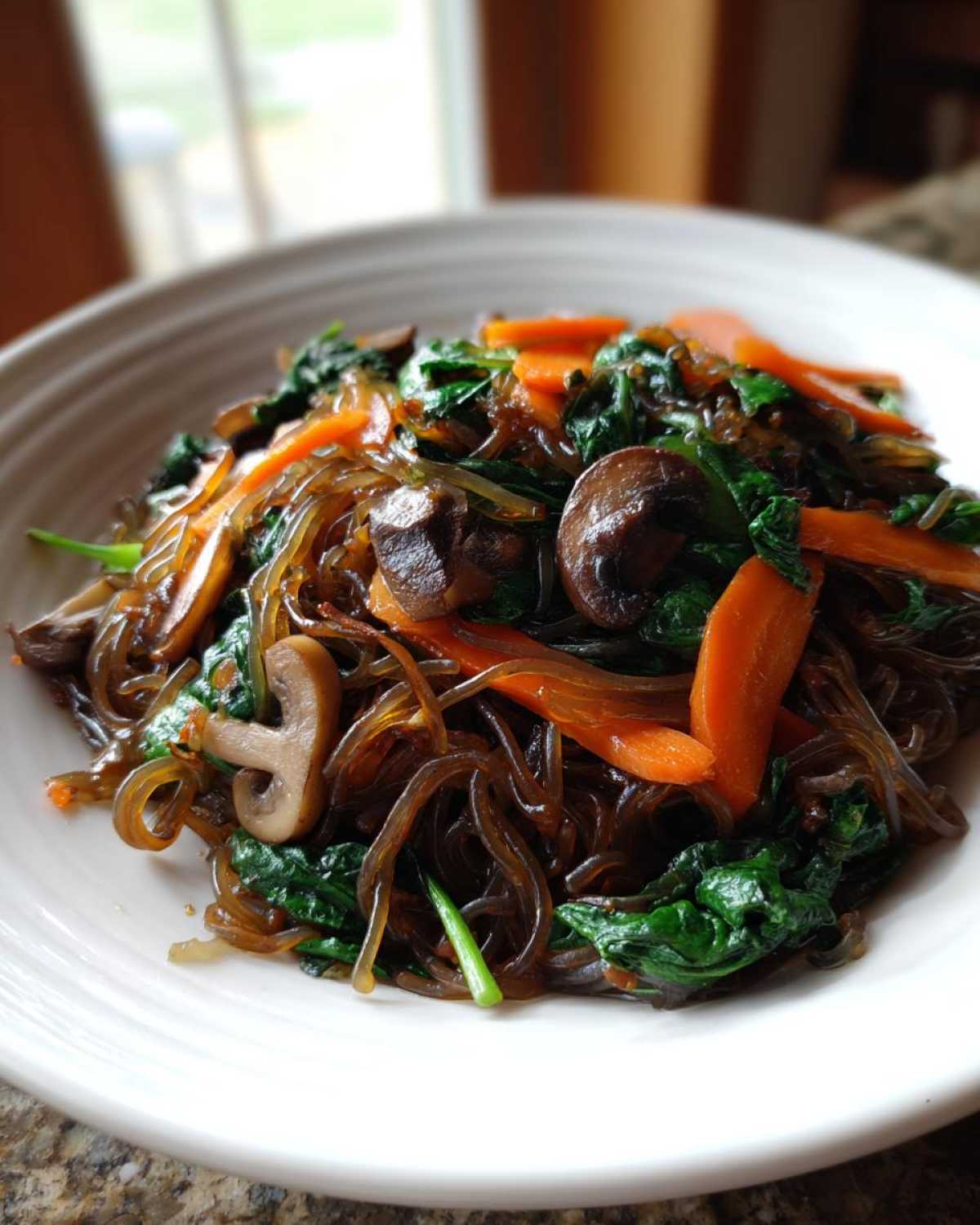
Tips for Success When Making Japchae Sweet Potato Noodles
I’ve learned a few crucial tricks over the years that stop this dish from turning into a sticky disaster—and these are the things I wish someone had told me sooner! These little tweaks really take your Japchae Sweet Potato Noodles from good to absolutely fantastic. It all comes down to respecting the starch and the sugar levels in the sauce. Remember, when trying to maintain that incredible texture, sometimes a small substitution makes a big difference.
Ingredient Swaps for Your Korean Starch Noodles Tutorial
If you stick strictly to meat for protein, you’re missing out! For a fantastic alternative that fits perfectly into our Korean Starch Noodles Tutorial, embrace tofu. Just make sure you press it really well to get the water out, then cube it and fry it until it’s golden brown before adding it in during the final assembly. Also, if you don’t have brown sugar, my notes mention you can absolutely use honey or maple syrup in the sauce base. It gives a lovely, slightly different sweetness while keeping that wonderful balance intact. If you are looking for inspiration on other sweet sides, you have to check out my recipe for apple cobbler!
Variations on the Traditional Korean Noodle Dish
Japchae is amazing as is, but I love showing folks how adaptable a recipe can be! While the core method for the noodles stays the same—gotta have that famous chew!—you can riff on this dish endlessly depending on what you have on hand or what your dietary needs are. It’s such a wonderfully adaptable dish, making it perfect for potlucks or just a Tuesday night dinner when you need something bright!
Creating a Vegetarian Japchae Option
If you’re skipping the beef in this recipe, you can actually make the dish even more vibrant! The key to a great Vegetarian Japchae option is texture. Don’t just throw soft tofu in there; that collapses and gets sad. You need to press your firm or extra-firm tofu—get rid of the water content! I usually wrap a whole block in paper towels and put something heavy on it, like a cast iron skillet, for at least 30 minutes. Then, cube it up and toss those cubes into the wok right where you would have cooked the beef. Fry them until they are nice and golden brown before you even think about adding the veggies. They get a little crispy shell and soak up the sauce beautifully!
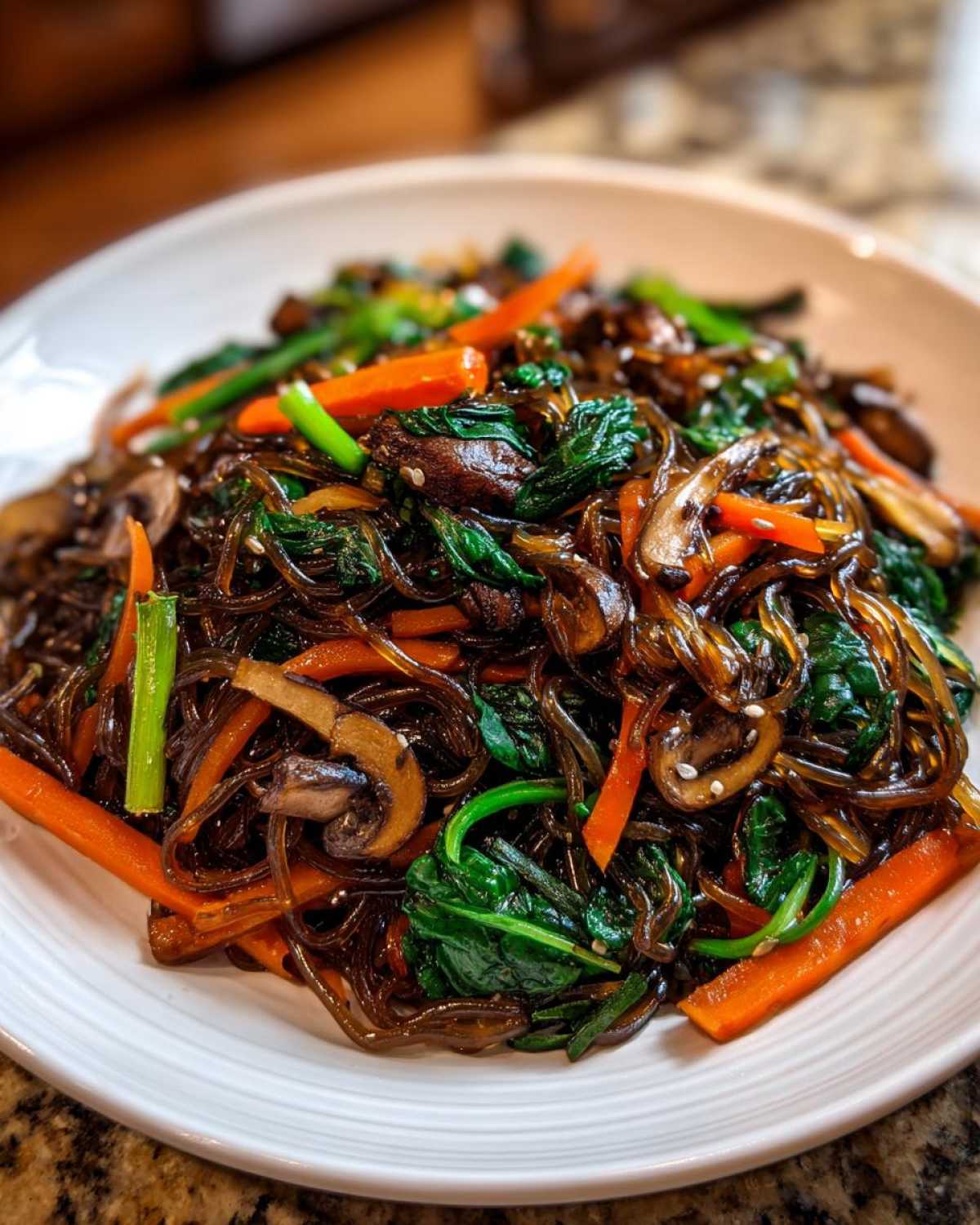
Gluten Free Korean Recipes Considerations
Making this dish gluten-free is surprisingly simple, which is great news for everyone looking for diverse options! Generally, almost everything in Japchae is naturally gluten-free: the vegetables, the sugar, the sesame oil, and the sweet potato noodles themselves. The only ingredient you need to swap out is the soy sauce. Standard soy sauce has wheat, so you just need to grab a bottle of Tamari, which is usually just fermented soybeans, or look specifically for a certified gluten-free soy sauce. If you make that one simple swap, you’ve instantly transformed this into one of the safest and tastiest Gluten free Korean recipes you can make! If you want to try seasoning something else without gluten, take a look at how I build flavor in my famous moist carrot cake—it uses simple, pure ingredients!
Serving Suggestions for This Quick Japchae Dinner
When your Japchae Sweet Potato Noodles are finished shimmering in that dark, fragrant sauce, you have options! It’s traditionally served as a wonderful Korean side dish noodle, perfect alongside Bulgogi or Korean BBQ, especially during holidays. But honestly? When I make a big batch, it’s definitely the main event for a quick dinner, especially if I loaded it up with extra mushrooms and tofu. Remember that garnish we planned? You must sprinkle those toasted sesame seeds generously over the top right before serving—the aroma alone is incredible! If you’re looking for an easy main dish pairing, check out my method for one-pot beans and rice!
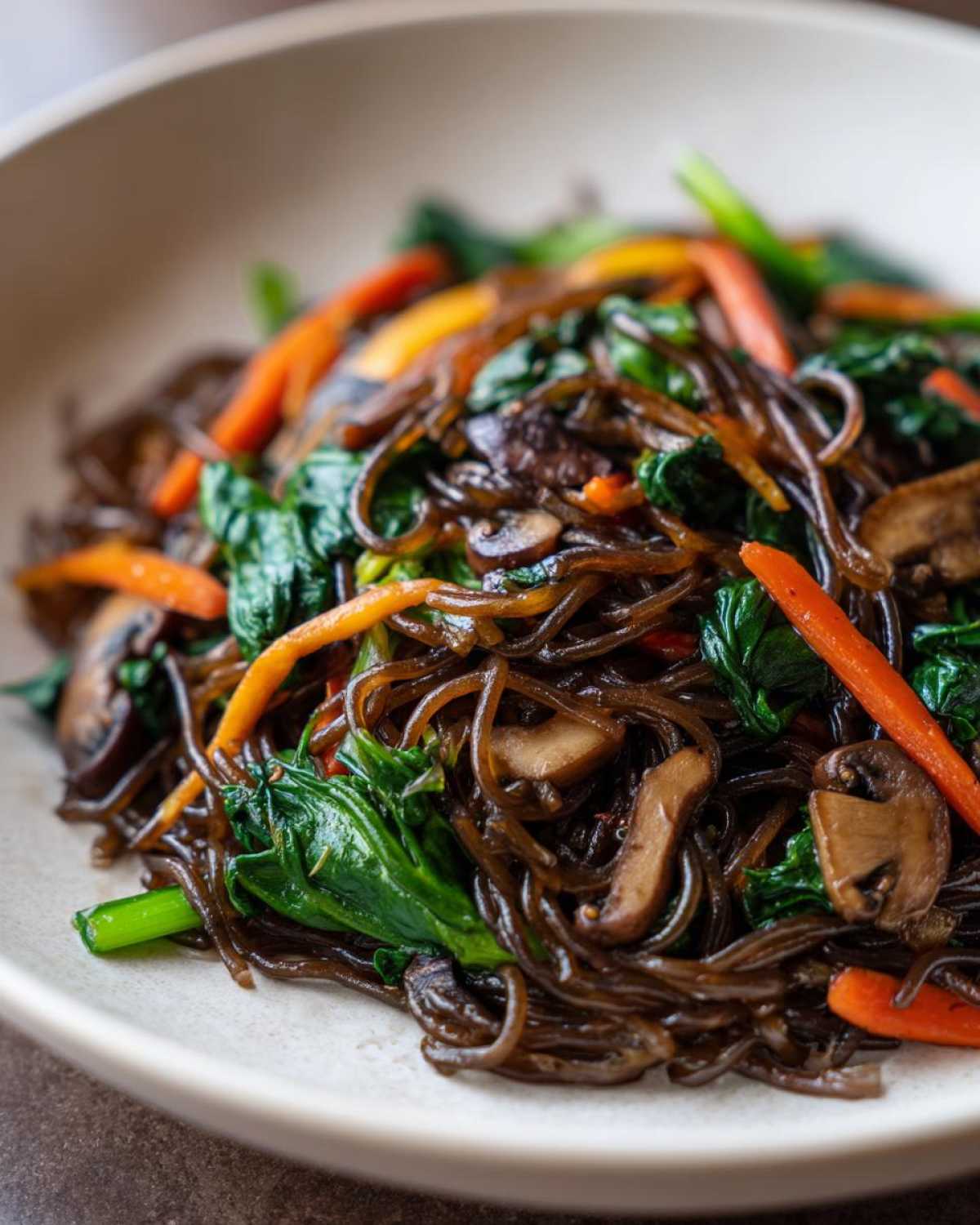
Storage and Reheating Instructions for Japchae Sweet Potato Noodles
This dish holds up surprisingly well, which is why it’s such a fantastic Korean side dish noodle to make ahead! Store any leftover Japchae Sweet Potato Noodles in an airtight container in the fridge for up to three days. Now, when it comes to reheating, skip the microwave if you can! The microwave tends to steam the noodles and makes them lose that beautiful bite we worked so hard for. I find the best method is tossing them gently in a skillet over medium heat with just a tiny splash of water or even some broth. This rehydrates them perfectly and brings back that springy texture. To see another great recipe that’s easy to store, check out my easy chicken cobbler!
Frequently Asked Questions About This Korean Side Dish Noodle
I know sometimes the details of making complicated-sounding dishes can leave you with a few lingering questions, so I gathered the most common things people ask about this recipe. Don’t worry if you’re trying this for the first time; we’ve all been there! These tips should help you feel super confident putting together this wonderful Korean side dish noodle.
Can I make Japchae ahead of time?
Yes, you absolutely can! This is one of the reasons I love it so much—it’s great for parties. You can cook everything, assemble the dish, and let it cool. Here’s the catch, though: those beautiful noodles will inevitably stick together a bit when they cool down completely. When you go to reheat it the next day, gently stir it in a skillet over low heat, adding just a tiny splash of water or broth. It loosens everything right up!
What if my Japchae noodles are too sticky after cooking?
If you follow the main recipe steps, this shouldn’t happen, but if you find yourself with a sticky situation, panic doesn’t help! Sticky noodles usually mean two things: being under-rinsed with cold water right after boiling, or not enough sesame oil tossed in afterward. If you are already in the stir-fry stage and they are clumping, take a deep breath, add a teaspoon of oil and a tablespoon of water to your wok, and toss vigorously over medium heat. Mastering the Dangmyeon stir fry instructions is all about managing that starch during the chewy glass noodles cooking phase!
Is this considered a Festive Korean Noodle Dish?
Oh, 100%! Japchae is absolutely a staple for birthdays, New Year celebrations (Seollal), and the Chuseok harvest festival. It’s colorful, complex in flavor, and substantial enough to feel really special. While it works perfectly as a satisfying Quick Japchae dinner any night of the week for my family, it definitely shines brightest when served as one of the main side dishes during a big gathering. You’ll see it served proudly on the table!
If you made this and loved it, please check out my recipe for creamy rice pudding for dessert!
Estimated Nutritional Data for Japchae Sweet Potato Noodles
Now, I want to be super clear about this next part. Because we are stirring in beef, onions, a good amount of soy sauce, and sugar, the nutrition facts are just estimates based on dividing the total recipe by four servings. If you use the vegetarian option with tofu instead of beef, those numbers will change a bit—usually lowering the protein and fat slightly! These figures are just a helpful guide, not an exact science, especially since ingredient brands vary so much. If you are looking for another sweet treat with a little more structure, you absolutely have to try the gooey streusel on my pecan pie muffins!
- Serving Size: 1 serving
- Calories: 450
- Fat: 10g
- Saturated Fat: 1.5g
- Carbohydrates: 75g
- Protein: 15g
- Sugar: 15g
- Sodium: 950mg
See how the sodium is a little high? That’s just the nature of using soy sauce as the foundation of the sauce, so keep that in mind!
Share Your Experience Making Japchae Sweet Potato Noodles
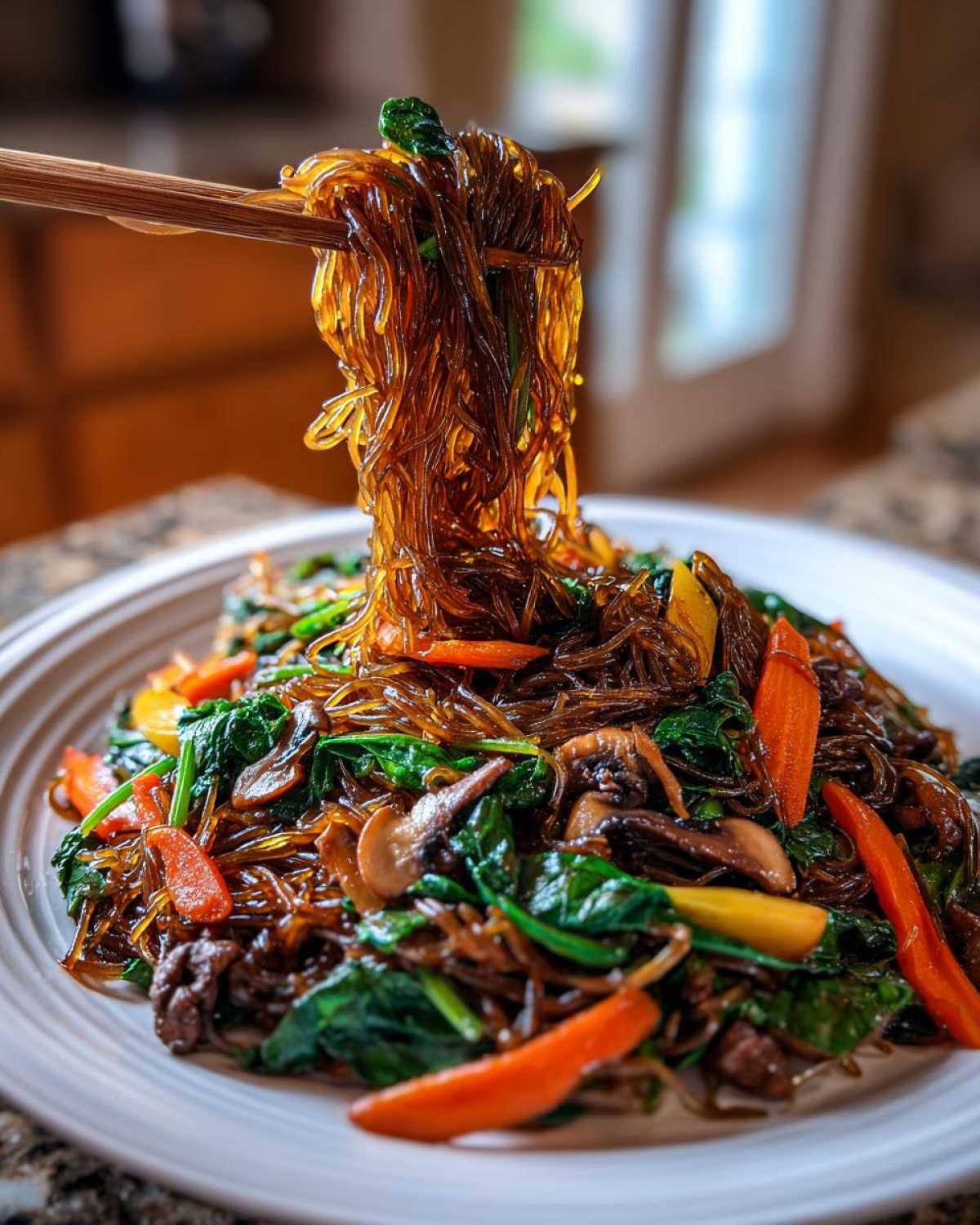
Well, that’s truly it! We’ve gone from raw ingredients to a glorious, glossy heap of perfect noodles. I really hope you feel excited to try this out because when those fantastic sweet potato starch noodles soak up all that savory goodness, it’s truly magnificent. My ultimate test for a successful batch of Japchae Sweet Potato Noodles is wrapping a big forkful around my chopsticks and just experiencing that springy, chewy texture. It makes me so happy!
I’m dying to know how yours turns out. Did the noodles behave? Did you add in extra mushrooms? Please, please, come back to the comments below this recipe and tell me how you liked it. Don’t forget to give it a star rating so other folks know it’s the real deal! And if you snap a picture of your finished dish, tag me on social media—I absolutely love seeing your kitchen successes! If you are always on the hunt for more great recipes to try out, feel free to browse everything else I have cooking in the kitchen over at my full recipe index!
PrintAuthentic Korean Japchae with Sweet Potato Noodles
Make classic Korean Japchae using chewy sweet potato starch noodles (dangmyeon) in a balanced sweet and savory sauce.
- Prep Time: 20 min
- Cook Time: 25 min
- Total Time: 45 min
- Yield: 4 servings
- Category: Main Dish
- Method: Stir-Frying
- Cuisine: Korean
- Diet: Vegetarian
Ingredients
- 8 oz sweet potato starch noodles (dangmyeon)
- 4 oz beef sirloin, thinly sliced (optional)
- 1 medium carrot, julienned
- 1/2 yellow onion, thinly sliced
- 4 shiitake mushrooms, sliced
- 1/2 red bell pepper, thinly sliced
- 4 cups spinach
- 2 tablespoons soy sauce (for vegetables)
- 1 teaspoon sesame oil (for vegetables)
- 1 teaspoon sugar (for vegetables)
- 1 tablespoon cooking oil
- For the Sauce: 4 tablespoons soy sauce
- 2 tablespoons brown sugar
- 1 tablespoon sesame oil
- 1 teaspoon minced garlic
- 1/2 teaspoon black pepper
- For Garnish: 1 teaspoon toasted sesame seeds
Instructions
- If using beef, marinate it with 1 tablespoon soy sauce, 1 teaspoon sugar, and a pinch of pepper for 10 minutes.
- Cook the spinach: Blanch spinach in boiling water for 30 seconds. Drain immediately, squeeze out excess water, and toss with 1 teaspoon soy sauce, 1/2 teaspoon sesame oil, and a pinch of sugar. Set aside.
- Cook the noodles: Boil the sweet potato noodles according to package directions, usually 6-8 minutes until tender but chewy. Drain immediately and rinse with cold water to stop cooking. Cut the noodles into manageable lengths (about 6 inches). Toss the noodles with 1 tablespoon sesame oil to prevent sticking.
- Prepare the vegetables and meat: Heat 1 tablespoon cooking oil in a large skillet or wok over medium-high heat. Stir-fry the marinated beef until cooked through. Remove and set aside.
- In the same skillet, stir-fry the carrots, onions, mushrooms, and bell pepper separately or in sequence until tender-crisp. Season each batch lightly with a mixture of 2 tablespoons soy sauce, 1 teaspoon sugar, and 1 teaspoon sesame oil.
- Combine the sauce: Whisk together the sauce ingredients: 4 tablespoons soy sauce, 2 tablespoons brown sugar, 1 tablespoon sesame oil, 1 teaspoon minced garlic, and 1/2 teaspoon black pepper.
- Assemble: Return the cooked beef, all stir-fried vegetables, and the cooked noodles to the skillet. Add the seasoned spinach. Pour the prepared sauce over everything.
- Toss well over medium heat for 2-3 minutes until the noodles are evenly coated and heated through.
- Serve immediately, garnished with toasted sesame seeds.
Notes
- For a vegetarian version, omit the beef and add 4 oz of firm tofu, pressed and cubed, stir-fried until golden.
- To achieve the best chewy texture, do not overcook the sweet potato noodles; they should remain slightly firm after rinsing.
- You can substitute brown sugar with honey or maple syrup if needed for the sauce.
Nutrition
- Serving Size: 1 serving
- Calories: 450
- Sugar: 15
- Sodium: 950
- Fat: 10
- Saturated Fat: 1.5
- Unsaturated Fat: 8.5
- Trans Fat: 0
- Carbohydrates: 75
- Fiber: 5
- Protein: 15
- Cholesterol: 30