

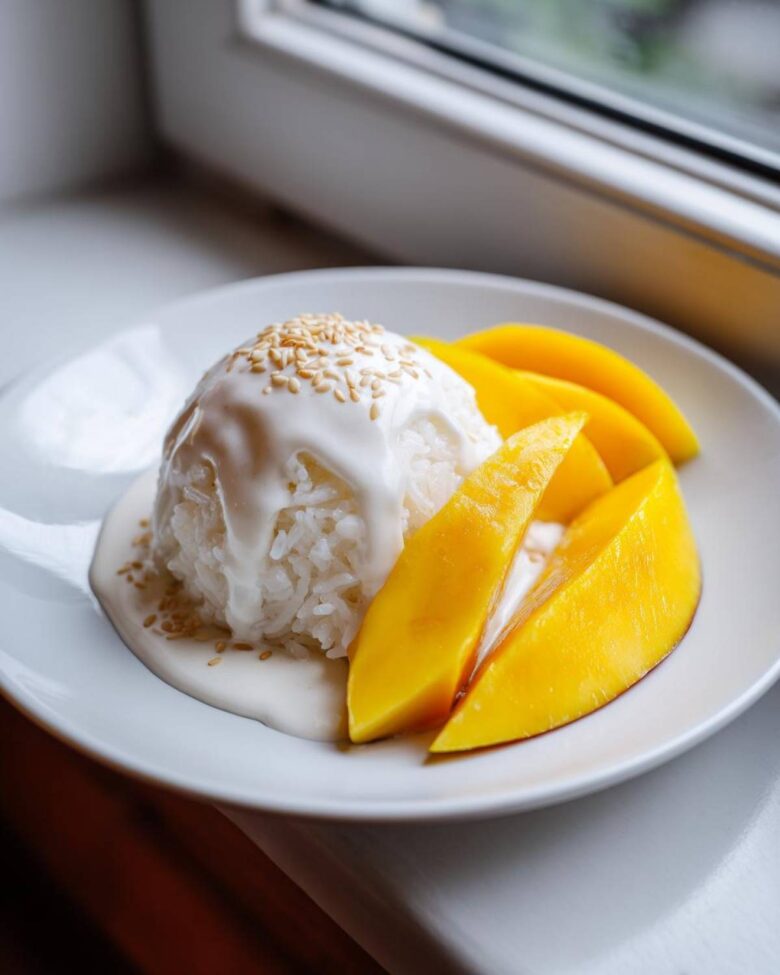
Oh my goodness, are you ready for the ultimate tropical treat? When summer hits, I immediately crave something cool, sweet, and ridiculously satisfying, and nothing beats our authentic **Mango Sticky Rice with Coconut**. Forget those sad, dry versions you sometimes find; we are going full-throttle traditional Thai style here!
I first fell head-over-heels for this dessert during a backpacking trip through Thailand years ago. The street vendors made it look so simple, yet the flavor was pure heaven. Since then, I’ve spent countless hours refining the recipe in my kitchen until I got that absolutely perfect, slightly chewy texture for the glutinous rice and that sauce—oh, that sauce!
This isn’t just any recipe; it’s my tried-and-true method for amazing **Mango Sticky Rice with Coconut**. It just requires a little patience upfront with the soaking, but trust me, the creamy payoff is worth every single minute. Let’s make some magic!
You can check out my main master recipe here if you want to see the full ingredient list right away, but stick with me, because the secrets are in the technique!
Why This Recipe for Mango Sticky Rice with Coconut Works So Well
I know there are a million ways you could make a quick dessert, but this authentic approach to **Mango Sticky Rice with Coconut** is what sets it apart. I’ve spent years perfecting every single component, and these non-negotiable steps are what guarantee success every time you try it. Remember, if you want to check out more general tips on cooking or baking inspiration, I try to update my main blog page regularly!
- That Signature Texture: We aren’t just making sweet rice; we are aiming for chewy, plump grains that are tender but still hold their shape. The long soak and steam combination locks in that perfect glutinous rice consistency.
- The Salt Factor in the Sauce: This is huge! Most quick recipes forget the tiny bit of salt in the coconut sauce mixture. That little pinch balances the sugar we use, stopping the dish from tasting flatly sweet and giving you that complex, craveable flavor that defines a proper **Mango Sticky Rice with Coconut**.
- Creamy, Not Soupy: We use a two-part sauce system—one to cook into the rice, and one thick, salty topping. This guarantees a rich finish without making the bottom layer of your sweet sticky rice watery.
- Only the Best Mango: I give you guidance on picking the perfect partner for your rice. If your mango isn’t spot-on fragrant and sweet, the whole dessert falls flat.
- It’s Surprisingly Simple: Once you get the soaking down, the cooking itself is mostly hands-off steaming. You’ll feel like a culinary genius making this incredible **Thai Dessert Recipe** at home!
Trust me on this one; mastering these points is the key to genuinely unforgettable **Mango Sticky Rice with Coconut**.
Gathering Ingredients for Authentic Mango Sticky Rice with Coconut
Okay, the success of any amazing dessert, especially a **Thai Dessert Recipe** this beloved, rests squarely on what you bring to the counter. For this version of **Mango Sticky Rice with Coconut**, you can’t skimp on quality. If you happen to be baking something rich and coconutty alongside this, perhaps check out my recipe for the Best Moist Coconut Cake for some coconut heavy inspiration!
See, the glutinous rice (sweet rice) has to be the real deal—no using regular long-grain here, or you’ll end up with mush! Similarly, you need those perfect mangoes that practically scream tropical sunshine. Here is everything you’ll need to gather before we start soaking:
- 2 cups glutinous rice (sweet rice) – This is crucial!
- 1 1/2 cups water (for cooking the rice initially)
- 1 can (13.5 oz) full-fat coconut milk, divided (use the whole can!)
- 1/2 cup granulated sugar
- 1/2 teaspoon salt
- 1/4 cup extra coconut cream (scoop the thick part from the top of a chilled can)
- 1 tablespoon sugar (for that drizzly topping sauce)
- 1/4 teaspoon salt (for that topping sauce)
- 2 ripe, sweet mangoes (Nam Dok Mai or Ataulfo are my absolute favorites for this!)
- 1 tablespoon toasted sesame seeds (just a little sprinkle for looks!)
When you shop, give those mangoes a gentle squeeze. They should give a little without being mushy. That’s how you know you have the best partner for your **Mango Sticky Rice with Coconut**!
Expert Tips for Perfectly Cooked Sticky Rice Dessert
Okay, let’s talk rice. If you mess up the rice, you might as well stop right there because the whole experience of **Mango Sticky Rice with Coconut** hinges on this step. We are aiming for that ideal texture—tender yet delightfully chewy, not like the mushy rice pudding you might find in a box. Getting there takes a little dedication upfront, but it’s totally worth it! If you’re looking for other rice-based inspiration, my creamy rice pudding recipe has a different vibe but definitely scratches that comfort food itch!
First thing first before we even bring the water to a boil: the rinse. You *have* to rinse that glutinous rice. I mean, rinse it until the water comes out absolutely clear. We are washing off all that excess starch that would otherwise turn our dessert into glue. Do this for several minutes—it makes such a difference!
The Importance of Soaking Glutinous Rice
Listen closely, because this next part is gospel for **Mango Sticky Rice with Coconut**: You cannot skip the soak. Soaking the glutinous rice overnight, or for a minimum of four hours, is non-negotiable. Why? Because glutinous rice grains are super dense. If you try to steam them dry, the outside will turn to goo before the center is even cooked! The soak hydrates the kernel evenly, guaranteeing that perfect, fluffy-yet-chewy result when you steam it. It lets the rice absorb the water gently so it cooks evenly throughout when we steam it up later.
Once drained, just steam it right over boiling water until it smells fragrant and feels tender. Then, we move fast to spoon that sweet coconut milk right over it while it’s scorching hot!
Creating the Sweet and Salty Coconut Cream Sauce
This is where the flavor profile of our **Mango Sticky Rice with Coconut** truly comes alive! You need two separate coconut mixtures, which might sound fussy, but trust me, it’s easy and the result is incredible.
First, we make the soaking liquid. Grab about a cup of your main can of coconut milk—that creamy rich stuff from the top is best—and put it in a small saucepan with half a cup of sugar and a half teaspoon of salt. You just gently warm this mixture over low heat. Don’t let it boil! We just need to stir until all that sugar and salt are completely dissolved. It’s the salt here that cuts through the sweetness, giving you that amazing classic Thai taste.
Once you’ve pulled your perfectly steamed rice and poured this warm mixture over it, let it soak, covered, for about half an hour until it’s totally absorbed. If you need a reminder on making this sweet sticky rice part perfectly, remember to stir gently!
Then, make the tiny topping sauce. Take that reserved thick coconut cream—remember, about a quarter cup—and mix it with just one tablespoon of sugar and a tiny pinch of salt (a quarter teaspoon). Warm that lightly too. This concentrated, slightly saltier drizzle that you pour over the finished **Mango Sticky Rice with Coconut** before serving is pure luxury. See? Two simple sauces, one amazing **Glutinous Rice Dessert**!
Assembling Your Mango Sticky Rice with Coconut
We’ve done the hard work—our rice is perfectly plump, and our sauces are balanced! Now for the fun part: putting together this gorgeous **Mango Sticky Rice with Coconut**. It comes together so fast once everything is prepped. Don’t stress about making it look perfect; even a slightly rustic serving looks incredible because the colors are so vibrant.
Once your rice has soaked up all that sweet coconut goodness (give it at least 30 minutes to really drink it in), it’s time to plate. Scoop a generous portion of the warm, sweet sticky rice onto your dish. You can mold it a little if you want a tidy presentation, or just let it fall naturally.
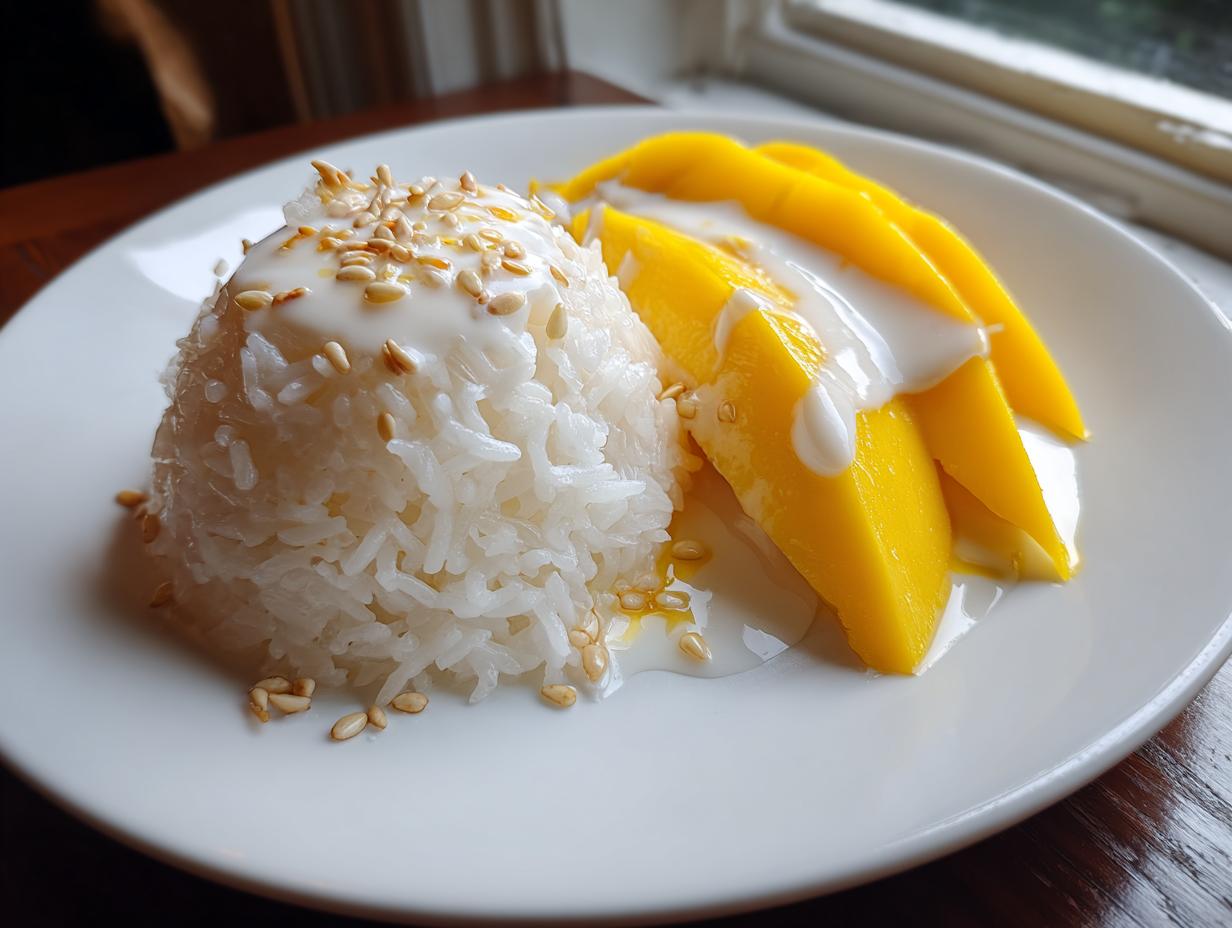
Next, address the mango. Remember we talked about picking the absolute Best Mango for Sticky Rice? Now we utilize it! Peel the mango carefully—I usually just slice along the inner sides of the pit—and cut the sweet flesh into nice, thick pieces. Arrange those slices right next to your rice mound.
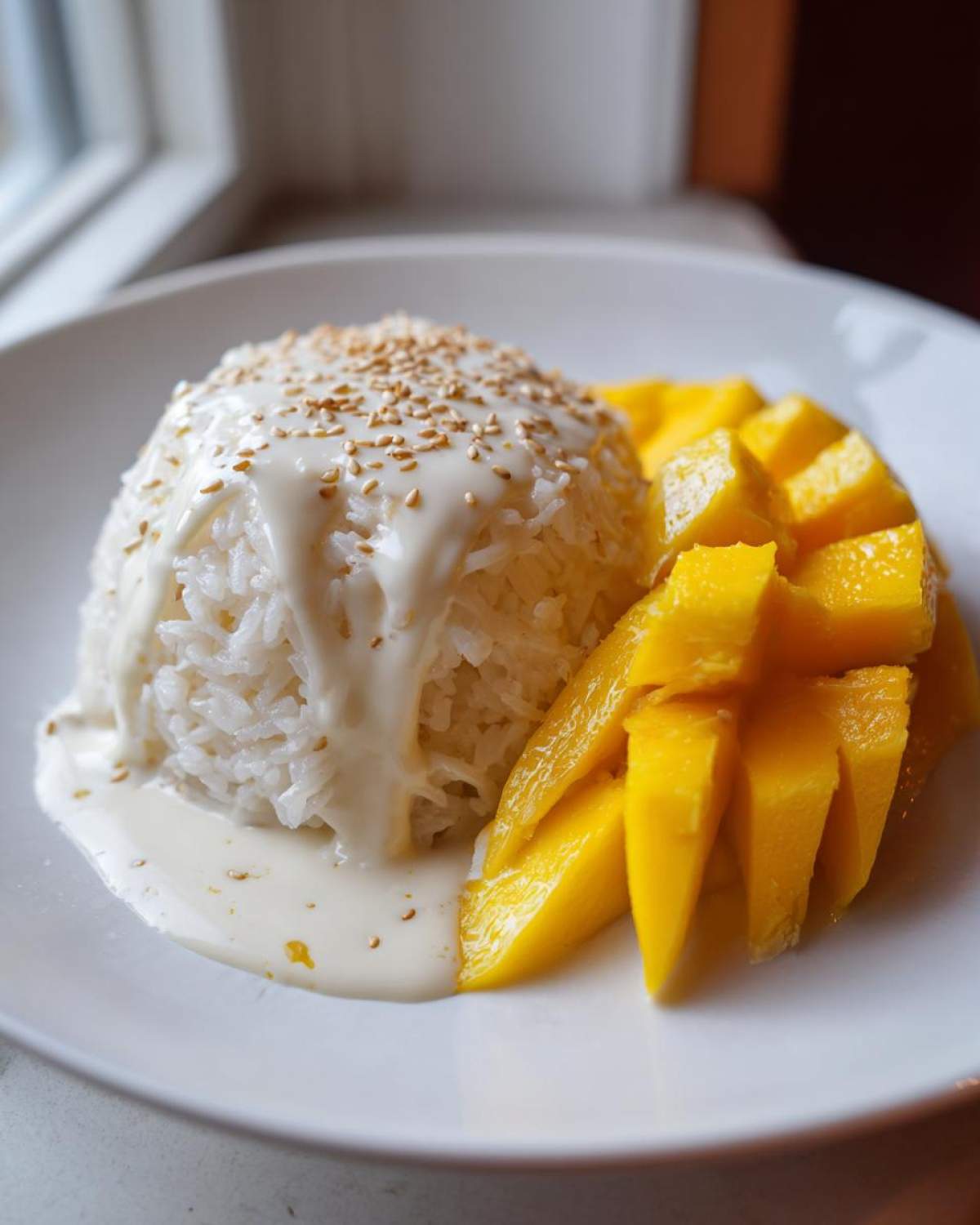
The final, glorious step is the drizzle! Take that warm, slightly salty coconut cream topping sauce and spoon it right over the rice. A little sprinkle of toasted sesame seeds finishes the entire presentation of your **Mango Sticky Rice with Coconut**. Serve it immediately while the rice is warm and the mango is perfectly room temperature!
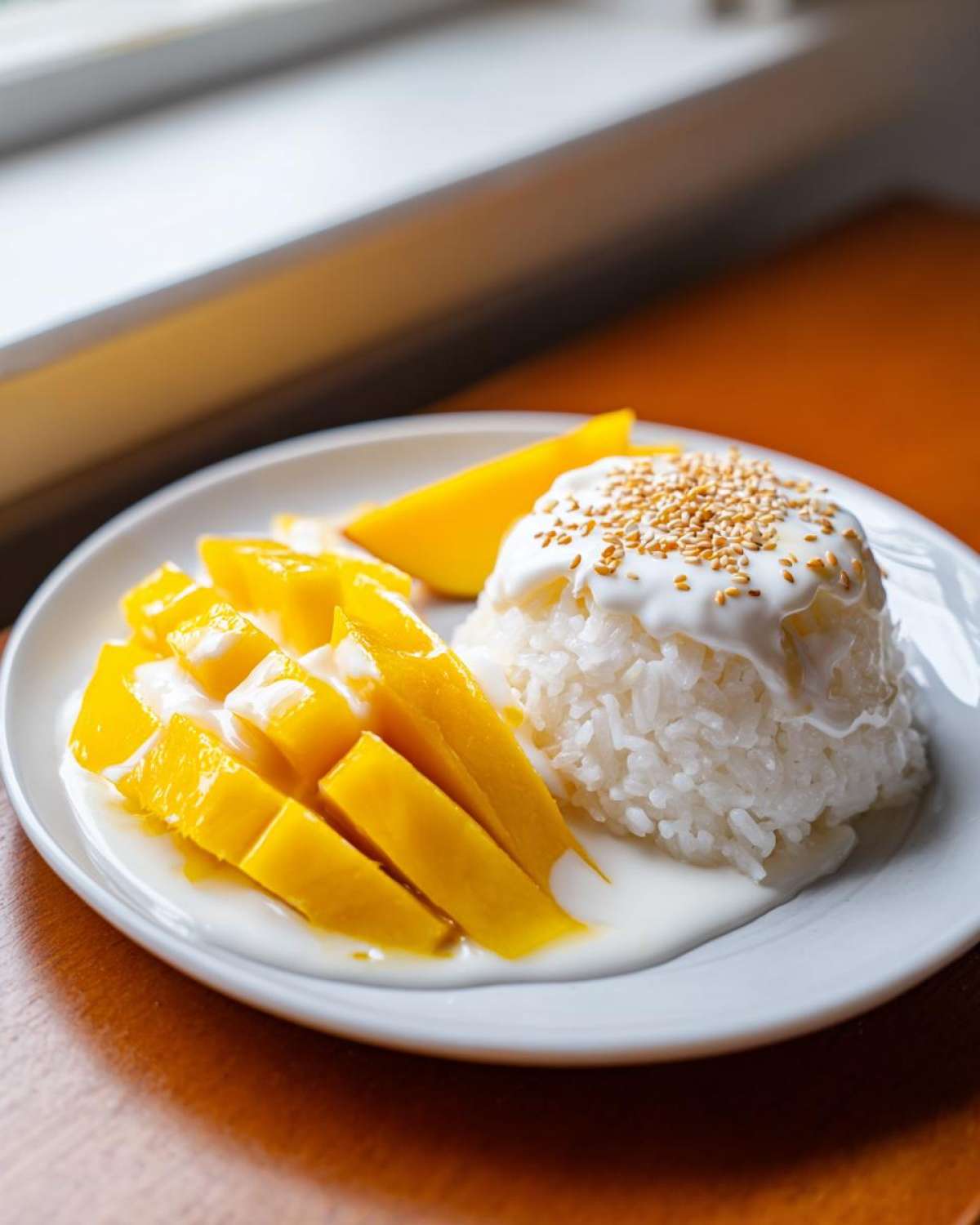
Selecting the Best Mango for Sticky Rice
Honestly, I could talk about mangoes all day! If you’re making a beautiful **Glutinous Rice Dessert** like this, you can’t just grab the first yellow thing you see in the produce section. The mango is half the star show here, right next to that gorgeous sweet sticky rice!
When I’m shopping for this, I always look for a couple of main things. If you can find Nam Dok Mai mangoes, grab them immediately because they are the gold standard in Thailand—they are small, incredibly sweet, and have almost no stringiness. But don’t worry if you can’t find those specialty ones!
Your next best bet is usually the Ataulfo mango, sometimes called the honey mango. They are that perfect teardrop shape. When you pick one up, you need to use your nose first. It should smell sweet and fragrant near the stem end. If it smells like nothing, well, it’s going to taste like nothing, no matter how yellow it looks!
Texture is crucial for the ‘give’. You want the mango to yield just a tiny bit when you press your thumb gently into the skin. If it’s rock hard, it’s raw and won’t give you that buttery slice we need when we assemble the final plate. If it’s super soft and mushy, it’s overripe and might just fall apart when you try to cut it. That light, gentle give tells you the sugars are perfectly developed for pairing with the **Sweet Coconut Milk Recipe**!

A truly ripe mango means you get rich sweetness without those annoying, stringy fibers getting stuck in your teeth while you’re trying to enjoy that perfect mouthful of **Traditional Thai Sweets**.
Storing Leftovers of Your Mango Sticky Rice with Coconut
Look, I doubt you’ll have many leftovers from this divine **Mango Sticky Rice with Coconut**, but if you do, storing it properly keeps it tasting like it was just made! You want to keep the rice and the mango separate if at all possible. Refrigerating mango often makes it mushy and dulls the flavor, which is a tragedy.
Store the cooked, sauced sticky rice in an airtight container. I know this sounds strange, but I actually prefer eating the leftover rice cold straight from the fridge sometimes—it gets firmer and chewier, which some folks love! If you want to warm it up, just use the microwave for about 20 seconds; add a tiny splash of water or milk before heating to help re-moisten it.
Keep the salty coconut topping sauce separate in a little jar. It keeps wonderfully. If you want to try another easy Vegan Coconut Dessert variation later, this sauce base is great drizzled over sliced fruit!
Frequently Asked Questions About Khao Niao Mamuang Recipe
I get so many great questions about **How to make Mango Sticky Rice** after people try it! It’s totally understandable; there are a few quirks to handling glutinous rice that you might not be used to. Here are some of the most common things people ask me when tackling this fantastic **Thai Dessert Recipe**.
If you’re looking for other lightning-fast sweet treats, I’ve got some super simple easy Thai dessert ideas on my site, too!
Can I use Jasmine rice instead of glutinous rice?
Oh, sweetie, I really wouldn’t recommend it if you want the real deal experience! Regular Jasmine rice—the kind grown in Thailand—is lovely, but it’s a completely different grain structure. It cooks up light and fluffy, which is great for savory meals. But for this **Glutinous Rice Dessert**, you absolutely need that sticky, chewy texture that only glutinous rice (also called sweet rice) can provide. Using regular rice will result in a much looser, more porridge-like texture, not the firm, slightly resistant bite that pairs perfectly with the sweet mango and salty cream.
What is the cultural significance of this Thai Dessert Recipe?
This dish, known as Khao Niao Mamuang, isn’t just dessert; it’s practically sunshine in a bowl! Culturally, it’s a beloved street food staple, especially when mangoes are perfectly in season. It represents celebrating the freshest, sweetest local produce. You’ll see vendors selling it everywhere when the mangoes are ripe and shining. It’s incredibly communal and perfectly balanced, making it a delightful pick-me-up anytime, day or night. It’s one of the most famous **Traditional Thai Sweets** for a reason!
My rice turned out a little hard after resting—what went wrong?
That usually points back to the soaking time or the initial steam! If the rice was hard, it means the grains didn’t get enough pre-hydration. You must soak it long enough so the interior is softened before steaming. Also, make sure you pour that warm coconut mixture over the rice *immediately* after steaming—that liquid absorption phase is what finishes the cooking process and turns those hard grains into tender, perfect **Mango Sticky Rice with Coconut**.
Do I have to use full-fat coconut milk?
Yes, yes, and absolutely yes! This is an area where you really want to use the best quality, full-fat canned coconut milk you can find, especially for the topping sauce. Low-fat versions often don’t separate well, meaning you won’t get that super-thick, luxurious cream that sits beautifully on top of the finished dish. Remember, the richer the fat content, the better the sauce clings to the **Sweet Sticky Rice**!
Sharing Your Homemade Mango Sticky Rice with Coconut
Okay, that’s it! You’ve done the hard work, you’ve mastered the soak, balanced the salt, and assembled a plate of true tropical perfection. Now the best part: eating it! But before you grab that spoon, I truly want to hear how this turned out for you.
Did you find the perfect Ataulfo mangoes? Did that slightly salty drizzle elevate your experience of the **Mango Sticky Rice with Coconut**? Seriously, let me know in the comments below!
If you were super proud of your tropical creation—and I know you will be—please leave a rating for this authentic **Khao Niao Mamuang Recipe**. Seeing your photos shared online truly makes my day; it lets me know this recipe is making it out of my kitchen and into yours!
If you’re already craving more tropical deliciousness, you might want to check out my guide on making a homemade mango dessert which has some fun, quicker ideas for when you don’t have time for the full soak!
I’m so excited for you to enjoy every single creamy, sweet, perfectly chewy bite of your **Mango Sticky Rice with Coconut**!
PrintAuthentic Thai Mango Sticky Rice (Khao Niao Mamuang)
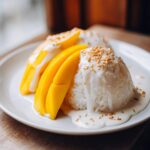
Follow these steps to prepare traditional Thai Mango Sticky Rice, featuring perfectly cooked glutinous rice and a balanced sweet and salty coconut cream sauce.
- Prep Time: 4 hours 30 min (includes soaking)
- Cook Time: 45 min
- Total Time: 5 hours 15 min
- Yield: 4 servings
- Category: Dessert
- Method: Steaming
- Cuisine: Thai
- Diet: Vegetarian
Ingredients
- 2 cups glutinous rice (sweet rice)
- 1 1/2 cups water (for cooking rice)
- 1 can (13.5 oz) full-fat coconut milk, divided
- 1/2 cup granulated sugar
- 1/2 teaspoon salt
- 1/4 cup extra coconut cream (from the top of a chilled can)
- 1 tablespoon sugar (for topping sauce)
- 1/4 teaspoon salt (for topping sauce)
- 2 ripe, sweet mangoes (Nam Dok Mai or Ataulfo recommended)
- 1 tablespoon toasted sesame seeds (for garnish)
Instructions
- Rinse the glutinous rice thoroughly under cold water until the water runs clear. Soak the rice in water for at least 4 hours, or preferably overnight. Drain the soaked rice completely.
- Place the drained rice and 1 1/2 cups of fresh water in a steamer basket lined with cheesecloth or parchment paper. Steam the rice over boiling water for 25 to 30 minutes, or until the rice is tender and chewy.
- While the rice steams, prepare the sweet coconut milk base. In a small saucepan, combine 1 cup of the coconut milk, 1/2 cup sugar, and 1/2 teaspoon salt. Heat over medium-low heat, stirring until the sugar and salt dissolve completely. Do not boil.
- Once the rice is cooked, transfer the hot rice to a heatproof bowl. Pour the warm sweet coconut milk mixture over the rice. Stir gently to combine. Cover the bowl tightly with plastic wrap or a lid and let it sit for at least 30 minutes to allow the rice to absorb the liquid fully.
- Prepare the topping sauce. In a separate small saucepan, gently heat the reserved 1/4 cup of thick coconut cream with 1 tablespoon sugar and 1/4 teaspoon salt until dissolved. Keep this sauce warm but do not boil it.
- Peel and slice the ripe mangoes.
- To serve, spoon a portion of the sticky rice onto a plate. Arrange the mango slices next to the rice. Drizzle the warm, slightly salty coconut cream sauce over the rice. Garnish with toasted sesame seeds.
Notes
- For the best texture, use high-quality glutinous rice. Soaking time is crucial for even cooking.
- Select mangoes that are fragrant and yield slightly to gentle pressure; avoid hard or overly mushy fruit.
- The salt in the coconut sauce balances the sweetness, creating the traditional flavor profile.
Nutrition
- Serving Size: 1 serving
- Calories: 450
- Sugar: 35
- Sodium: 250
- Fat: 20
- Saturated Fat: 18
- Unsaturated Fat: 2
- Trans Fat: 0
- Carbohydrates: 65
- Fiber: 2
- Protein: 5
- Cholesterol: 5