

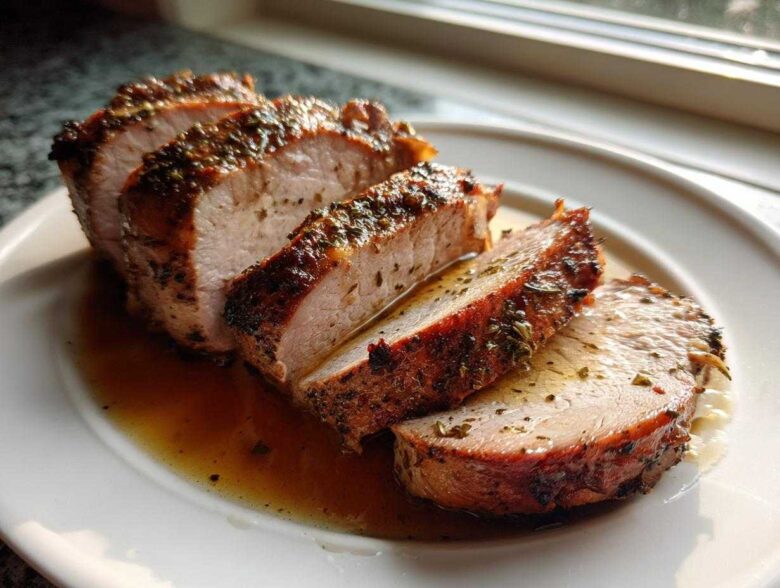
If there is one cut of meat that makes me pause and get nervous before putting it in the oven, it’s a beautiful, lean pork loin roast. You see those great big cuts at the store, and you just know they can turn out dry and sad if you miss the mark by five minutes! But don’t you worry one bit. Amina always reminds me that perfect meat is all about trusting the process, not guessing. That’s why I developed this absolute winner for cooking a truly juicy pork loin. It’s simple enough for when you need an easy pork dinner on a Tuesday, but impressive enough for a proper sunday roast recipe. We’re locking in those juices with a two-step temperature approach. You’re going to love how tender this comes out! If you’re looking for more family food stories, check out what we’re up to over on our main blog page.
Why This Juicy Pork Loin Roast is Your New Weeknight Dinner Favorite
I know what you’re thinking: a roast feels like too much work after a long day. But trust me, this recipe is pure magic because it cuts out all the fussy steps. We focus only on what matters to give you reliable results every single time you make this oven roasted pork. It’s genuinely my favorite way to get a great easy pork dinner on the table!
- It requires almost zero active cooking time—mostly just waiting for the oven to do its work.
- The herbs we use are right in your spice cabinet. No exotic shopping needed!
- It reliably delivers that deeply satisfying, tender texture we all chase when cooking pork.
Simple Seasoning for Maximum Flavor
Amina always jokes that my favorite spice mix is the one I can whip up in sixty seconds using what’s already out. That’s what this is! Salt, pepper, garlic, onion, and a little thyme. That’s it. Mixing those pantry staples is faster than opening a seasoning packet, and it tastes so much cleaner and brighter.
Perfect Temperature Control for a Juicy Pork Loin
Here’s the real secret to avoiding dryness: the thermometer. You need to aim for that magic 145 degrees Fahrenheit for the pork loin internal temp, and then we stop cooking. Pulling it out right when it hits that number guarantees the most juicy pork loin possible, even before it rests.
Ingredients Needed for Your Perfect Pork Loin Roast
Okay, this list is so short, you might think I forgot something! Nope, that’s the beauty of this simple pork loin roast preparation. We are only using ingredients guaranteed to give you that beautiful, crusty exterior without fighting through layers of complicated flavors.
- 3 lb pork loin roast, bone-out
- 2 tablespoons olive oil
- 1 tablespoon kosher salt
- 1 teaspoon black pepper
- 1 teaspoon garlic powder
- 1 teaspoon onion powder
- 1 teaspoon dried thyme
See? Pantry staples! If you’ve got these basics, you are ready to go.
Essential Equipment for Your Oven Roasted Pork
When you keep the ingredients simple, you have to rely on the right tools to get the job done well. Cooking this oven roasted pork is straightforward, but skipping the right equipment is how you end up with a sad, stuck roast! We don’t want stuck meat or meat that’s overcooked because we couldn’t check the temperature right.
For this recipe to turn out as reliably delicious as it does in David’s kitchen, you absolutely need these three things:
- A sturdy roasting pan or a rimmed baking sheet. If you use a baking sheet, make sure it has a slight lip so that flavorful pan drippings don’t run all over the bottom of your oven—that’s a clean-up Amina hates!
- Paper towels. And lots of them! We need that pork loin surface completely dry for a proper crust to form.
- A reliable instant-read digital meat thermometer. I cannot stress this enough! This is the single most important piece of gear for getting that perfect pork loin internal temp of 145°F. Guessing by sight just doesn’t work for lean cuts like this one.
That’s truly it! No fancy rotisseries or smoke guns needed for this straightforward, delicious cut of meat.
Step-by-Step Guide to Making a Tender Pork Loin Roast
When I first started cooking larger roasts, I definitely worried about uniformity—I’d end up with one end cooked perfectly and the other looking pale and worried! But this two-stage method is so reliable. You get that gorgeous sear first, which builds flavor instantly, and then a gentle, consistent cook to finish. It’s the key to making this a foolproof oven roasted pork whether it’s Tuesday or Sunday. If you want a great side dish to go with this, maybe try out Amina’s easy classic apple cobbler recipe for dessert!
Prep Work: Seasoning the Pork Loin Roast
First thing: grab those paper towels. You need to get this roast completely dry. I mean bone-dry! Moisture steams, and we want a crust, not steam. Next, quickly mix up all those herbs and salts in a tiny bowl. Don’t skip the mixing step—we want the salt and the seasoning powders evenly distributed. Rub the olive oil all over the pork loin roast first; this is the glue. Then, sprinkle that spice mixture evenly and press it firmly all over so it adheres really well. Make sure you get the sides and ends covered, too!
The Two-Temperature Roasting Method for Pork Loin Roast
We start hot! Get that oven cranked to 400 degrees Fahrenheit for the first 15 minutes. This blast of heat is what gives you that lovely browned exterior we love. After that time is up, you have to resist the urge to peek too much and immediately dial the heat down to 350 degrees Fahrenheit. Now, this is where your meat thermometer becomes your best friend. Keep checking the thickest part of the roast—don’t poke it a hundred times, just check it every ten minutes or so—until that needle lands right on 145 degrees Fahrenheit. That’s the golden number for our pork loin internal temp.
The Non-Negotiable Rest for a Juicy Pork Loin
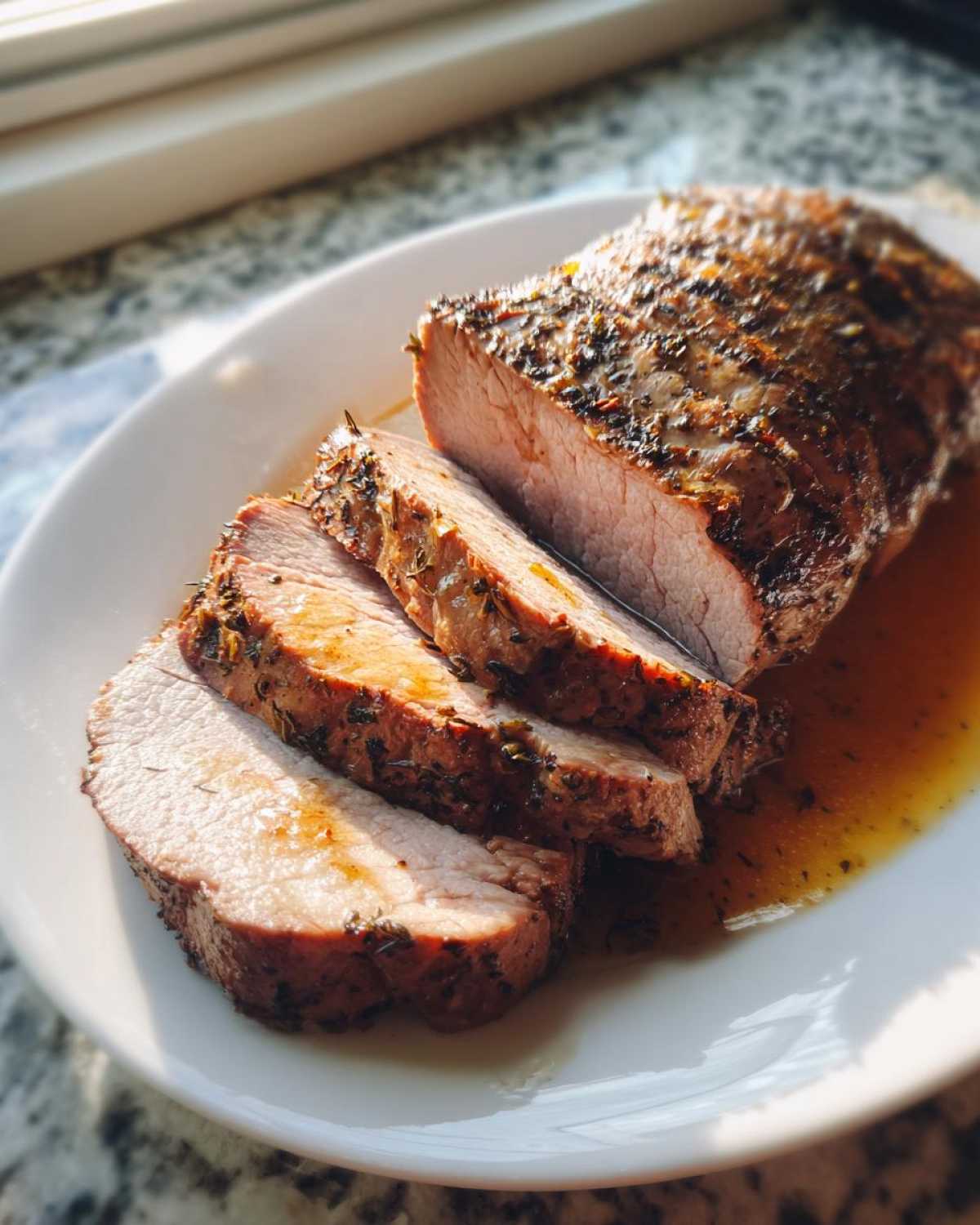
I learned this the hard way when I was trying to impress Amina early on; I carved it straight out of the oven, and all the beautiful juices ran out onto the board, making a sad little puddle. Don’t do that! When the roast hits 145°F, take it out, move it to a clean cutting board, and tent it loosely with foil. You must, absolutely must, let it rest for a minimum of 10 to 15 minutes. This resting period lets the muscle fibers relax and redistribute those vital juices back into the meat. This is the ultimate secret weapon for a genuinely juicy pork loin.
Tips for Success to Guarantee Your Pork Loin Roast is Perfect
Look, I want you to succeed on your first try! Cooking this pork loin roast is so rewarding when it comes out tender and flavorful, but a few small habits make all the difference between a great dinner and a dry oopsie. Remember, this recipe is about consistency, and the meat thermometer is the anchor of that consistency. Check that temperature in a few different spots in the thickest part of the roast to make sure you aren’t pulling it early from one side while the other is still cold.
Now, let’s talk about resting again because I cannot overstate its importance. I remember one time thinking I could shave off five minutes of rest time before company arrived. Disaster! The juices just exploded everywhere when I sliced it. It still tasted okay, but it wasn’t that melt-in-your-mouth tenderness we expect. Take the extra ten minutes; go whip up a quick dessert like this easy homemade chocolate cake recipe while the pork rests. That small act of patience guarantees you get that incredibly juicy pork loin every single time.
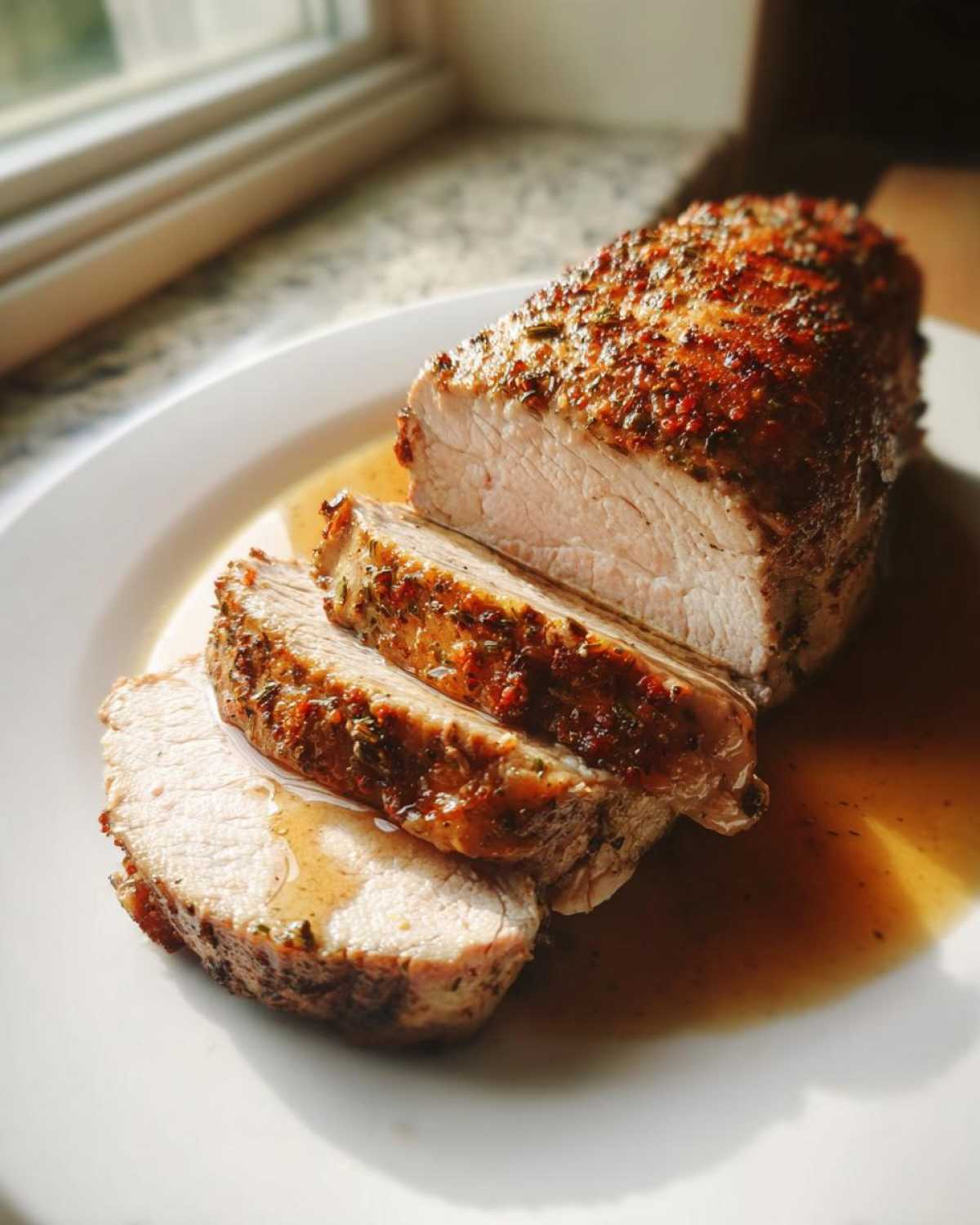
Also, bone-out roasts sometimes cook unevenly toward the center. If yours seems to be cooking very fast on the outside, just loosely tent it with foil when you reduce the oven temperature to 350°F. It shields the outside while the inside catches up!
Creating a Simple Pan Sauce Gravy for Your Pork Loin Roast
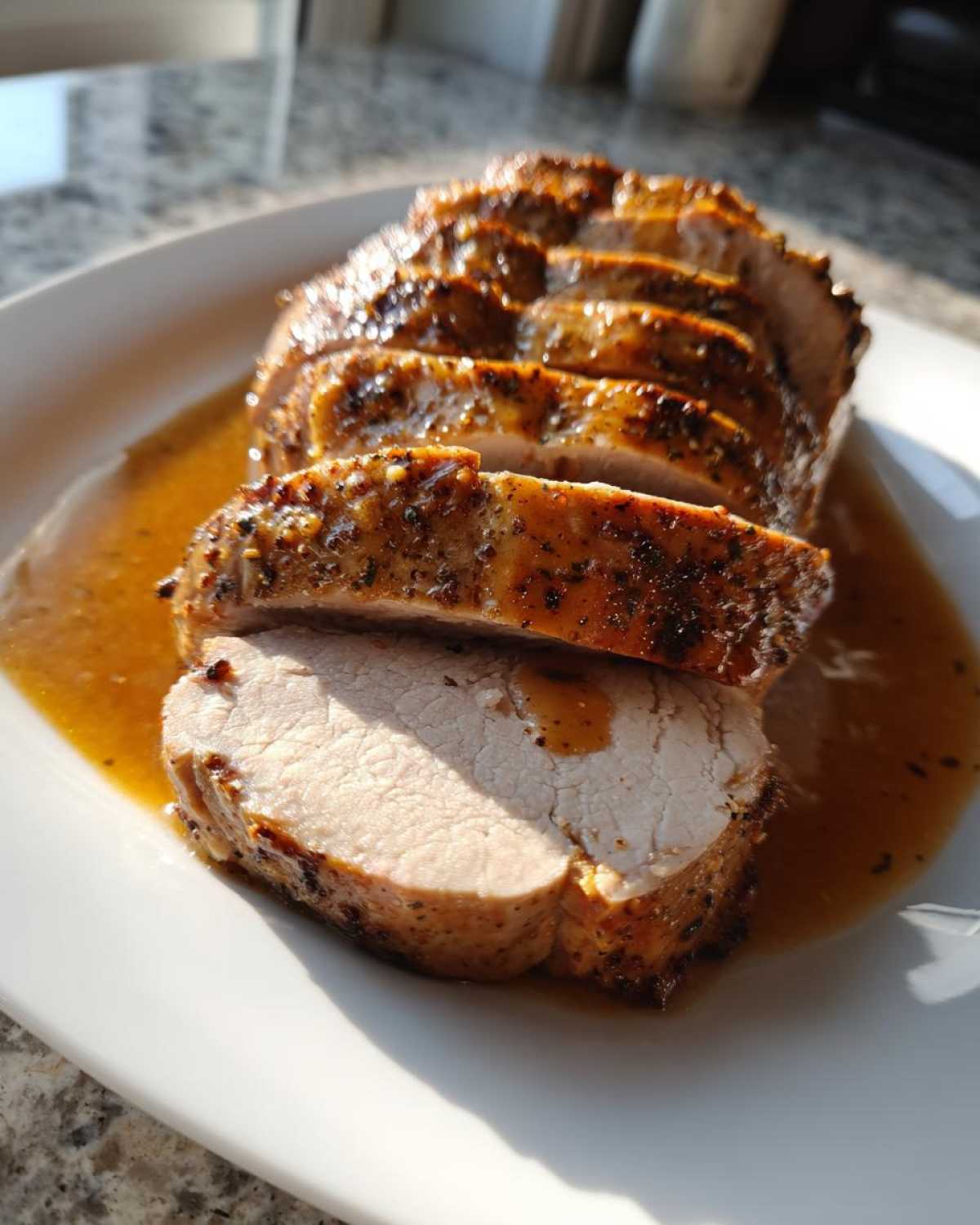
You’ve done the hard work! You’ve seasoned, roasted, and rested your beautiful pork loin roast. Now, we absolutely cannot let those gorgeous, flavorful drippings sitting in your roasting pan go to waste. That liquid gold is screaming to become a quick, velvety pan sauce gravy! This step takes maybe five minutes, but it completely elevates the meal from a good roast to a spectacular sunday roast recipe centerpiece.
Honestly, Amina laughs because my standard recipe for a quick sauce is often just improvisation based on what else we’re eating, but here is the bedrock method that never fails. You don’t need a complicated roux or hours of simmering; we’re making gravy right now!
First, carefully pour off any excess fat from your roasting pan, leaving behind those browned bits—that’s flavor country! Scrape up everything stuck to the bottom of the pan with a wooden spoon or spatula. Transfer those drippings into a small saucepan. If you’re ever feeling fancy later on, you can check out Amina’s garlic aioli easy 5-minute homemade recipe, but for gravy, simplicity wins.
Next, this is the little trick for instant thickness: make a slurry. Take one tablespoon of cornstarch and mix it thoroughly with two tablespoons of cold water in a tiny little dish until there are absolutely zero lumps. Whisk this slurry slowly into the simmering drippings in the saucepan over medium heat. Keep whisking gently! It thickens up almost immediately as it heats. If it looks too thick, splash in a tiny bit more water or broth until it coats the back of a spoon perfectly. Taste it for salt—you might not need any, but always check! Pour that luscious pan sauce gravy right over your sliced pork loin roast and enjoy the payoff!
Serving Suggestions for Your Easy Pork Dinner
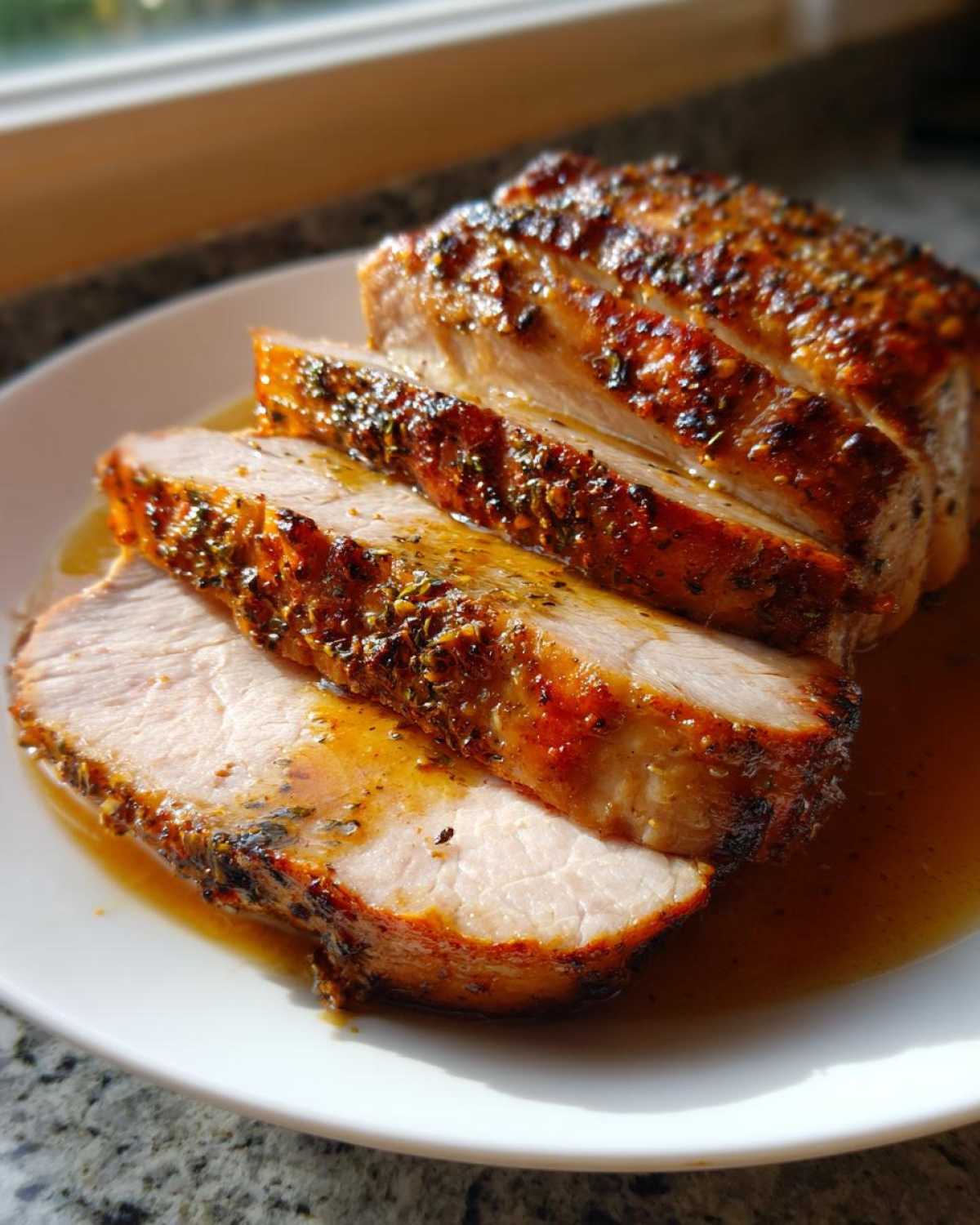
We’ve got this gorgeous, tender, and juicy pork loin roast—what do we serve next to it? When I plan this out as an easy pork dinner for a busy weeknight, I keep the sides just as simple as the main event. The pork is so lean and flavorful that it honestly doesn’t need heavy sauces or complicated accompaniments!
But when we turn this into a full-blown sunday roast recipe, we pull out a few more stops. The flavors in our seasoning—garlic, thyme, onion—pair beautifully with earthy vegetables. You want things that can either roast alongside the pork (if you have the oven space) or be made quickly while the meat is resting.
Here are a couple of my tried-and-true favorites that make this entire meal feel complete:
- Roasted Root Vegetables: Toss carrots, parsnips, and maybe even some sweet potatoes with olive oil, salt, and pepper. You can throw these into the oven right after you drop the temp down to 350°F for the pork. They cook right alongside everything else!
- Garlicky Green Beans: A quick sauté of fresh green beans with a little butter and a heavy dose of fresh minced garlic is always a winner. It adds a necessary pop of freshness and color to the plate next to that rich, savory pork.
- Creamy Potatoes: If you’re going all out for Sunday dinner, you have to have potatoes. While some people go for mashed, I honestly love making a big, comforting casserole. Amina makes this incredible baked potato casserole recipe that is always the first thing to disappear from the table. It’s pure indulgence!
No matter what you choose, remember that the success of an easy pork dinner is making sure the side dish complements the star without stealing its thunder. Keep it simple, keep it fresh, and enjoy that perfect slice of roast!
Storage and Reheating Instructions for Leftover Pork Loin Roast
You made a beautiful, perfect, juicy pork loin roast, and now you have leftovers! That’s the best kind of problem to have, right? But the way you handle leftovers determines if tomorrow’s lunch is just as good as tonight’s dinner. Amina and I have perfected the storage game because we hate wasting any of that good work we put into getting the pork loin internal temp just right in the first place.
When it comes to keeping this meat tender, the key is moisture retention. Don’t just toss it in a container; we need to protect it from the dry air inside your fridge!
Here is my quick guide for making sure those slices are fantastic the next day:
- Cool Down First: After the meat has rested and you’ve sliced what you needed, let the remaining roast cool down on the cutting board for maybe 30 minutes before trying to store it. Putting hot meat directly into a sealed container speeds up bacteria growth, and we definitely don’t want that on our perfectly cooked roast!
- The Wrapping Secret: Don’t just throw the slices into an airtight container. To maintain moisture, wrap the slices tightly in plastic wrap first, creating a good seal around the piece. Then, place those wrapped slices inside a heavy-duty zip-top bag or an airtight container. This double layer really locks the juices in. It keeps well for 3 to 4 days in the fridge.
Now, for reheating—this is where people often go wrong, turning that fantastic oven roasted pork into shoe leather. You cannot just microwave dry, sliced pork; everything dries out!
Reheating for Maximum Tenderness
To bring that pork loin back to life and keep it tasting like the easy pork dinner you just made, you need to add moisture back in via steam or liquid when reheating. Here are the two best methods I use:
- Stovetop Simmer (My Favorite): Place your sliced pork in a skillet. Add a tablespoon of liquid for every two slices of pork. This liquid can be water, chicken broth, or even some of the leftover pan sauce gravy if you saved any! Heat gently over medium-low heat until the meat is just warmed through. Do not boil! Boiling will toughen the meat instantly. This keeps the slices incredibly tender.
- Microwave Gentle Warm: If you’re in a rush, place the slices in a microwave-safe dish. Add a teaspoon of broth or water directly onto the meat, cover the dish tightly with a microwave-safe lid or vented plastic wrap, and heat for 30-second bursts on 50% power. The steam trapped inside rescues the juices.
If you treat those leftovers right, they’ll taste fantastic the next day—maybe even better because the spices have had time to deepen overnight!
Frequently Asked Questions About Cooking a Pork Loin Roast
When I put a recipe out there, I always hope it answers most of the questions right in the steps, but sometimes you just need quick answers. Roasts can be intimidating, especially when you’re aiming for that perfect texture. Here are the things I get asked most often about turning out a tender pork loin roast!
What is the safe pork loin internal temp for this recipe?
This is the most important number you need to memorize! For a truly safe and juicy result, we are looking for an internal temperature of 145 degrees Fahrenheit. Remember what I mentioned earlier about resting? When you pull the roast out at 145°F, the temperature will continue to climb slightly—that’s called carryover cooking. It’s that perfect stage where the meat finishes cooking without drying out. If you wait until the thermometer reads higher than 145°F while it’s still in the oven, you’ve already gone too far, and it will be less tender!
Can I make this pork loin roast ahead of time?
Yes, you absolutely can set yourself up for an even faster easy pork dinner next time! You can cook the entire oven roasted pork following the recipe right up until the resting stage. Allow it to cool completely on the counter, then slice it and store the slices tightly wrapped as I described for leftovers. It reheats beautifully using low, moist heat on the stovetop. If you’re planning way ahead, you can even freeze cooked and sliced pork for best results within about three months. If you prefer to cook completely different meals ahead of time, sometimes Amina busts out her slow cooker cowboy soup recipe on a Sunday so we have lunches ready for the week!
How do I prevent my oven roasted pork from drying out?
If dryness is your main worry, focus on two things, and your meat will be beautifully moist! First, commit to the two-stage temperature method: the initial high blast at 400°F for the crust, followed by the gentle 350°F cook toward the target pork loin internal temp. Second, and this is non-negotiable, you must respect the resting time. That 10 to 15 minutes under foil is where the magic happens. The juices settle back into the muscle fibers instead of running all over your cutting board. Follow those two rules, and you will never have a dry oven roasted pork again!
Estimated Nutritional Data for This Pork Loin Roast
Now, before we wrap up this journey to the most juicy pork loin you’ve ever cooked, I need to throw in a little disclaimer about the numbers. Amina reminds me all the time that these figures are just estimates, right? We’re using rough averages for a 3-pound bone-out roast, and how much seasoning you use versus how much fat renders off will change things slightly. We always say you shouldn’t obsess over nutrition when cooking food this good, but it’s smart to have a general idea!
This data is based on a 4-ounce serving of the finished, cooked pork loin roast. You can check out our full guidelines on our disclaimer page if you need super high precision, but for knowing what you’re eating, this gives you a great snapshot:
- Serving Size: 4 oz cooked
- Calories: Roughly 300
- Protein: A whopping 40 grams! That’s why this is such a satisfying sunday roast recipe.
- Fat: Around 14 grams total (with about 5 grams being saturated fat). Remember, a lot of the pork fat renders off during the cooking process, especially with that high-temp blast we start with!
- Carbohydrates and Sugar: Very low here—only about 1 gram of each. This recipe is naturally low-carb, focusing on the flavor of the meat and herbs.
- Sodium: Roughly 450mg. This is mostly coming from the dedicated tablespoon of kosher salt we use in the rub to help form that incredible crust.
See? Lean, packed with protein, and perfect for a satisfying, honest meal. It’s a great centerpiece for any easy pork dinner!
Share Your Experience Making This Pork Loin Roast
Now, I’m genuinely curious! Did you try this technique? Did you finally achieve that perfect juicy pork loin you’ve been dreaming about? Please hop down to the comments below and tell me how it went. Did you use the pan sauce gravy, or did you pair it with something else? Tell me the pork loin roast turned out spectacular! Amina and I love seeing your creations on social media—tag us so we can cheer you on. We’re always here to cheer for flavorful food!
PrintJuicy Oven Roasted Pork Loin Roast
Learn how to cook a tender, juicy pork loin roast in the oven with simple ingredients. This recipe includes guidance for perfect internal temperature and resting for easy weeknight dinners or a Sunday roast.
- Prep Time: 10 min
- Cook Time: 75 min
- Total Time: 85 min
- Yield: 6 servings
- Category: Dinner
- Method: Oven Roasting
- Cuisine: American
- Diet: Low Fat
Ingredients
- 3 lb pork loin roast, bone-out
- 2 tablespoons olive oil
- 1 tablespoon kosher salt
- 1 teaspoon black pepper
- 1 teaspoon garlic powder
- 1 teaspoon onion powder
- 1 teaspoon dried thyme
Instructions
- Preheat your oven to 400 degrees Fahrenheit.
- Pat the pork loin roast completely dry using paper towels. This helps create a nice crust.
- In a small bowl, mix together the kosher salt, black pepper, garlic powder, onion powder, and dried thyme.
- Rub the olive oil all over the pork loin roast.
- Sprinkle the spice mixture evenly over the entire surface of the roast, pressing gently so the seasoning sticks.
- Place the seasoned pork loin roast in a roasting pan or on a rimmed baking sheet.
- Roast at 400 degrees Fahrenheit for 15 minutes.
- Reduce the oven temperature to 350 degrees Fahrenheit. Continue roasting until the internal temperature reaches 145 degrees Fahrenheit on a meat thermometer inserted into the thickest part of the roast. This usually takes about 15 to 20 minutes per pound.
- Remove the pork loin roast from the oven when it hits 145 degrees Fahrenheit.
- Transfer the roast to a cutting board and tent it loosely with foil. Let the pork rest for at least 10 to 15 minutes before slicing. This resting period is key for a juicy pork loin.
- Slice the roast against the grain into thick pieces.
- For a simple pan sauce gravy, pour any drippings from the roasting pan into a small saucepan. Bring to a simmer over medium heat, whisking in a tablespoon of cornstarch mixed with two tablespoons of cold water until thickened.
Notes
- For the juiciest result, use a meat thermometer to check the pork loin internal temp; 145 degrees Fahrenheit is the target.
- If you skip resting, the juices will run out when you slice, leaving you with dry meat.
- You can substitute the herbs with your favorite blend, but keep the salt and pepper ratio consistent.
Nutrition
- Serving Size: 4 oz cooked
- Calories: 300
- Sugar: 1
- Sodium: 450
- Fat: 14
- Saturated Fat: 5
- Unsaturated Fat: 9
- Trans Fat: 0
- Carbohydrates: 1
- Fiber: 0
- Protein: 40
- Cholesterol: 100