

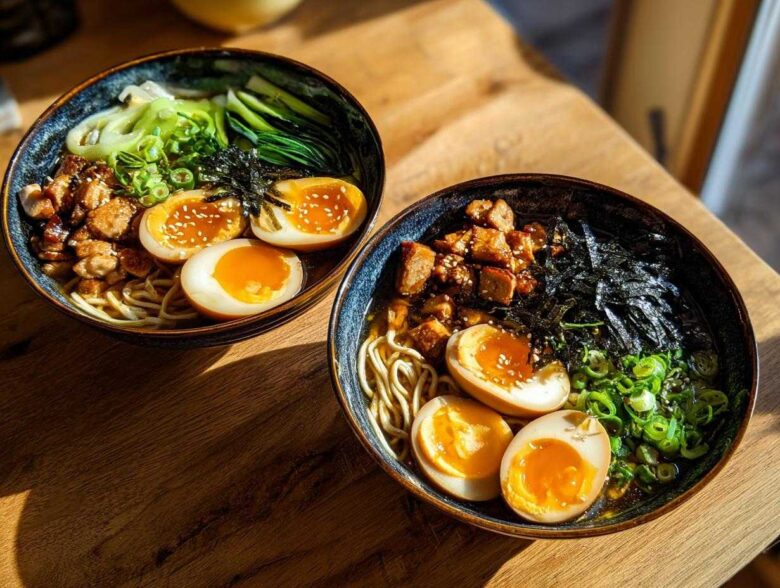
You know that feeling, right? That deep, soul-satisfying craving when only a steaming, glorious bowl of real ramen will do? Store-bought packets just don’t cut it when that craving hits, especially when you want that perfect blend of spicy sizzle and deep, savory warmth. Well, stop dreaming, because I’ve finally cracked the code. This is it: my absolute favorite Spicy Miso Ramen with Soft-Boiled Eggs. We’re talking about a broth so rich and complex it tastes like I spent three days working on it, and those jammy, marinated eggs? Chef’s kiss! Trust me, getting that authentic, umami-packed flavor at home without spending hours sourcing every single secret ingredient is totally doable. I spent years tweaking my broth base, and what I came up with feels like a warm hug in a bowl! If you want even more kitchen inspiration while you wait for that broth to simmer, check out my main recipe index; I’m always adding new things.
You are going to love how we pull this together. Forget flimsy soup; this recipe gives you robust flavor and texture that stands up perfectly to those incredible, just-set ramen eggs. Let’s jump straight into what makes this version the real deal.
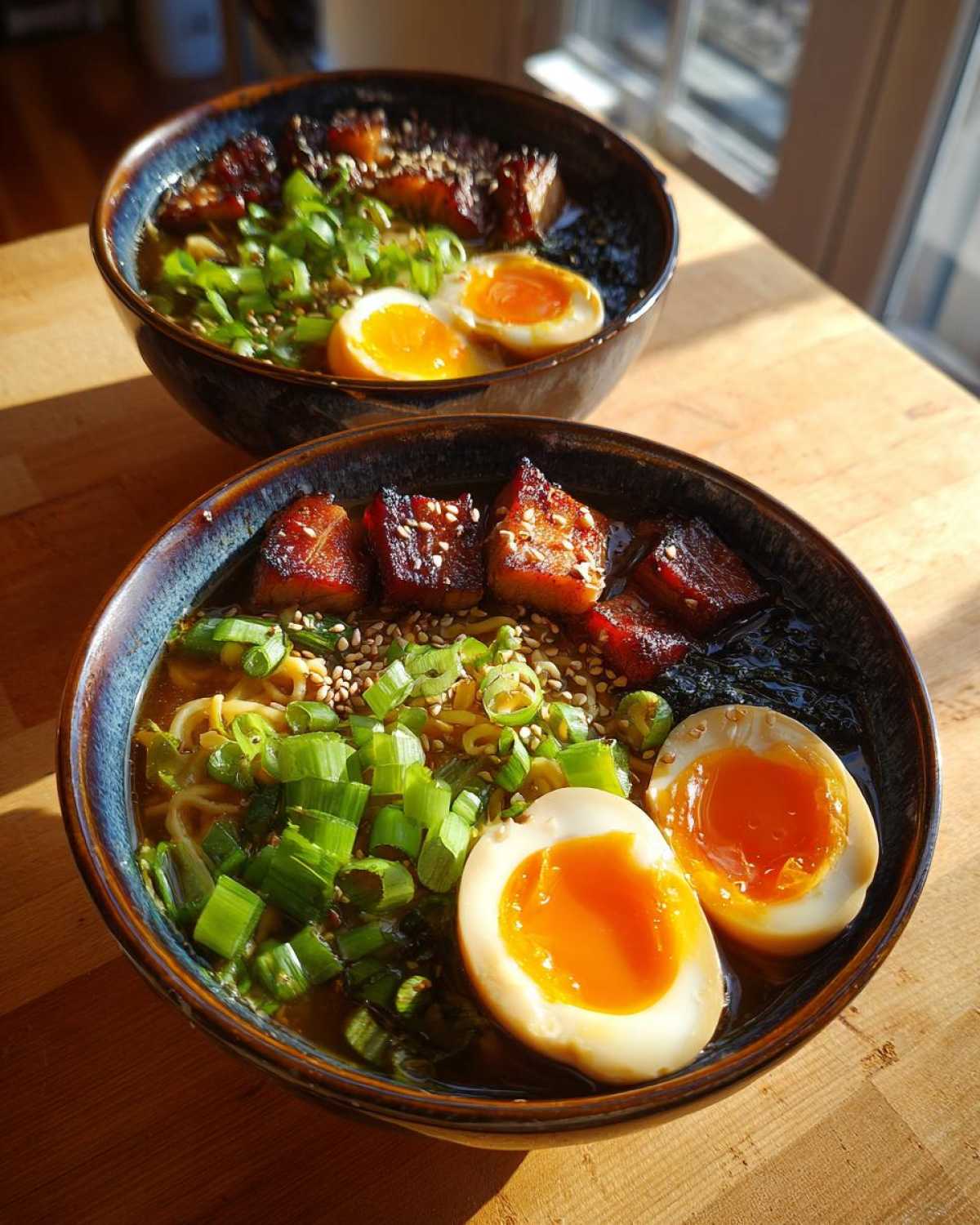
Why This Spicy Miso Ramen with Soft-Boiled Eggs Recipe Works
Honestly, I think this recipe has made it into my regular dinner rotation because it checks every single box without needing a mountain of effort. You get incredible depth, and you’re completely in control of the heat level!
- You nail that perfect jammy yolk every single time for your ramen eggs—no more rubbery whites!
- The flavor depth from combining two types of miso paste gives you that signature umami punch.
- It all comes together surprisingly fast, making it one of the best spicy ramen recipe options when you need dinner now.
- The assembly is fun, and it looks stunning when you garnish it right.
Essential Authentic Miso Ramen Ingredients
If you want this bowl of spicy miso ramen to taste like something special, you can’t just toss things in willy-nilly! The quality of your base ingredients really shines through, especially with the miso. I always keep a few specific things on hand for when a ramen craving strikes. Don’t worry if you can’t find everything, because I’ve put substitution notes coming up later, but for the best results, try to stick closely to this list. You’ll find all these components below, organized so you know exactly what goes into the eggs versus what builds that crazy good broth. Want more amazing recipes to try out after this? Take a peek at my guide for making a moist chocolate cake; it’s a total classic!
For the Soft Boiled Ramen Eggs (Ajitsuke Tamago)
This is the VIP section because the eggs make the whole dish feel restaurant-worthy! You absolutely need two large eggs—the size matters for timing those perfect centers. For the magic marinade that infuses them with flavor, grab your soy sauce, mirin, and a little bit of water to slightly dilute the punch.
- 2 large eggs
- 1/4 cup soy sauce
- 1/4 cup mirin
- 1/4 cup water (for the marinade)
For the Spicy Miso Tare and Rich and Flavorful Ramen Soup
Okay, this is where we build the heart of the flavor—the part that makes this a truly Rich and Flavorful Ramen Soup. You need both white and red miso pastes; they offer different depths of flavor that play so nicely together. For the heat, I’m using gochujang because I love its fermented tang, but I’ll tell you what else works in the notes section. Don’t skip the aromatics; fresh ginger and garlic are non-negotiable here!
- 4 cups chicken or vegetable stock
- 2 tablespoons white miso paste
- 1 tablespoon red miso paste
- 1 tablespoon gochujang or chili bean paste
- 1 teaspoon sesame oil
- 1 clove garlic, minced
- 1 teaspoon fresh ginger, grated
- 1/2 teaspoon sugar
Noodles and Spicy Ramen Toppings Ideas
For the noodles, always look for fresh ramen noodles if you can find them—they boil up much faster and have a better chew! If you are using dried, just watch them closely. Garnish time is the payoff; have fun with your spicy ramen toppings ideas, but these are what I use for the best presentation:
- 8 ounces fresh or dried ramen noodles
- 4 ounces cooked pork belly or ground pork (optional, but highly recommended!)
- 1/2 cup chopped green onions, for garnish
- 1 sheet nori, cut into strips, for garnish
- 1 teaspoon toasted sesame seeds, for garnish
Step-by-Step: How to Make Spicy Miso Ramen with Soft-Boiled Eggs
This is where the magic happens! I want you to feel confident building these amazing layers of flavor for your Spicy Miso Ramen with Soft-Boiled Eggs. We have to start with the eggs because they need time to soak up all that salty, sweet goodness. Don’t rush this part; it pays off big time later!
Achieving the Perfect Soft Boiled Ramen Eggs Tutorial
For the absolute best result in this Soft boiled ramen eggs tutorial, precision is everything. Get a small pot of water boiling hard—I mean rolling boil, furious bubbles! Gently lower your eggs in and set a timer for exactly 6 minutes and 30 seconds. Right when that timer screams, scoop them out and plunge them *immediately* into a big bowl of ice water. This stops the cooking dead in its tracks so you get that beautiful, jammy yolk. Trust me, the ice bath is not optional! Once they’re totally cool, gently tap and peel them. Then, whisk your soy sauce, mirin, and that extra splash of water in a small container, drop the peeled eggs in, cover it, and let them chill for at least four hours, or even better, overnight. If you peel really gently, they come out smooth as silk!
Creating the Umami Packed Miso Broth Base
Next up, that incredible soup base. First, we’re making our own little flavor powerhouse—the tare. In a bowl, mix your white miso, red miso, gochujang (or paste of choice), that teaspoon of sesame oil, minced garlic, grated ginger, and sugar until it looks homogenous. Think of it as a thick, spicy, savory mud. Now, take your stock and bring it to a gentle simmer—not a rapid boil! Scoop out about half a cup of that hot stock and slowly whisk it into your miso paste mixture until it loosens up into a smooth slurry. This step is called tempering, and it stops those miso clumps! Pour that tempered tare back into the main pot of stock. Stir it all together and keep it warm. Remember this! Never let your broth boil hard after the miso goes in, or you’ll kill all that lovely flavor and aroma—we want an Umami packed miso broth, not flat soup!
Assembling Your Spicy Miso Ramen with Soft-Boiled Eggs
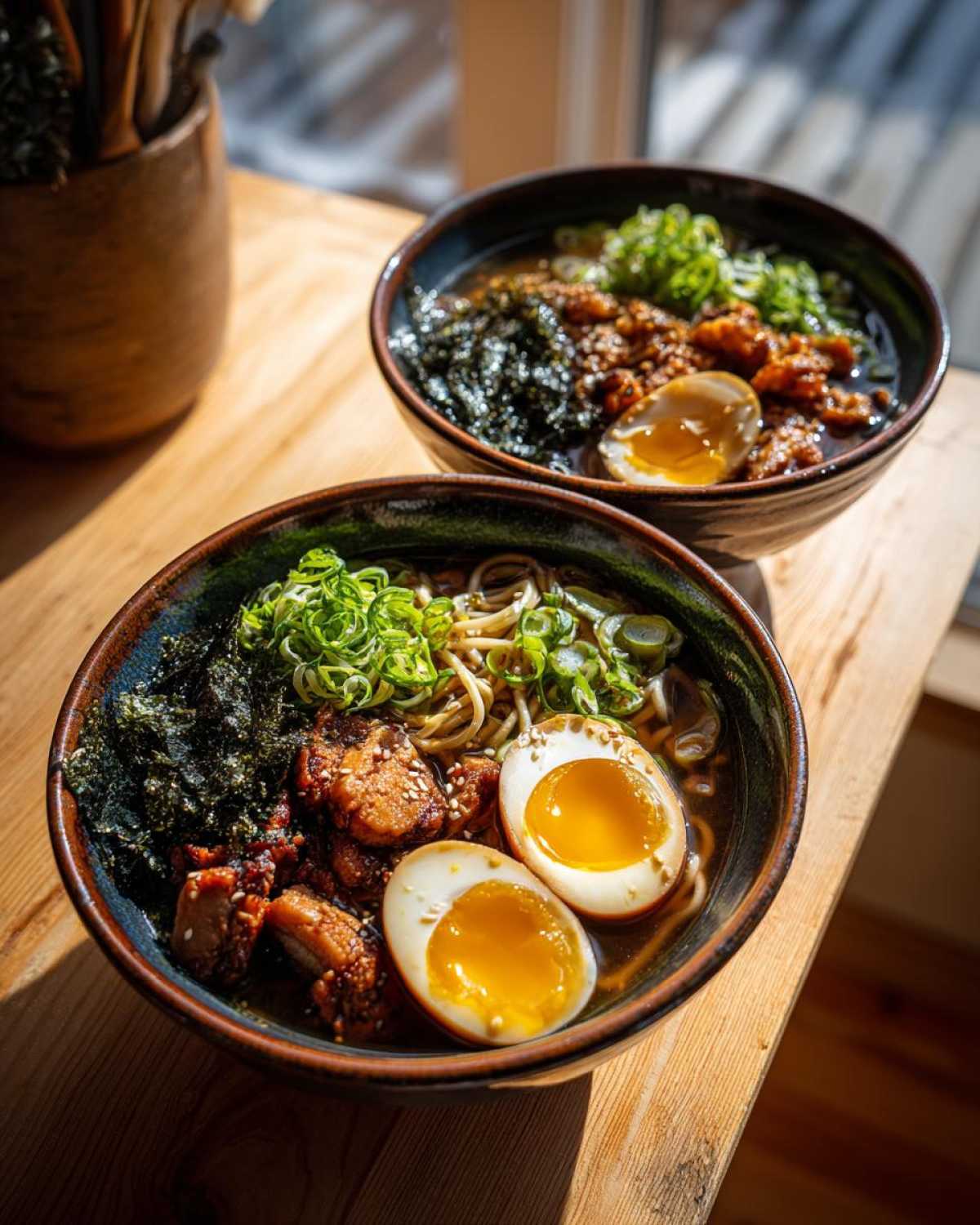
Time for the grand finale! Cook your noodles strictly according to the package directions until they are perfectly chewy, then drain them really well. Divide those hot noodles between your serving bowls. Now, ladle that fragrant, Spicy Miso Ramen with Soft-Boiled Eggs broth right over the top. If you cooked pork, spoon it over the noodles next. Finally, slice each marinated egg in half lengthwise, show off that beautiful yolk, and nestle the halves carefully on top of the ramen. Scatter those green onions, sprinkle on the sesame seeds, and tuck in a crisp strip of nori. It’s ready!
Tips for Success in How to Make Miso Ramen at Home
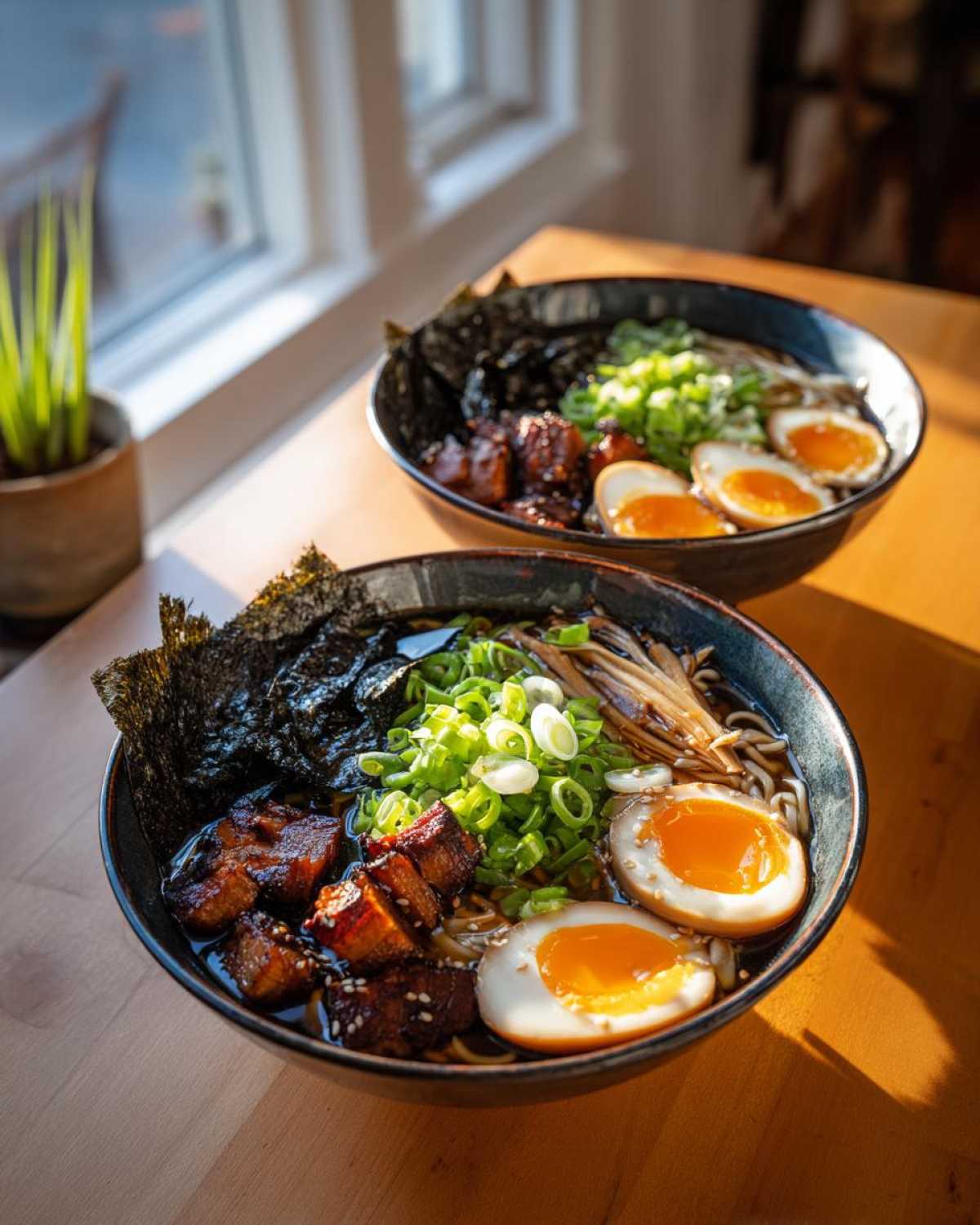
Getting that restaurant quality when learning how to make miso ramen at home really comes down to a few small details, but they make a massive difference in the final taste. The number one tip I can give you is about your miso paste. Seriously, shop around for the best quality you can find; the stuff next to the regular soup stock often just isn’t as vibrant. If you can find unpasteurized or fresh miso, grab it!
Also, think about your stock! You noticed I mentioned chicken or vegetable stock above, right? For next level richness, I try to use a 50/50 blend of good chicken stock and a homemade pork stock if I have some simmering. It makes the broth so much more luxurious. Finally, about that spice level: taste as you combine the miso and the gochujang. You can always add more chili paste, but if you accidentally dump too much in, you can’t take it out! Start slow, taste often, and you’ll nail your perfect heat level.
Ingredient Notes and Substitutions for Spicy Miso Ramen
I know grocery shopping can be tricky sometimes, especially when you’re looking for specific Japanese ingredients needed for truly good Spicy Miso Ramen with Soft-Boiled Eggs. Don’t panic if your local store is out of something! This kitchen is all about making things work with love, but sticking to the heart of the flavor profile.
Let’s talk about that heat source, the gochujang. That is my preferred chili paste for this recipe because it adds a lovely background sweetness, but if you can’t find it, no big deal. You can absolutely swap it out for chili garlic sauce—just taste it first, as it is usually saltier. Another fantastic alternative is doubanjiang, which is a fermented bean paste with chili; it’s really robust, so use about half of what the recipe calls for first.
For the stock, if a 50/50 meat stock isn’t an option, just stick with a high-quality store-bought chicken stock. It works great! If you are keeping this vegetarian, use a high-quality vegetable stock, and consider adding a teaspoon of dried shiitake mushroom powder to that stock while you heat it up. That little trick helps bring back some of that deep, meaty savoriness we lose when we skip the meat stock. It’s amazing what a little powder can do! It brings so much flavor to the overall soup, and I talk more about easy savory recipes like this one over on my beans and rice post!
And please, if you can only find one type of miso, just use that one! If you only find white miso, use all three tablespoons of that. If you only find dark red, use that, but maybe cut it down to two tablespoons total since it’s much stronger. You’ll still end up with a deeply satisfying bowl of spicy miso!
Serving Suggestions for Japanese Noodle Soup Spicy
I love how hearty this ramen bowl is all by itself, but you know what makes a meal truly complete? A little something on the side to act as a palate cleanser against all that richness and spice! Since our Japanese noodle soup spicy broth is so savory, you don’t want anything heavy to compete with it.
I usually keep things really simple. A small dish of quick refrigerator pickles, like thinly sliced cucumbers or carrots marinated in rice vinegar and a pinch of sugar, is fantastic. They give you that awesome, cold crunch that cuts right through the heat. If you need another quick side idea, or maybe something sweet for after, check out my recipe for soft, chewy classic peanut butter cookies—perfect contrast!
Storage and Reheating Instructions for Leftover Spicy Miso Ramen with Soft-Boiled Eggs
Now, leftovers! Ramen can be tricky, right? The biggest crime you can commit with leftover ramen is letting those beautiful noodles sit in the broth overnight. They soak up all the liquid and turn into, well, not-so-great mush. So, when I know I’m making extra Spicy Miso Ramen with Soft-Boiled Eggs, I always prepare in a way that saves things separately. This is my golden rule for delicious next-day ramen!
Make sure you store the noodles, the broth, and your toppings—especially the eggs—in completely separate airtight containers in the fridge. The broth usually lasts about three days, maybe four if you didn’t add any fresh, raw toppings to it initially. The marinated eggs should be fine in their marinade for a good five days, easy!
Reheating the Rich Broth Components
When you’re ready to eat, put the broth back in a saucepan and heat it gently on the stove. Again, remember our warning: don’t let it come to a roaring boil once that miso is in there. Keep it at a low simmer until it’s steaming hot. If it seems a little weak after reheating, you can always stir in half a teaspoon of fresh miso paste right at the end to brighten it up. If you’re looking for something totally different to snack on while that heats up, you have to try my pecan pie dip; it’s amazing!
Reviving Noodles and Assembling for a Second Round
You can’t really reheat noodles properly after they’ve been swimming in the soup. Instead, just boil a small batch of plain water and briefly refresh your saved noodles for about 30 seconds—just long enough to warm them through and soften them up a bit. Drain them well and put them into your second serving bowl.
Now, reheat your broth, ladle it over those fresh noodles, and slice your marinated egg in half to show off that perfect yolk again. Add any toppings that you didn’t store—like fresh green onions—right at the end. By separating everything, you save yourself from eating sad, soggy leftovers and get a totally rebuilt, fantastic bowl of Spicy Miso Ramen with Soft-Boiled Eggs!
Frequently Asked Questions About This Spicy Miso Ramen Recipe
Oh, I totally get it! When you’re sinking time into making something this delicious, you want to make sure you get it right, and sometimes you’re missing that one tiny ingredient. Don’t sweat it! I’ve answered the most common things people ask me when they are trying this dish for the first time. These answers make sure your next bowl of Spicy Miso Ramen with Soft-Boiled Eggs is perfect!
If you’re looking for quick dessert ideas while you wait for your eggs to marinate, you have to try my cinnamon roll bites—they are super speedy!
Can I use dried noodles instead of fresh for this Spicy Miso Ramen recipe?
Yes, absolutely! You can definitely use dried noodles for your Spicy Miso Ramen recipe. Fresh noodles only take about 1 to 2 minutes to cook, which is super quick, but dried noodles are totally fine. The key thing is that dried noodles usually require a bit more time in the rapidly boiling water—usually 3 to 5 minutes. You need to fish them out when they are still a tiny bit firm (al dente) because they will continue to cook slightly when you pour that piping hot broth over them in the bowl. Drain them really well before they hit the soup!
What is the best way to make a Homemade spicy ramen broth if I don’t have stock?
If you’re in a real bind and don’t have any chicken or vegetable stock on hand to make your Homemade spicy ramen broth, you can certainly make a quick substitute, but I won’t lie, the flavor won’t be quite as deep. In the past, when I was totally out, I’ve used very hot water mixed with a high-quality bouillon cube or paste. If you use this shortcut, use slightly less water than the recipe calls for in stock, because bouillon is generally saltier. Just dissolve your bouillon completely, bring it up to temperature, and then proceed with tempering your miso tare into the hot liquid as planned. Remember, the better your stock base, the better your final ramen flavor will be, but desperation calls for creativity!
Estimated Nutritional Information for Spicy Miso Ramen with Soft-Boiled Eggs
I always get a little nervous sharing the nutrition facts because, let’s be real, ramen is meant to be comforting, and comfort food sometimes packs a punch! These numbers are just an estimate—mine are always a little higher because I probably used extra pork belly, oops!—and they are based on the ingredients listed for the full recipe yielding two generous bowls. If you use lighter broth or skip the optional pork, your counts will look a little different. Think of this as a helpful guide, not a strict rulebook!
I’ve pulled all this flavor data from the recipe details. If you want to see how this compares to other savory meals, take a look at my amazing one-pot French onion pasta; it’s surprisingly lighter!
Here is the breakdown based on one serving (one bowl):
- Serving Size: 1 bowl
- Calories: Around 650—that’s pretty robust for a single bowl!
- Protein: A solid 35 grams, thanks mostly to that egg and any meat you add.
- Fat: About 28 grams of fat total, with 9 grams coming from saturated fats. If you’re skipping the pork belly, that number drops significantly!
- Carbohydrates: Roughly 75 grams, mainly from those delicious ramen noodles.
- Sodium: This is usually the highest number in any ramen recipe, sitting around 1800mg because of the miso and soy sauce. I’m always trying to cut back, but it’s essential for flavor!
- Sugar: A modest 12 grams, mostly from the mirin in the eggs and the small amount in the tare paste.
Remember, the quality of your stock and the amount of soy sauce you add to your eggs really sway these numbers, so treat them as a snapshot of this delicious, flavorful batch!
PrintSpicy Miso Ramen with Soft-Boiled Eggs
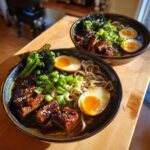
A detailed recipe for preparing rich, spicy miso ramen broth, complete with instructions for perfectly seasoned, soft-boiled ramen eggs.
- Prep Time: 20 min
- Cook Time: 25 min
- Total Time: 45 min (plus 4 hours marinating time for eggs)
- Yield: 2 servings
- Category: Dinner
- Method: Stovetop
- Cuisine: Japanese
- Diet: Low Fat
Ingredients
- 2 large eggs
- 1 cup water (for boiling eggs)
- 1/4 cup soy sauce (for egg marinade)
- 1/4 cup mirin (for egg marinade)
- 4 cups chicken or vegetable stock
- 2 tablespoons white miso paste
- 1 tablespoon red miso paste
- 1 tablespoon gochujang or chili bean paste
- 1 teaspoon sesame oil
- 1 clove garlic, minced
- 1 teaspoon fresh ginger, grated
- 1/2 teaspoon sugar
- 8 ounces fresh or dried ramen noodles
- 4 ounces cooked pork belly or ground pork (optional)
- 2 tablespoons neutral oil
- 1/2 cup chopped green onions, for garnish
- 1 sheet nori, cut into strips, for garnish
- 1 teaspoon toasted sesame seeds, for garnish
Instructions
- Prepare the eggs: Bring a small pot of water to a rolling boil. Gently lower the eggs into the boiling water. Cook for exactly 6 minutes and 30 seconds for a jammy yolk. Immediately transfer the eggs to an ice bath to stop the cooking process. Peel carefully.
- Make the egg marinade: Whisk together soy sauce, mirin, and 1/4 cup water in a small container. Place the peeled eggs in the marinade, cover, and refrigerate for at least 4 hours, or preferably overnight.
- Make the spicy miso tare base: In a small bowl, combine the white miso paste, red miso paste, gochujang, sesame oil, minced garlic, grated ginger, and sugar. Mix until a thick paste forms.
- Cook the meat (if using): Heat the neutral oil in a small skillet over medium heat. Add the pork belly or ground pork and cook until browned and crispy. Set aside.
- Prepare the broth: Pour the stock into a medium saucepan and bring to a simmer over medium heat. Remove about 1/2 cup of the hot stock and whisk it into the miso tare paste until smooth. Pour the thinned tare back into the saucepan with the remaining stock. Stir well to combine. Keep the broth warm but do not boil vigorously after adding the miso.
- Cook the noodles: Cook the ramen noodles according to package directions until just tender (al dente). Drain well.
- Assemble the ramen: Divide the cooked noodles between two large bowls. Ladle the hot spicy miso broth over the noodles. Top each bowl with the cooked pork, half of a marinated soft-boiled egg (sliced in half lengthwise), green onions, nori strips, and sesame seeds.
Notes
- For a deeper umami flavor, use a combination of chicken and pork stock.
- If you cannot find gochujang, use chili garlic sauce or doubanjiang for heat.
- The quality of your miso paste significantly affects the final broth flavor; look for fresh, unpasteurized varieties if possible.
Nutrition
- Serving Size: 1 bowl
- Calories: 650
- Sugar: 12
- Sodium: 1800
- Fat: 28
- Saturated Fat: 9
- Unsaturated Fat: 19
- Trans Fat: 0
- Carbohydrates: 75
- Fiber: 5
- Protein: 35
- Cholesterol: 375