

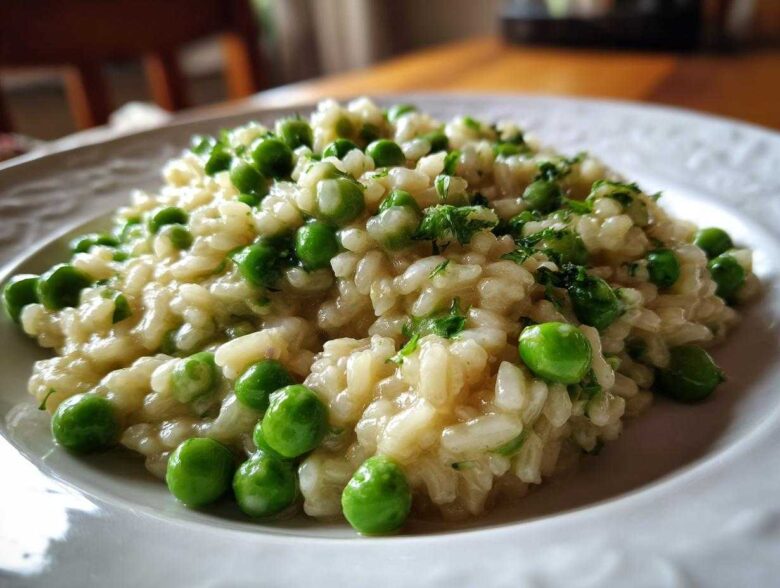
Oh, when spring finally hits, you know I immediately start getting rid of all those heavy winter root vegetables! There’s nothing that smells like pure sunshine to me like fresh peas, and pairing them with mint? It’s simply magic. Today, I’m sharing my absolute favorite way to celebrate these new flavors with a proper Italian technique—my famous **Spring Pea and Mint Risotto**. Trust me, after making dozens of batches, I’ve locked down the secret to that unbelievably creamy texture you usually only find in grandmothers’ kitchens in Lombardy. It’s light, bright, and exactly what your dinner table needs this season. For more of my thoughts on seasonal cooking, check out my main blog page!
Why This Spring Pea and Mint Risotto Recipe Works (E-E-A-T Focus)
I’ve spent years perfecting risotto so you don’t have to experiment through a hundred bland batches! This recipe shines because we treat our seasonal ingredients with the respect they deserve while mastering a few core Italian cooking moves. It’s not just throwing ingredients together; it’s about chemistry. If you’ve ever had a tricky risotto where the rice stays hard or the texture turns gluey, you know why technique matters. I learned these tricks studying classic methods, similar to how I approached that amazing meatloaf recipe, focusing on quality execution.
Achieving Perfect Creaminess: The Classic Italian Risotto Technique
The real secret, honestly, is the rice itself—Arborio has those specific starches we need! We don’t rinse it off; we need that starch to create the creamy sauce naturally. The slow, patient addition of hot stock is non-negotiable. That constant stirring encourages the grains to release starch layer by layer. Then, right at the end, we hit it with the *mantecatura*—taking it off the heat and beating in that cold butter and cheese. Wow, that’s what makes it luxurious!
Incorporating Fresh Peas for Vibrant Color in Your Spring Pea and Mint Risotto
Timing with the peas is everything, trust me on this one. If you toss them in when you start, they turn mushy and lose that cheerful spring color we love. We only add them right at the very end, usually with the final ladle of liquid, or even during the mantecatura itself. This steams them just enough so they are perfectly tender-crisp. That burst of green sweetness is what makes this **Spring Pea and Mint Risotto** feel so fresh and vibrant.
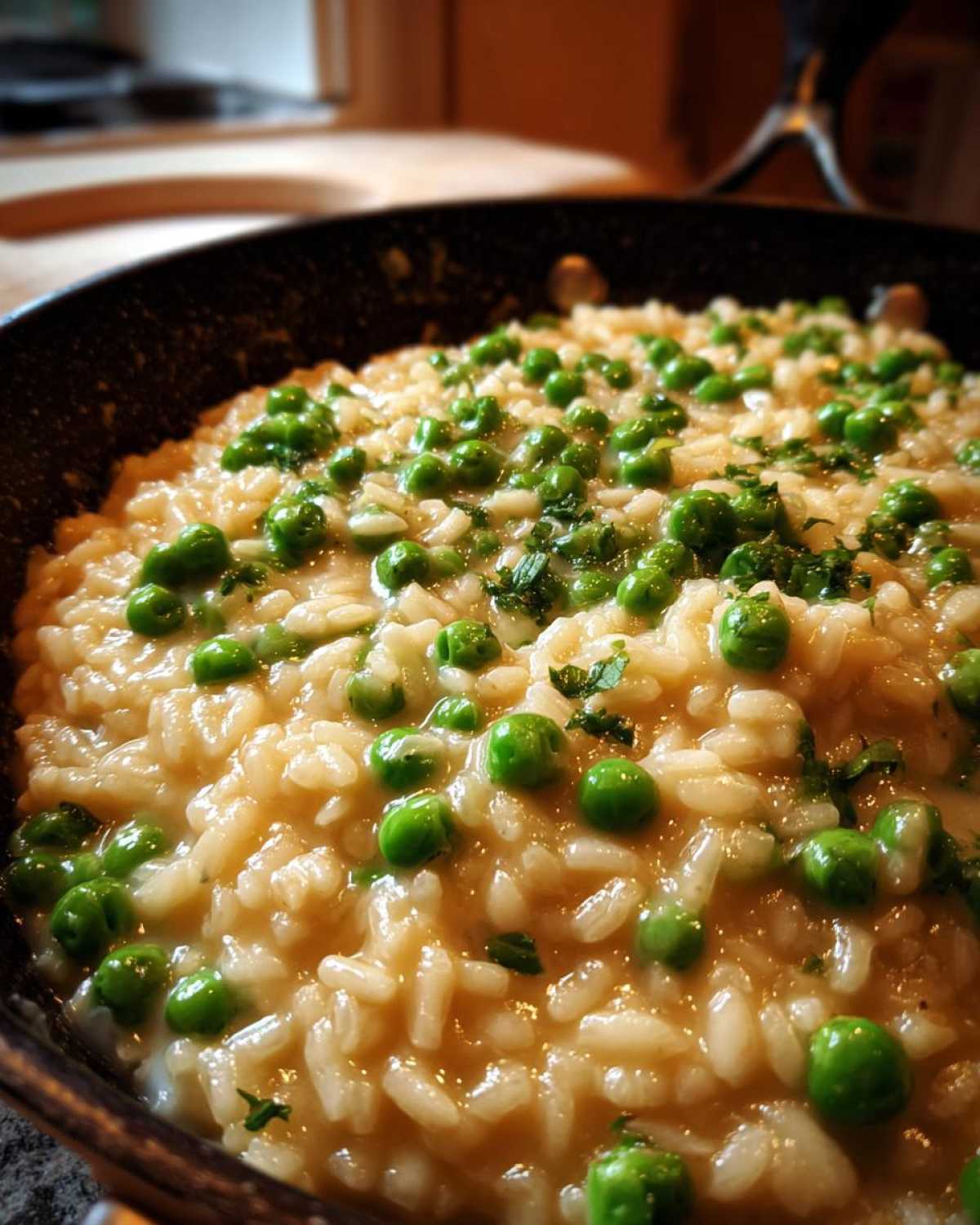
Essential Ingredients for Your Spring Pea and Mint Risotto
When you are making something this simple and fresh, the quality of your ingredients really jumps out at you. You can’t hide behind heavy sauces here! I’ve listed out everything you need right here so you can shop with confidence. Seeing the list of what goes into this **Spring Pea and Mint Risotto** really shows you why the flavor profile is so clean and bright.
- 6 cups vegetable or chicken stock—make sure this is good stuff!
- 2 tablespoons olive oil—the regular kind is fine, we’re dressing it up later.
- 1 small yellow onion, finely chopped—we want this almost translucent, so chop it small!
- 2 cloves garlic, minced—just a little background warmth here.
- 1 1/2 cups Arborio rice—this is the star engine for the cream!
- 1/2 cup dry white wine—grab a bottle you’d actually drink, like a Pinot Grigio.
- 2 cups fresh or frozen peas—we’ll talk about timing these in a second.
- 1/2 cup grated Parmesan cheese, plus more for serving—use the good stuff that comes in a block, please.
- 3 tablespoons unsalted butter—cold from the fridge for the end, okay?
- 1/4 cup fresh mint leaves, chopped—don’t skimp here; this is crucial.
- Salt and black pepper to taste—seasoning happens right at the end.
Ingredient Notes and Substitutions
Since this is basically spring in a bowl, the stock choice matters immensely. If you want this dish strictly vegetarian, go for a really flavorful, low-sodium vegetable stock. If you’re okay with meat, chicken stock adds a little more depth. I’ve used both for creamy sauce recipes before, and the base flavor really carries through!
About that wine: it needs to be dry. Please don’t use anything sweet, or it’ll turn the whole dish cloying. If you absolutely can’t use wine, swap it for an extra 1/2 cup of hot stock mixed with about a tablespoon of fresh lemon juice. It gives you that acidic lift!
And for the Parmesan? That boxed stuff just won’t melt or emulsify right. Grate it fresh! You need real Parmigiano-Reggiano or a good quality Grana Padano for that salty, nutty finish that melts beautifully into the rice. If you wanted a richer base, you could sometimes substitute half the stock with a rich chicken broth, but for true spring lightness, sticking to veggie stock is lovely.
Step-by-Step How to Prepare Spring Pea and Mint Risotto
Okay, this is where the magic happens, but this part requires your full attention! Risotto feels intimidating, but it’s really just about routine and patience. Think of it like reading a good book—you can’t skip chapters. I always put on some music because you’re going to be standing near the stove for about 25 minutes, and you need to enjoy the process! Once you get these steps down, you’ll find yourself whipping up a perfect **Spring Pea and Mint Risotto** whenever you have a craving.
Building the Flavor Base (Soffritto and Toasting)
First things first: get your stock heated up on a back burner and keep it at a gentle, constant simmer. We don’t want cold liquid hitting hot rice—that stops the cooking process dead in its tracks!
Grab your biggest, heaviest pot—I love my Dutch oven for this. Pour in the olive oil over medium heat. Let the chopped onion go in first and sweat it down until it looks soft and totally see-through, about five minutes. It shouldn’t brown at all. Then toss in your minced garlic. Give that just 60 seconds until you can really smell it. You don’t want it burning, or everything tastes bitter, so watch carefully!
Now comes the *tostatura*, or toasting the rice. Dump in all your Arborio rice at once. Stir it non-stop for about two minutes. You’ll notice the grains change color a bit; they’ll go from opaque white to looking almost translucent around the edges. This seals the outside and helps them cook evenly later. Once toasted, pour in that dry white wine. Stir that in until the smell of alcohol cooks off and the liquid is *totally* gone. It smells amazing at this stage!
The Risotto Cooking Process: Adding Stock for Creamy Arborio Rice Dish
This is the rhythm section of the recipe: ladle, stir, absorb, repeat. Grab one scoop—about a cup—of that shimmering hot stock and pour it into the rice. Now, you stir. Stir almost constantly, but don’t panic if you have to step away for 15 seconds. The key is reducing the liquid enough so the next ladle doesn’t just swim in soup. It has to be mostly absorbed before you add the next one.
Keep this up, one ladle at a time, for maybe 18 to 20 minutes. You are looking for the rice to be tender but still have a tiny, firm bite right in the center—that’s al dente. Don’t add the final ladle of stock yet! You need a little moisture left in the pot for the next big step.
Finishing Your Spring Pea and Mint Risotto with Mantecatura
When the rice is almost ready—tender but still firm—toss in your 2 cups of peas. If they are frozen, that’s perfect, they’ll defrost and cook through in the remaining heat in about 3 to 5 minutes. You want them bright green, not drab green!
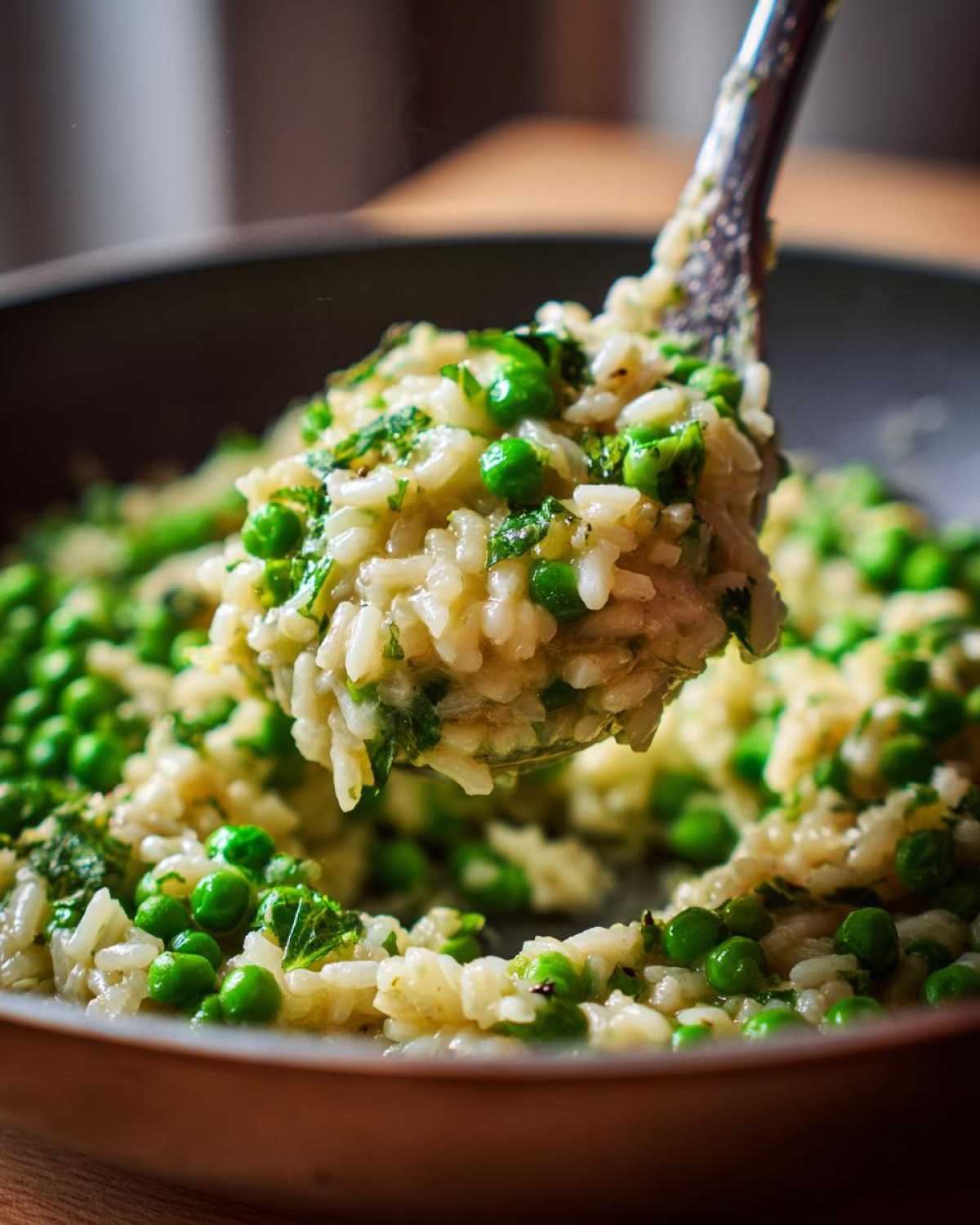
When everything looks creamy and only slightly soupy, take the entire pot *off* the heat. This is crucial for the texture! Vigorously stir in your cheese and the cold butter. This final, energetic beating process is the *mantecatura*, and it’s what makes your **Spring Pea and Mint Risotto** so ridiculously creamy without adding any actual cream. It’s pure technique!
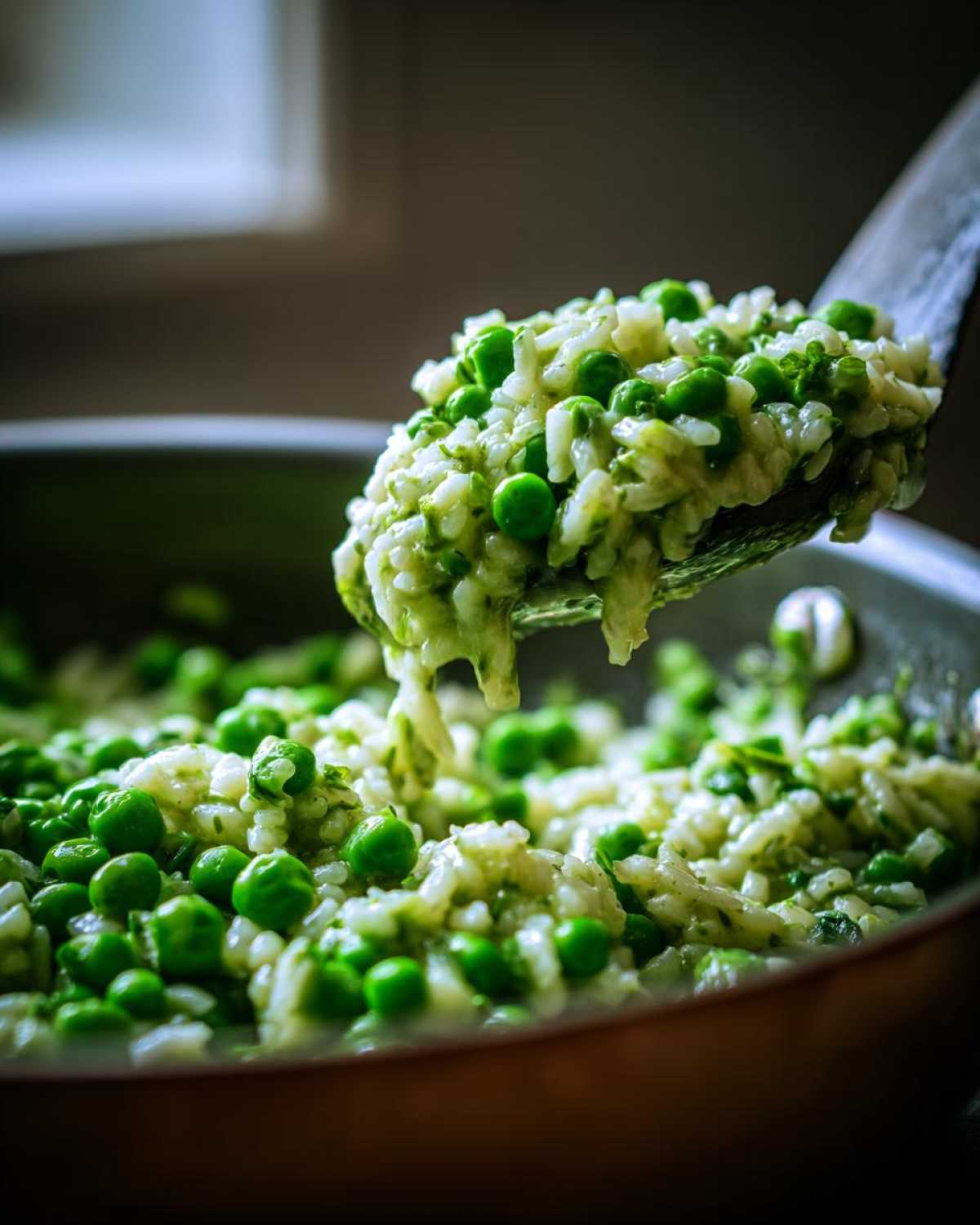
Finally, stir in all that chopped fresh mint. Give it a taste and season with salt and pepper. Remember, the Parmesan is salty, so taste before you add too much salt! Serve it immediately in warm bowls with an extra shower of Parmesan on top. Honestly, making this is almost as satisfying as eating it. If you want a tutorial on how to make similar flavor profiles in bread, check out my guide on homemade Italian bread!
Tips for Success Making Gourmet Pea Risotto at Home
Risotto is temperamental, which is why I love it so much! It demands respect, but once you know the little tricks, it acts right for you every time. If you follow the steps above, you’ll be golden, but here are a few of my favorite insider tips that I’ve picked up over the years to ensure yours comes out restaurant-quality.
First off, let’s talk about testing readiness. Don’t rely just on the timer! The best way to check if your rice is perfectly *al dente* is to pluck a few grains out with a spoon and bite them. You should feel a distinct, tiny resistance in the middle—a little white dot—but the rest of the grain should be creamy and tender. If it’s pure chalk, keep stirring in that stock. If it dissolves into mush the second you bite it, you went too far! I always try to pull it off the heat when it’s *slightly* more liquid than I want, because that final butter stir tightens everything up.
You absolutely must use hot liquid. I cannot stress this enough! Having a separate pan going with simmering stock is key. If you pour in room-temperature or cold stock, it shocks the rice grains, stopping that gentle starch release we need for creaminess. It’s like trying to make a quick sauce while the pan is cooling down—it just doesn’t emulsify right. If you only have hot water and low-sodium stock, that works too, but keep it simmering!
For an extra boost of brightness, especially if your peas aren’t peak-season fresh, you need acid. I sometimes cheat by adding 1 teaspoon of fresh lemon zest right at the very end with the mint. It cuts through the richness of the butter and Parmesan beautifully. Don’t add the juice, though; zest is just the right amount of zing. It wakes up the whole dish! If you’re looking for quick ways to amp up other creamy dishes, you might want to check out how I make my peanut dipping sauce; sometimes a little acid makes all the difference!
Finally, remember the resting rule. While the major resting happens during the *mantecatura* (taking it off the heat), don’t let it sit in the pot too long after you’ve added the butter and cheese. Risotto hates staging. It should go from the stove to the bowl almost immediately, while it’s still flowing beautifully off the spoon. You want that luxurious wave on the plate!
Serving Suggestions for Your Light Spring Dinner Recipes
Since our **Spring Pea and Mint Risotto** is already so rich on its own thanks to that luxurious *mantecatura*, I like to keep the accompaniments really light when I serve it for dinner. Because it’s such a cheerful, lighter main course, it pairs beautifully with delicate proteins. Think about grilled shrimp or maybe some scallops that you just sear up quickly—you get that wonderful texture contrast without weighing down the meal!
If you’re keeping it vegetarian, which is often my go-to, serve it alongside a super crisp, peppery arugula salad dressed simply with olive oil and a splash of lemon juice. And you know me, I always love a refreshing drink nearby, so if you’re looking for something bright to serve alongside, you absolutely must try my recipe for a Watermelon Mint Mojito. It tastes just as fresh as this risotto!
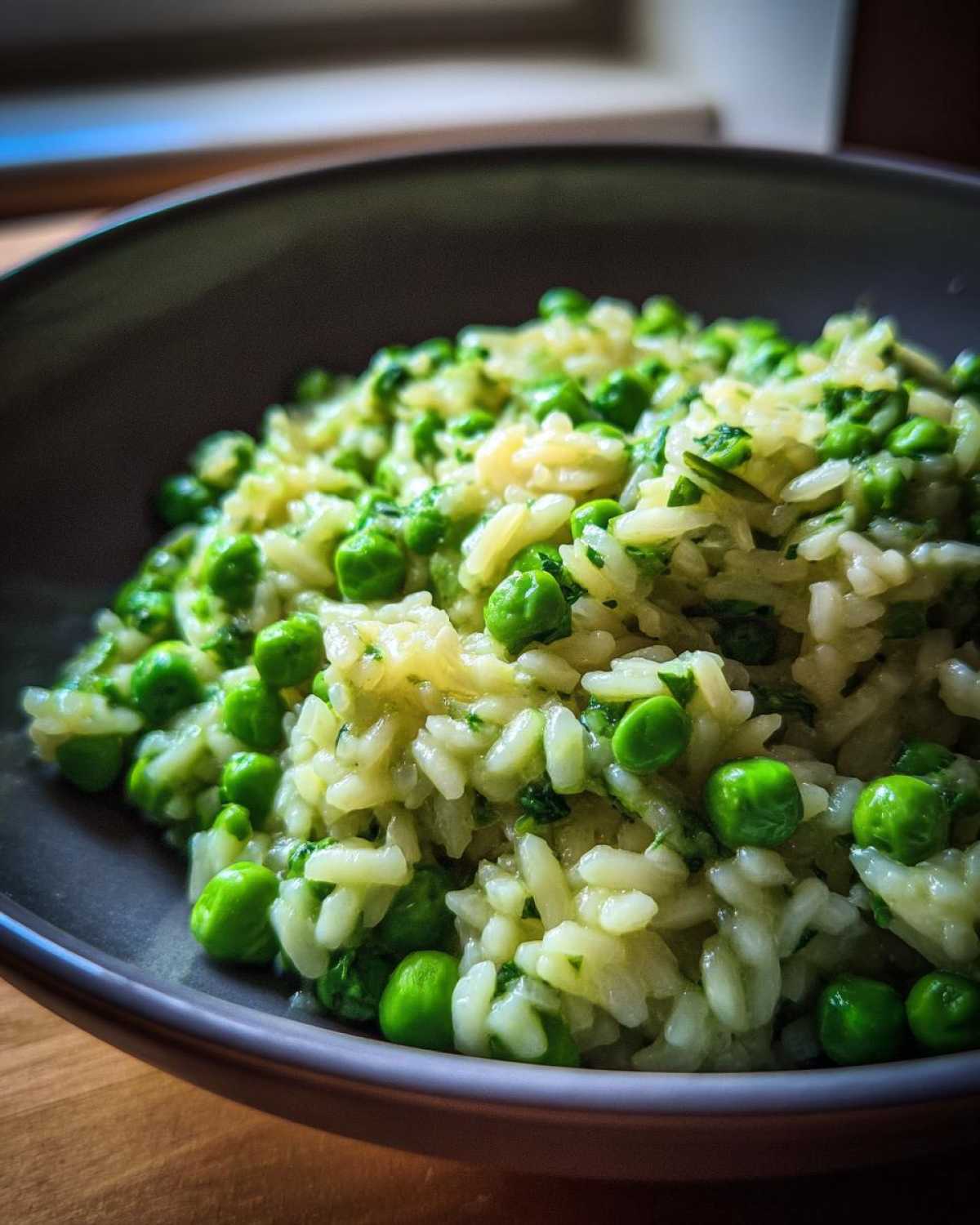
Storage and Reheating Instructions for Spring Pea and Mint Risotto
Listen, I know sometimes we make way too much of the good stuff! Leftover risotto happens, but you need to know how to treat it gently because it changes personality overnight in the fridge—it gets really firm, almost like a cake! Do not, under any circumstances, just try to microwave it straight from the fridge. It will turn into a sad, starchy brick, and that rich creaminess we worked so hard for vanishes. Don’t let your perfect **Spring Pea and Mint Risotto** suffer that fate!
The best way to store leftovers is in a flat, airtight container placed in the fridge. It should keep okay for maybe two nights, but honestly, the texture is best on Day One.
When you’re ready to revive it, you *must* add liquid back in. Place the portion you want to eat into a small saucepan over medium-low heat. Add a splash—maybe a quarter cup to start—of hot stock or even just water. Stir slowly and gently as it warms up. The liquid helps rehydrate the rice grains and brings back that flowy texture. You aren’t trying to cook it again; you are just warming it through and loosening it up!
For a final touch once it’s warm, you can mix in a tiny pat of fresh butter and a little sprinkle of fresh mint right before serving. It revitalizes the flavor beautifully. If you are interested in making things ahead of time for breakfasts instead of dinners, I have the ultimate guide to overnight oats that you might enjoy!
Frequently Asked Questions About This Spring Risotto Recipe
I get so many questions about risotto because everyone wants that perfect bowl! It seems fiddly, but once you understand rice science, you’re good to go. Here are some of the common things folks ask me about making this beautiful **Pea and Mint Risotto tutorial** at home.
Can I use frozen peas in this Pea and Mint Risotto tutorial?
Oh yes, absolutely! If fresh peas aren’t available, frozen are totally fine for this recipe. The key thing is when you add them. You don’t want to add frozen peas at the beginning because they will totally overheat and turn mushy and dull gray while the rice is still cooking. I usually toss them in right when I am down to the last ladle or two of stock, or sometimes even during the final *mantecatura* stage off the heat. They just need a few minutes to steam through so they stay bright green and have that nice little pop when you bite into them. It’s a great little hack for an easy seasonal risotto for spring!
What is the best rice to use for How to make creamy risotto?
There’s no real substitute here if you are aiming for that authentic texture. You need short-grain, high-starch Italian rice. Arborio is the most common one you’ll find, and it works wonderfully. If you can find Carnaroli rice, that’s even better—it’s often called the “king” of risotto rice because it releases starch beautifully while remaining very firm at the center, making it slightly harder to overcook. Just don’t try this with standard long-grain rice like Basmati or Jasmine; the starch structure just isn’t right, and you’ll end up with flavorful, soupy rice, not a luxurious **creamy Arborio rice dish**.
Can this be made vegetarian? (Vegetarian Spring Main Course)
Yes, this is naturally a lovely **Vegetarian Spring Main Course**! The only component that dictates whether it’s vegetarian or not is the stock. If you use vegetable stock—and make sure it’s a good quality one, since it’s a main flavor component—you’re all set. If you used chicken stock, it would just taste richer, but the veggie version is fantastic. You get all the creaminess from the starch release and the butter/cheese finisher, not from any meat product!
To see more meat-free dinner ideas, feel free to browse through my collection of dinner recipes!
Estimated Nutritional Data for Spring Pea and Mint Risotto
I know some of you like to keep track of what’s going into your body, and that’s smart! Here is the approximate nutritional breakdown I calculated for one serving of this risotto. Since we are using fresh butter and Parmesan, it has a bit more fat than a super light salad, but it’s packed with good carbs and that fresh flavor!
- Serving Size: 1 serving
- Calories: 450
- Fat: 15g
- Saturated Fat: 8g
- Unsaturated Fat: 7g
- Trans Fat: 0g
- Carbohydrates: 65g
- Fiber: 4g
- Sugar: 5g
- Protein: 18g
- Cholesterol: 30mg
- Sodium: 450mg
Just remember, these are estimates, okay? If you use a low-sodium stock or go lighter on the Parmesan (which I don’t recommend, but you *can*!), those numbers will shift a little. These estimates are based on the recipe amounts listed for 4 servings.
Share Your Perfect Spring Pea and Mint Risotto Experience
If you made this, I truly hope your kitchen smelled like a spring garden! Honestly, seeing your results brings me so much joy. I’d adore it if you left a rating below—was it easy? Did you nail that creamy texture? Tell me what you thought!
And please, snap some photos if you make this **Spring Pea and Mint Risotto**! Tag me on social media so I can see how beautifully green your peas turned out. If you have any questions that I missed here, shout them out in the comments below so we can chat about risotto technique or how you incorporated that fresh mint!
If you need anything else, feel free to head over to my Contact Page!
Estimated Nutritional Data for Spring Pea and Mint Risotto
I know some of you like to keep track of what’s going into your body, and that’s smart! Here is the approximate nutritional breakdown I calculated for one serving of this risotto. Since we are using fresh butter and Parmesan, it has a bit more fat than a super light salad, but it’s packed with good carbs and that fresh flavor!
- Serving Size: 1 serving
- Calories: 450
- Fat: 15g
- Saturated Fat: 8g
- Unsaturated Fat: 7g
- Trans Fat: 0g
- Carbohydrates: 65g
- Fiber: 4g
- Sugar: 5g
- Protein: 18g
- Cholesterol: 30mg
- Sodium: 450mg
Just remember, these are estimates, okay? If you use a low-sodium stock or go lighter on the Parmesan (which I don’t recommend, but you *can*!), those numbers will shift a little. These estimates are based on the recipe amounts listed for 4 servings. If you want more hearty, single-pot meal ideas, you should totally check out my one-pot beans and rice recipe!
Share Your Perfect Spring Pea and Mint Risotto Experience
If you made this, I truly hope your kitchen smelled like a spring garden! Honestly, seeing your results brings me so much joy. I’d adore it if you left a rating below—was it easy? Did you nail that creamy texture? Tell me what you thought!
And please, snap some photos if you make this **Spring Pea and Mint Risotto**! Tag me on social media so I can see how beautifully green your peas turned out. If you have any questions that I missed here, shout them out in the comments below so we can chat about risotto technique or how you incorporated that fresh mint!
If you need anything else, feel free to head over to my Contact Page!
PrintSpring Pea and Mint Risotto
A recipe for creamy risotto featuring fresh spring peas and bright mint, perfect for a light spring meal.
- Prep Time: 10 min
- Cook Time: 30 min
- Total Time: 40 min
- Yield: 4 servings
- Category: Main Course
- Method: Stovetop
- Cuisine: Italian
- Diet: Vegetarian
Ingredients
- 6 cups vegetable or chicken stock
- 2 tablespoons olive oil
- 1 small yellow onion, finely chopped
- 2 cloves garlic, minced
- 1 1/2 cups Arborio rice
- 1/2 cup dry white wine
- 2 cups fresh or frozen peas
- 1/2 cup grated Parmesan cheese, plus more for serving
- 3 tablespoons unsalted butter
- 1/4 cup fresh mint leaves, chopped
- Salt and black pepper to taste
Instructions
- Heat the stock in a saucepan and keep it at a gentle simmer over low heat.
- In a large, heavy-bottomed pot or Dutch oven, heat the olive oil over medium heat. Add the chopped onion and cook until soft and translucent, about 5 minutes.
- Add the minced garlic and cook for 1 minute until fragrant.
- Add the Arborio rice to the pot. Toast the rice, stirring constantly, for 2 minutes until the edges of the grains look translucent.
- Pour in the white wine. Stir and let it cook until the wine is fully absorbed.
- Add one ladleful (about 1 cup) of the hot stock to the rice. Stir continuously until the liquid is almost completely absorbed.
- Continue adding the stock, one ladleful at a time, stirring frequently and waiting until each addition is absorbed before adding the next. This process takes about 18 to 20 minutes.
- When the rice is nearly done (al dente), add the peas. Cook for 3 to 5 minutes until the peas are tender-crisp.
- Remove the pot from the heat. Stir in the Parmesan cheese and the butter vigorously. This is the mantecatura step, which creates creaminess.
- Fold in the chopped fresh mint. Season with salt and pepper to your taste.
- Serve immediately with extra Parmesan cheese sprinkled on top.
Notes
- Use high-quality, low-sodium stock for the best flavor base.
- For a brighter flavor, add 1 teaspoon of fresh lemon zest along with the mint.
- If you prefer a richer flavor, substitute half of the stock with chicken broth.
- If using frozen peas, do not thaw them before adding them to the risotto.
Nutrition
- Serving Size: 1 serving
- Calories: 450
- Sugar: 5
- Sodium: 450
- Fat: 15
- Saturated Fat: 8
- Unsaturated Fat: 7
- Trans Fat: 0
- Carbohydrates: 65
- Fiber: 4
- Protein: 18
- Cholesterol: 30