

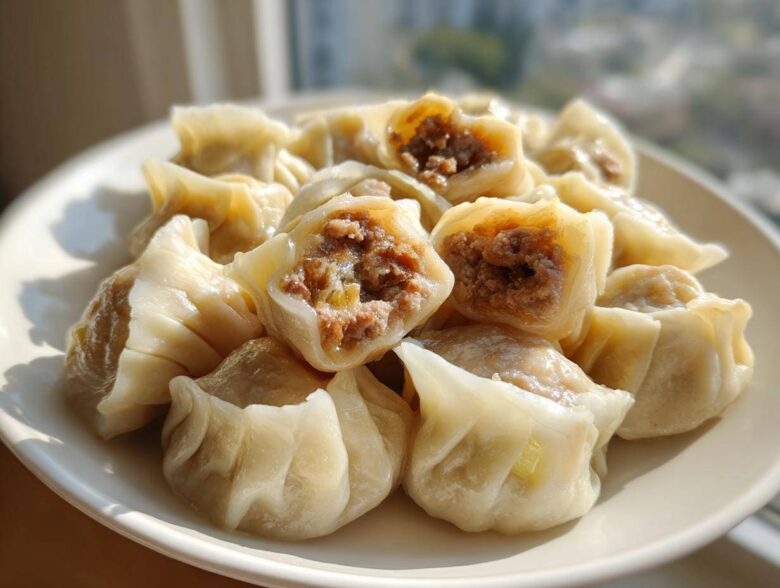
There is nothing quite like the feeling of comfort that floods your kitchen when food made by hand warms your belly. When Amina and I first moved here, we craved that connection to home, and nothing brought it back faster than wrapping dough around savory filling. Forget the frozen bags; today, we’re diving deep into making Traditional Chinese Dumplings completely from scratch, wrappers and all! This flavor is the taste of connection, reminding us of the vibrant energy we miss so much from the markets back home. You can read more about our journey here. Trust me, taking the time to make these authentic jiaozi is worth every single loving minute.
Why You Will Love Making Traditional Chinese Dumplings
I know, I know. The word “scratch” sounds intimidating, right? But seriously, once you try these, you’ll understand why we put so much love into making every component of our Chinese dumplings recipe. It’s a different world from anything you can buy pre-made. Here’s why this process becomes addictive:
- The Flavor Explosion: When you make the filling yourself, you control the freshness. That pop of ginger and rich savory pork we get when you mix it right? Unbeatable. The pork cabbage dumplings taste incredibly vibrant.
- Wrapper Satisfaction: There is a certain magic in rolling out your own dough. It’s meditative! You get those perfect, slightly chewy homemade dumpling wrappers that just melt in your mouth when you eat boiled Chinese dumplings.
- It’s a Celebration: Making a big batch of lunar new year dumplings is a perfect activity for the whole family. It might take a little longer, but the memories made laughing and folding together are half the fun.
- Total Control: You choose how much salt, how much garlic, how thin the wrapper is! If you’re worried about sodium, you can adjust it easily. It’s all about making it yours.
- They Freeze Like a Dream: Seriously, this is huge! You can spend one weekend making 300 of these bad boys and have perfect, ready-to-cook freezer friendly dumplings for months. Grab a bag anytime you need a quick, delicious meal!
Gathering Ingredients for Authentic Jiaozi
Okay, let’s talk about what you need to pull off these Traditional Chinese Dumplings. Amina says you can’t rush the ingredients—the quality really shouts in simple fillings like this. We have two main groups here: the dough for the wrappers and the filling itself. For both parts, precision matters, especially with the chopping!
Don’t think about substituting anything major here; these proportions are what give you that authentic, satisfying chewiness and flavor profile.
For the Homemade Dumpling Wrappers
This dough is incredibly simple, but it needs patience. We only use three things, and the temperature of the water is actually important here. Remember, we are aiming for a pliable dough that can handle a lot of filling!
- 2 cups all-purpose flour (just the standard stuff works great!)
- 3/4 cup warm water (this is the magic number, but keep a tiny splash nearby just in case your flour is thirsty)
For the Pork Cabbage Dumplings Filling
This is where the flavor really sings! You can see how straightforward it is, but read the preparation instructions carefully. Those specific chopping methods are non-negotiable if you want the best pork cabbage dumplings.
- 1 pound ground pork (I prefer a mix of lean and a little fat for juiciness)
- 3 cups finely chopped Napa cabbage (Seriously, chop it fine! Don’t just rough chop it.)
- 1/4 cup finely chopped scallions (the green and white parts are fine)
- 2 tablespoons soy sauce
- 1 tablespoon sesame oil
- 1 tablespoon grated fresh ginger (fresh, please! No powder allowed here!)
- 1 teaspoon salt
- 1/2 teaspoon white pepper (it offers a cleaner flavor than black pepper in this context)
When you’re done chopping and measuring, you’ll have everything you need for perfect, juicy authentic jiaozi.
Step-by-Step Guide to Homemade Dumpling Wrappers
Let’s start at the beginning, because the wrapper sets the stage for the entire dumpling experience. If you skip making your own homemade dumpling wrappers, you’re missing out on the best part of making Traditional Chinese Dumplings! Don’t worry; this dough is very forgiving, but you have to give it a little time to relax.
First, we mix. Take your flour and slowly drizzle in that warm water while using your hands or a big spoon to bring it all together. It’s going to look messy and shaggy at first—like a small, dry snowball that needs a hug. That’s exactly what you want!
Now comes the elbow grease needed for creating a great texture. We need to knead this shaggy mess for a good 8 to 10 minutes on a lightly floured surface. I usually put on some music while I do this; it’s great for working out the stress from the day! Kneading develops the gluten so the wrappers don’t tear when you fill them with your savory filling.
When you think you’re done kneading, keep going for another minute! The dough should transform from rough to smooth to the touch. It should feel elastic, not sticky or stiff.
Here’s the crucial part Amina always insists on: resting. Wrap that smooth ball of dough tightly in plastic or cover it with a damp kitchen towel—it needs to breathe but not dry out. Let it rest for at least 30 minutes. Seriously, don’t try to rush this! That resting period lets the gluten relax, which makes rolling out those thin circles later so much easier. If you skip it, the dough fights you every time you try to flatten it!
Mixing the Perfect Pork Cabbage Dumplings Filling
Alright, the dough is resting and doing its thing—which means it’s time to work on what makes these Traditional Chinese Dumplings truly legendary: the filling! As I mentioned before, Amina’s grandmother had a secret way of mixing that ensures every single dumpling is bursting with juice, and this preparation step is where we lock that flavor in.
In a separate, large bowl, toss in your ground pork, that beautifully finely chopped Napa cabbage, the scallions, soy sauce, sesame oil, ginger, salt, and that touch of white pepper. Now, listen closely, because this isn’t just throwing things in a bowl. You need to mix it, and you need to be dedicated about it.
You must mix everything thoroughly, but here is the trick: Mix it all in one single direction. Don’t stir back and forth! Keep turning the bowl and stirring consistently in the same clockwise or counter-clockwise path. This action helps the proteins in the pork align correctly, creating an emulsion that traps all the flavorful juices inside the meat. Keep going until that mixture looks visibly sticky and cohesive—it won’t look like loose ground meat anymore; it’ll look like a sturdy paste.
This stickiness is what separates good pork cabbage dumplings from amazing ones. It’s the backbone of juicy flavor!
Here’s my favorite little trick, the one that reminds me of Amina tasting everything before serving: Before you even start wrapping, take a tiny spoonful of the raw filling and microwave it for about 20 seconds, or fry a small bit in a pan. Taste it! Does it need a little more salt? A tiny splash more sesame oil? This is your Chinese dumplings recipe test run, and it’s the final E-E-A-T step to ensure every single one of your authentic jiaozi tastes exactly how you want them to.
Assembling and Pleating Your Traditional Chinese Dumplings
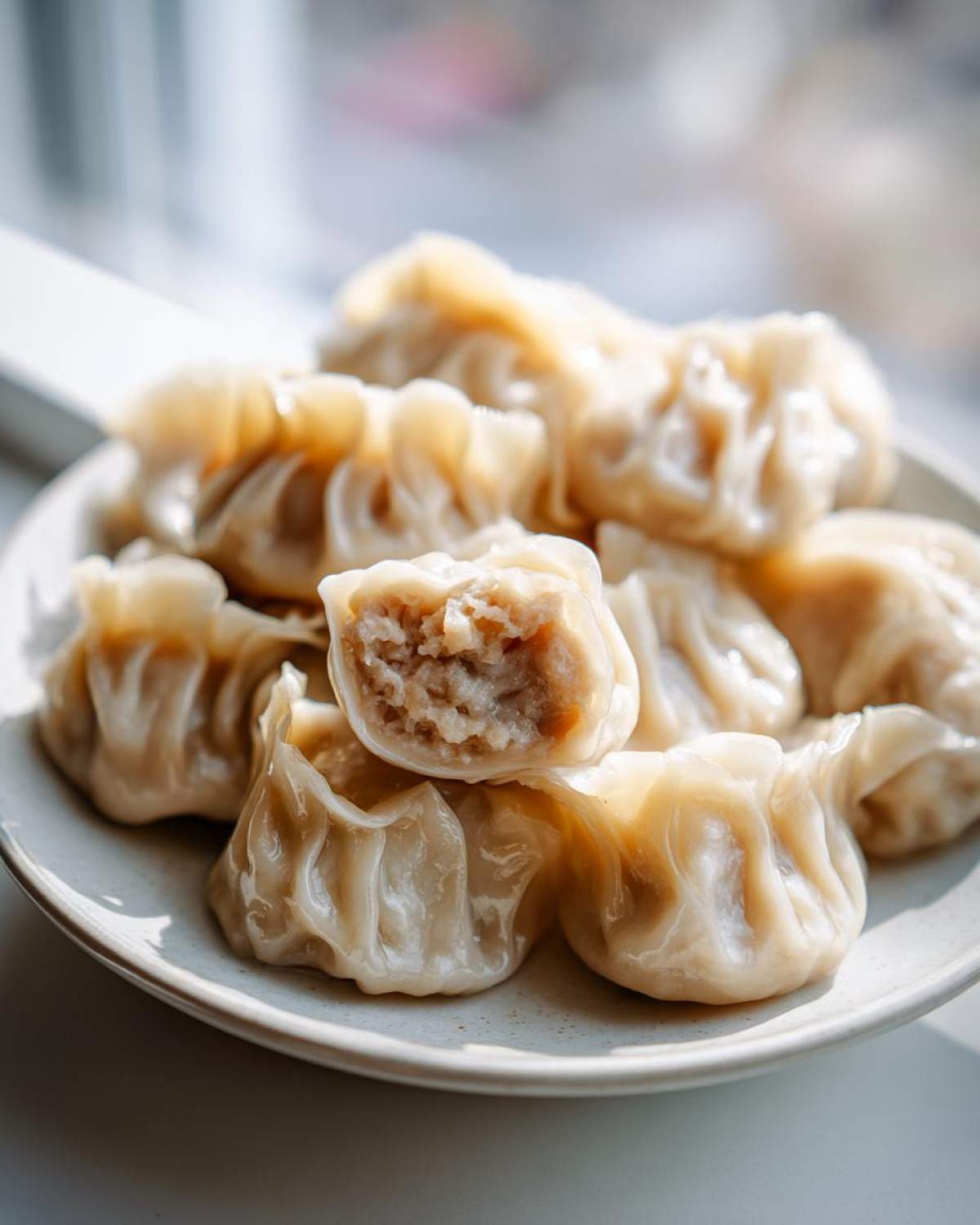
Okay, this is where the real artistry begins! We have our smooth, rested dough and our perfectly seasoned filling boasting that sticky texture—now we bring them together to make gorgeous Traditional Chinese Dumplings. It looks tricky when you see those grocery store packages, but honestly, it’s just about practicing rhythm.
First, take your rested dough and divide it into four equal chunks; this just helps manage the workload. Roll each chunk into a long rope, about the thickness of your thumb—say, 1 inch? Then, use a sharp knife to slice that rope into little 1-inch pieces. It’s like making dough gnocchi, but these are destined for greatness!
Now, take one of those small pieces and flatten it slightly with your palm. You’ll roll this out into a thin circle, about 3 inches across. Here’s the secret to good wrapper texture: try to make the edges slightly thinner than the very center. Why? Because the center needs to be strong enough to hold the filling, but the edges need to seal beautifully.
Once you have your circle, place about a teaspoon—no more!—of your savory pork cabbage dumplings filling right in the middle. Don’t overfill it, or you’ll be crying when it bursts later! Moisten the very edge of the wrapper all the way around using just a little bit of water on your fingertip. This acts as the glue.
Fold the wrapper in half to create that classic half-moon shape, pressing the very top center together first. Now, for the crimping! If you need to seal them quickly for lunar new year dumplings, just make sure you press every section tightly. But if you want that beautiful pleat? Start at one end and create small, overlapping folds, pressing each one firmly onto the resting edge of the wrapper as you go all the way to the other side. It takes practice, but even if your first few look a little clumsy, I promise, they are still the best authentic jiaozi you will ever eat!
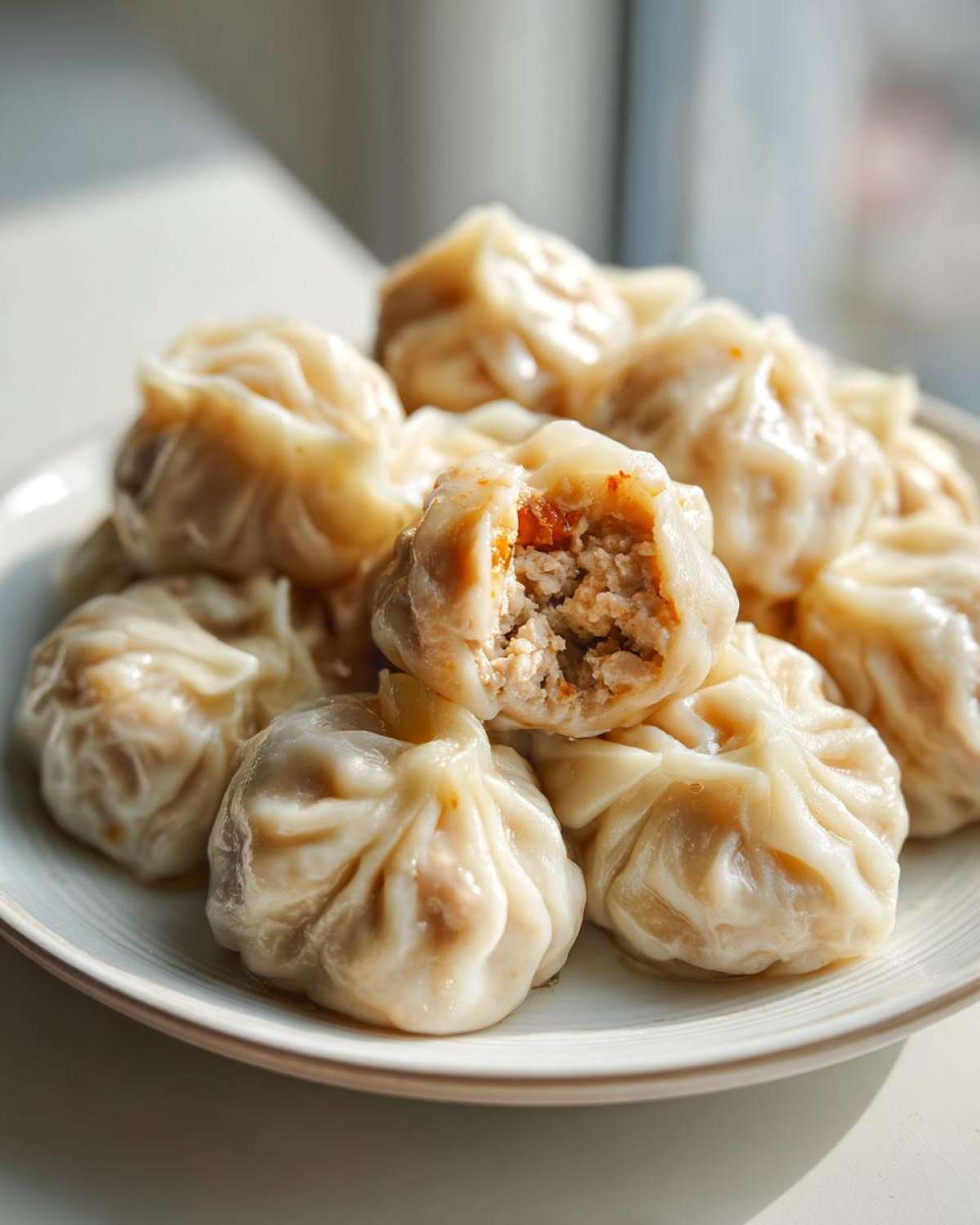
Don’t hesitate! Keep a little bowl of water nearby and just keep rolling and sealing. The more you practice, the faster and more natural the pleating becomes. You’ve got this!
Cooking Method: Mastering Boiled Chinese Dumplings
Now that we’ve tucked all that deliciousness inside our beautiful homemade dumpling wrappers, it’s time for the cooking part! For this specific Chinese dumplings recipe, we are focusing on the classic method: boiling. This is how you get those incredibly tender skins that just soak up the flavor of the broth they’re swimming in. If you’re aiming for classic boiled Chinese dumplings, this technique is straightforward but needs your attention for a few minutes.
First, get a big pot of water and bring it to a proper, rolling boil. I mean, you want big, aggressive bubbles—don’t even think about putting the dumplings in until the water is truly raging. This helps prevent them from sticking to the bottom right away!
Gently, and I mean gently, drop your assembled Traditional Chinese Dumplings into the boiling water. Don’t crowd the pot; if you’ve made a huge batch forlunar new year dumplings, cook them in waves. The immediate cooling effect of adding the cold dumplings will drop the water temperature, so you just need to wait for that boil to come back actively.
As soon as they settle, use a wooden spoon or spatula to stir them very softly. Don’t stir them vigorously, or those beautiful pleats we worked so hard on will tear! We are just making sure they don’t clump together at the bottom. Give them a little nudge and let them swim.
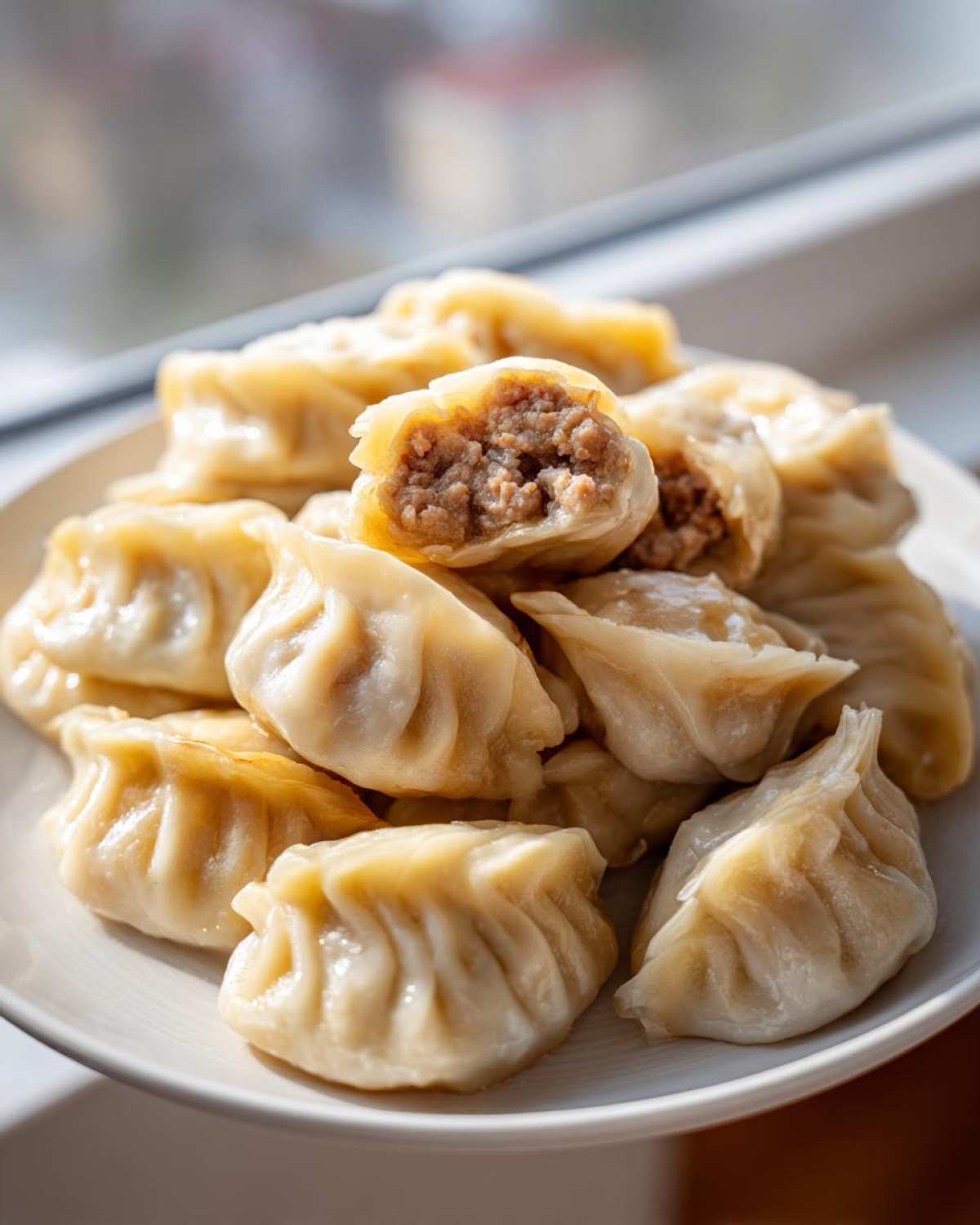
The visual cue is amazing for figuring out when they are almost done. They will float right up to the top of the water! Once every single dumpling is floating, that’s your signal that the interior meat is getting close. But don’t pull them out yet! We need to cook them a tiny bit more to ensure the pork is done perfectly. For the absolute best authentic jiaozi, cook them for an additional 3 to 5 minutes after they float. This ensures the center of that thick pork filling cooks through beautifully.
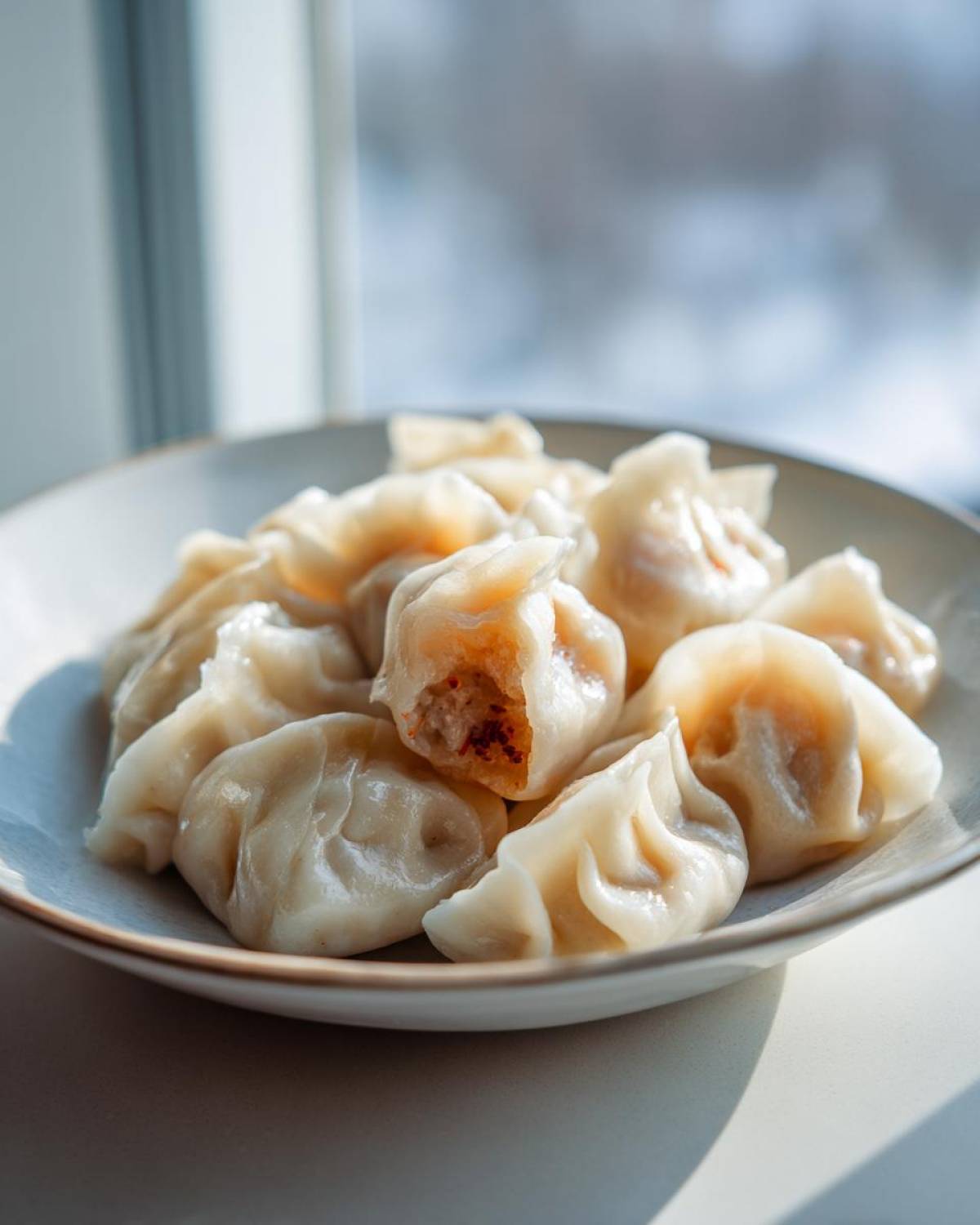
Use a slotted spoon, like the ones Amina bought at the market in Lagos, to lift them out. They will look plump and slightly translucent. You can enjoy them just like this, or maybe check out some ideas on mastering other types of dumpling textures here!
Alternative Cooking: Pan-Frying for Potstickers
Now, I know some people love that crispy bottom crust! If you’re feeling versatile and want to turn these into potstickers instead of simple boiled Chinese dumplings, that’s easy enough to pivot to. Just heat up a really sturdy, non-stick skillet with a thin layer of vegetable oil over medium-high heat. Place your uncooked dumplings directly into the hot oil (flat sides down, if you folded them that way).
Let them fry undisturbed until the bottoms are that perfect, deep golden brown—you’ll hear them sizzle happily when they are ready. That’s usually about 2 to 3 minutes. Once they look crispy, pour in just a tiny bit of water—maybe ¼ cup for a dozen dumplings—and immediately cover the pan tightly with a lid! The water turns to steam, cooking the rest of the wrapper and the pork filling perfectly. Cook until all that water has evaporated. Done! You get the best of both worlds: a crispy bottom and a steamed top!
Tips for Making Freezer Friendly Dumplings
You know, one of the best things about making this massive batch of Traditional Chinese Dumplings is knowing that we don’t have to eat them all today! These are the absolute best lunar new year dumplings because you can prepare them way ahead of time. Seriously, making a huge stash of freezer friendly dumplings means you always have incredible homemade takeout ready when you need it.
Don’t just throw them into a bag—that’s a recipe for a giant clump of frozen dough in a few weeks! You have to freeze them individually first. Grab a sturdy baking sheet and line it with parchment paper first. This stops any sticking whatsoever, which is vital.
Place your uncooked dumplings onto that parchment-lined sheet, but this is critical: make sure they aren’t touching each other! Give them a little bubble of space all around. If they touch while freezing, they fuse together, and you’ll have to chisel apart a single giant, oddly shaped dumpling creature.
Pop that entire tray into the freezer. You want them frozen solid—usually 2 to 3 hours, depending on how cold your freezer is. Once they are hard as little rocks, you can take them off the sheet. Now you can scoop them all into a heavy-duty freezer bag or airtight container. They won’t stick now! Just label the bag with the date so you remember what treasure you packed away.
Cooking them from frozen is super simple, but you can’t use the exact boiled Chinese dumplings time. When you toss those frozen beauties into the boiling water, you need to add a few extra minutes to the cook time. They usually need 2 to 3 minutes longer after they float up. Just be patient, wait for them to float, and then give them about 6 or 7 minutes more to ensure that wonderful pork filling cooks all the way through. Enjoy your future shortcuts!
Serving Suggestions for Authentic Jiaozi
Now that you’ve put so much love and elbow grease into making these perfect Traditional Chinese Dumplings, we can’t just eat them plain, can we? Well, you certainly could—they are that flavorful! But a truly authentic jiaozi experience needs the right sidekick. We always serve ours with the simplest dipping sauce mixture across Lagos and here. It lets the flavor of the pork and cabbage shine through without overwhelming it.
Amina’s go-to sauce is almost embarrassingly easy. It starts with a base of good quality soy sauce. Then, you add a splash of Chinkiang black vinegar—it has a wonderful, mellow tang. Finish that with a drizzle of pure sesame oil, and maybe, just maybe, a few drops of chili oil if David has been near the stove lately! Mix it right in the little dipping bowl so everyone can customize their own portion.
If you’re having these as a main event, especially for those big lunar new year dumplings spreads, we always pair them with something light and cleansing on the side. A quick, slightly vinegary cucumber salad cuts through the richness of the pork beautifully. Or—and this is a comfort food win—serve them swimming in a light, clear broth. It turns them into a lovely, cozy soup!
If you happen to have some of our spicy homemade condiments floating around, like a touch of homemade chili garlic paste, that works wonders too! If you’re feeling adventurous and looking for other sauce pairings for dipping, we have a fun recipe for homemade garlic aioli, although for these pork cabbage dumplings, I still recommend sticking to the vinegar base to truly honor the classic taste.
Frequently Asked Questions About Chinese Dumplings Recipe
We get so many questions about making these beauties, especially when people are trying to recreate them for lunar new year dumplings! It’s wonderful that you’re putting so much care into getting them right. Here are a few of the things I hear most often about our Traditional Chinese Dumplings recipe.
Can I use store-bought wrappers instead of homemade dumpling wrappers?
Oh, I totally get the temptation here! If you’re in a huge pinch and need something fast, yes, you absolutely can use the pre-made kind. It saves so much time, especially when you’re juggling everything else for a big meal. However, if you are aiming for that true, chewy, delightful texture that makes authentic jiaozi so special, nothing beats the fresh ones we made above. Store-bought wrappers are usually a bit thicker and don’t have that wonderful elasticity when steamed or boiled. For the best flavor experience, I really encourage trying the homemade dumpling wrappers at least once!
What is the best way to store leftover boiled Chinese dumplings?
If you somehow manage to have leftover boiled Chinese dumplings, congratulations, you lucky duck! The best way to store them is definitely in the fridge, and you need to do it quickly. Let them cool down a bit on the counter—maybe 20 minutes—but don’t leave them sitting out for hours. Once they are just warm, store them in a shallow, airtight container. Don’t pile them too high; try to keep them in a single layer if possible, or line layers with a small piece of parchment paper so they don’t stick together. They should be good for about three days in the cold. When you reheat them, steaming them again is better than microwaving them, which can make the wrapper tough.
How do I ensure my pork cabbage dumplings stay juicy?
To keep your pork cabbage dumplings supremely juicy, you need to focus on two things we covered in the steps, because they are non-negotiable! First, you must mix that filling mixture in one direction until it gets truly sticky. That sticky texture is the binding agent that holds the juices in while they cook. Second, don’t overcook the boiled Chinese dumplings! Remember the rule: wait until they float up, and then simmer them for just 3 to 5 minutes more. Overcooking dries out the pork faster than anything else. Trust me, watching them float is your cue to get ready to eat!
Are these dumplings suitable for freezing uncooked?
Yes, absolutely! In fact, this recipe is my secret weapon for easy weeknight meals because they freeze so well. As long as you follow the steps to freeze them individually on a baking sheet first—making sure they don’t touch!—once they are rock hard, you can toss them into a big bag. That’s why they are listed as freezer friendly dumplings. You can cook them straight from frozen anytime you need a taste of home. It’s such a great hack for keeping that authentic flavor around for a long time!
If you’re looking for more tips and stories from our kitchen adventures, don’t forget to check out our main blog page!
Nutrition Estimate for Traditional Chinese Dumplings
I always feel a little funny putting numbers next to food that tastes this much like pure comfort and tradition, but for those of you keeping track of macros or tracking meals, Amina made sure we got these estimates calculated for you! Remember, these are just ballpark figures based on the ingredients listed in our Traditional Chinese Dumplings recipe, and you know how it is—the exact brand of pork or how much oil you use for frying instead of boiling can change things!
Consider this a rough guide, not gospel. As the storyteller here, I have to say, these numbers look pretty great for how satisfying these pork cabbage dumplings are. When made as boiled Chinese dumplings, they are surprisingly lighter than you’d think!
Here is the breakdown based on a serving size of 5 dumplings:
- Serving Size: 5 dumplings
- Calories: 280
- Fat: 12g (4g Saturated Fat)
- Carbohydrates: 28g
- Protein: 16g
- Sodium: 450mg
- Sugar: 1g
See? That’s a good balance for a hearty meal! If you use leaner pork or skip any added soy sauce, those sodium numbers will drop even further. It just goes to show that making your own authentic jiaozi gives you total control over what ends up on your plate. Enjoy every bite!
Share Your Kitchen Snap Moments
Wow, if you made it this far, you have successfully navigated the world of dough handling and sticky fillings! I am so proud of you for tackling these Traditional Chinese Dumplings from scratch. Amina and I genuinely believe that cooking is only half the fun—the other half is sharing that joy, that heritage, and those amazing flavors with someone else!
We created Spoonful Snap to be a true kitchen community, a place where we can connect over the fire and the flavor. So, when you finally sit down to enjoy those beautiful pork cabbage dumplings, I want to see them! Seriously, snap a picture of the final plate, especially if you managed to get those perfect little pleats on your authentic jiaozi.
Please, leave us a rating below! Five stars means you’re ready to host the next big lunar new year dumplings feast, but even a few stars with constructive feedback helps us know how to make the next batch of instructions clearer. Did the dough rest perfectly? Did you manage to freeze some of those freezer friendly dumplings?
Tell us everything in the comments! Your success stories are what fuel us every single day to keep cooking, keep sharing, and keep that cultural connection alive. If you ever want to send us a direct message or share a photo privately—maybe you need help troubleshooting a sticky wrapper—you can always reach out via our contact page. We can’t wait to see what you create!
PrintAuthentic Pork and Cabbage Chinese Dumplings (Jiaozi)
Learn to make delicious, traditional Chinese dumplings from scratch with tender pork and crisp cabbage filling. This recipe includes instructions for making homemade dumpling wrappers and tips for boiling and freezing your authentic jiaozi.
- Prep Time: 45 min
- Cook Time: 15 min
- Total Time: 60 min
- Yield: 4 servings
- Category: Dinner
- Method: Boiling
- Cuisine: Chinese
- Diet: Low Fat
Ingredients
- 2 cups all-purpose flour
- 3/4 cup warm water (plus more if needed)
- 1 pound ground pork
- 3 cups finely chopped Napa cabbage
- 1/4 cup finely chopped scallions
- 2 tablespoons soy sauce
- 1 tablespoon sesame oil
- 1 tablespoon grated fresh ginger
- 1 teaspoon salt
- 1/2 teaspoon white pepper
Instructions
- Make the dough: In a large bowl, mix the flour and warm water until a shaggy dough forms. Knead on a lightly floured surface for 8 to 10 minutes until smooth. Cover the dough with a damp cloth and let it rest for at least 30 minutes.
- Prepare the filling: In a separate bowl, combine the ground pork, chopped cabbage, scallions, soy sauce, sesame oil, ginger, salt, and white pepper. Mix thoroughly in one direction until the mixture becomes sticky and well combined. This step is key for juicy pork cabbage dumplings.
- Roll the wrappers: Divide the rested dough into four equal pieces. Roll each piece into a long rope, about 1 inch thick. Cut the rope into 1-inch pieces. Roll each small piece into a thin circle, about 3 inches in diameter, keeping the edges slightly thinner than the center.
- Assemble the dumplings: Place about 1 teaspoon of filling in the center of a wrapper. Moisten the edges with water. Fold the wrapper in half over the filling to create a half-moon shape. Crimp and pleat the edges to seal securely.
- Cook the dumplings: Bring a large pot of water to a rolling boil. Gently drop the dumplings into the water, ensuring they do not stick together. Stir gently.
- Boil the authentic jiaozi until they float to the surface. Once floating, cook for an additional 3 to 5 minutes until the pork is cooked through.
- Remove the boiled Chinese dumplings with a slotted spoon and serve immediately.
Notes
- For freezer friendly dumplings: Place uncooked dumplings on a baking sheet lined with parchment paper, ensuring they do not touch. Freeze until solid, then transfer to a freezer bag. Cook directly from frozen, adding a few extra minutes to the cooking time.
- If you prefer pan-fried dumplings (potstickers), cook them in a lightly oiled skillet until the bottoms are golden brown, then add a small amount of water, cover, and steam until the water evaporates.
- Taste your filling mixture before wrapping; if it seems bland, add a touch more soy sauce or salt.
Nutrition
- Serving Size: 5 dumplings
- Calories: 280
- Sugar: 1
- Sodium: 450
- Fat: 12
- Saturated Fat: 4
- Unsaturated Fat: 8
- Trans Fat: 0
- Carbohydrates: 28
- Fiber: 2
- Protein: 16
- Cholesterol: 55